



TI's solid-state relay insulation technology boosts reliability and stability.
 Published2022.05.11 08:52
▲Texas Instruments (TI) solid-state relay (SSR) portfolio (Image courtesy of TI)
As eco-friendly trends sweep across industry, the electric vehicle market has grown tenfold in just five years. As electric vehicle development and distribution accelerate, high-voltage systems have become more widespread, presenting system engineers with challenging design challenges such as EMI, EMC, and insulation.
Texas Instruments (TI) announced on the 10th the launch of its solid-state relay (SSR) portfolio, including automotive-grade isolated drivers and switches, which it expects to deliver high reliability while enhancing the safety of electric vehicles. TI explains that this will minimize the solution size of powertrains and 800V battery management systems (BMS), thereby reducing bill of materials (BOM) costs.
The newly introduced TPSI3050-Q1 isolated switch driver with integrated 10V gate supply and TPSI2140-Q1 1400V 50mA isolated switch improve reliability with a unique approach that integrates power and signal isolation through a single barrier. Additionally, they added that they can reduce solution size and cost compared to existing electromechanical relays and solid-state photorelays. These devices are the first in a new solid-state relay portfolio that also includes IC designs for high-voltage industrial applications.
TI's new solid-state relay portfolio highlights three key benefits: 1) High system reliability achieved through integrated isolation technology; 2) System size and cost reduction through integrated power and signal isolation; and 3) Enhanced safety in 800V electric vehicle BMSs.
First, while electromechanical relays take milliseconds to switch, the new solid-state relays switch and connect loads in microseconds across a single insulation barrier, making them safer for high-voltage automotive systems. The TPSI3050-Q1 offers reinforced insulation up to 5 kVRMS and a service life more than 10 times longer than electromechanical relays.
Additionally, the TPSI2140-Q1 provides basic isolation up to 3.75kVRMS, achieving TDDB reliability that is more than four times higher than solid-state photorelays.
Secondly, in terms of system size reduction and cost reduction, solid-state relays can integrate power and signal transmission into a single chip, reducing solution size by up to 50% and reducing BOM by up to three components.
The TPSI3050-Q1 integrates the functions of an isolated power supply, digital isolator, and gate driver, providing a solution size that is up to 90% smaller than mechanical relay solutions. The TPSI2140-Q1 integrates signal FETs and resistors, eliminating the need for reed relays and reducing size by up to 50% compared to existing solid-state photorelay solutions.
Thirdly, the TPSI2140-Q1, designed for high-voltage measurement and insulation monitoring to enhance the safety of electric vehicles, can be combined with battery pack monitoring devices such as the BQ79631-Q1 to detect insulation faults faster and with higher accuracy than solid-state photorelays in 800V battery management systems. The TPSI2140-Q1 uses less than 1MW resistor and can withstand 300% higher avalanche current than conventional photorelays, enabling safer human-system interaction.
The TPSI3050-Q1 and TPSI2140-Q1 are available in pre-production quantities on TI.com for $1.99 and $2.75, respectively, in 1,000-unit quantities. TI also announced that evaluation modules for the TPSI3050Q1EVM and TPSI2140Q1EVM are available on TI.com for $49, allowing engineers to evaluate the devices.
TI continues to introduce differentiated isolation products. Solid-state relays are the latest addition to TI's growing isolation product portfolio. Another new product, the UCC14240-Q1 isolated DC/DC bias power supply module, uses TI's proprietary transformer integration technology to achieve high power density, low electromagnetic interference (EMI), and high reliability, thereby extending the driving range of electric vehicles.
The AMC23C12 is the industry's first reinforced isolation comparator that integrates a robust galvanic isolation barrier into the standard comparator function, reducing solution size by up to 50% and enabling ultra-fast isolated bidirectional overcurrent and overvoltage detection in less than 400 ns, TI emphasized.
“As electric vehicles become more prevalent, high-voltage systems are becoming more prevalent, and as the electric vehicle industry transitions to 800-volt batteries, insulation presents a challenging design challenge for system engineers,” said Troy Coleman, vice president of product management at Texas Instruments.
“TI is committed to helping system designers solve their challenges,” he said. “With our new solid-state relays that incorporate more integrated features and leverage TI’s isolation technology, engineers can now reduce the size, cost and complexity of high-voltage power supplies and enhance the safety of next-generation automotive and industrial systems.”
Meanwhile, Texas Instruments (NASDAQ: TXN), a global semiconductor company, designs, manufactures, tests, and sells analog ICs for industrial, automotive, and personal electronics, communications equipment, and enterprise applications, as well as embedded processors.
For decades, TI has been driven by the spirit of technological progress through semiconductors, delivering technological innovations that enable semiconductors to be incorporated into every electronic device, delivering greater reliability and efficiency. For more information about TI, please visit TI.com.

Comments
Related news
.jpg)
TI's Wideband ADC Cuts Size and Power Consumption in Half
Texas Instruments (TI) has launched a wideband ADC that maximizes channel density and extends battery life while reducing size and power consumption by half.
2021.12.10by 배종인 기자
TI Unveils Industry's Highest Bandwidth Amplifier
Texas Instruments (hereinafter TI) is introducing amplifiers that eliminate the need for custom ASICs and simplify front-end design, responding to engineers' requirements.
2022.01.21by 성유창 기자
.jpg)
TI Participates in APEC 2022… Introduces Power Management Design Solutions
Texas Instruments (TI) presents power solutions at APEC and explains technologies for enhancing future system performance.
2022.03.22by 성유창 기자
Schneider Aims for Building Energy Savings and Operational Stability with Next-Generation HVAC Drives
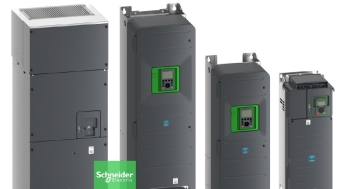
Schneider Electric has unveiled its next-generation HVAC drive product line 'Altivar HVAC'. The new product line's key features center on enhanced energy savings, system operational stability, and building management system integration. The products are divided into 'ATH200' for OEM and small equipment applications, and 'ATH600' for environments requiring continuous operation and advanced control. The company plans to expand the application scope from commercial buildings to facilities where HVAC system stability is critical, such as hospitals, airports, and data centers. The announcement includes over 30% energy savings, operation from -10°C to +60°C, Modbus and BACnet support, and compatibility with low global warming potential refrigerants.
2026.03.26by 명세환 기자

Ecolab Expands AI Data Center Cooling Business Through Acquisition of CoolIT
Ecolab has agreed to acquire CoolIT Systems, a liquid cooling company for AI data centers, for approximately $4.75 billion. The transaction is expected to close by Q3 2026, subject to regulatory approvals. CoolIT has been supplying direct-to-chip cooling-based coolant distribution units, cold plates, and manifolds, serving hyperscale data centers and colocation operators as customers. This acquisition is a measure to address the high-heat and high-density server environments created by AI proliferation. Ecolab plans to combine its water management and digital monitoring capabilities with CoolIT's hardware technology to expand its data center cooling business.
2026.03.26by 명세환 기자











