



"Artwork Engineers Must Consider EMC in Design Cue"
 Published2022.09.01 14:12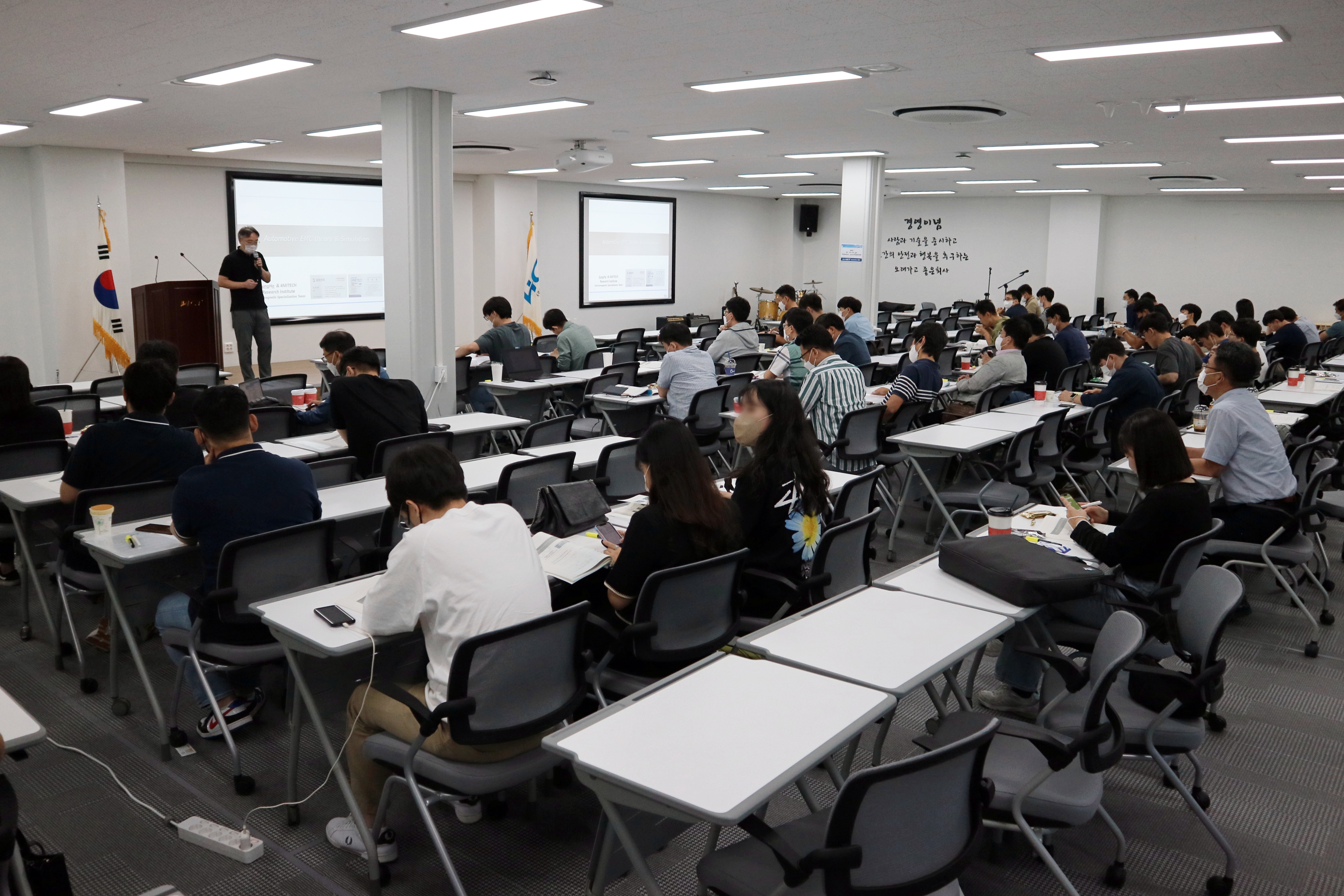
▲2022 HCT 오토모티브 세미나
아트웍 엔지니어, 설계 단계서 EMC 인증·검증 고려 必
지난 2년 간 코로나19 확산으로 인해 중단됐던 HCT 오토모티브 세미나가 올해 다시금 개최해 전장품 인증 동향과 EMC 솔루션 등을 강연하며 자동차 엔지니어들의 열띤 호응 속에 성료했다.
국내 시험인증·교정 서비스 업체인 HCT가 31일 경기도 이천 본사 미래관에서 자동차 엔지니어들을 위한 2022 HCT 오토모티브 세미나를 개최했다.
EMC뿐 아니라 자율주행 관련 사이버 시큐리티 및 전장 관련 주제를 포괄해 전장 부품과 시스템 설계 개발사를 위한 심도 있는 세션이 진행됐다. 이날 세션에는 △씨엔비스 김정기 부사장 △현대차 양정석 책임연구원 △포엠아이텍&성호전자 여재영 연구소장 △EMC닥터스 김종훈 박사가 참여해 강연을 진행했다.
■”전장품 사이버 보안 必”
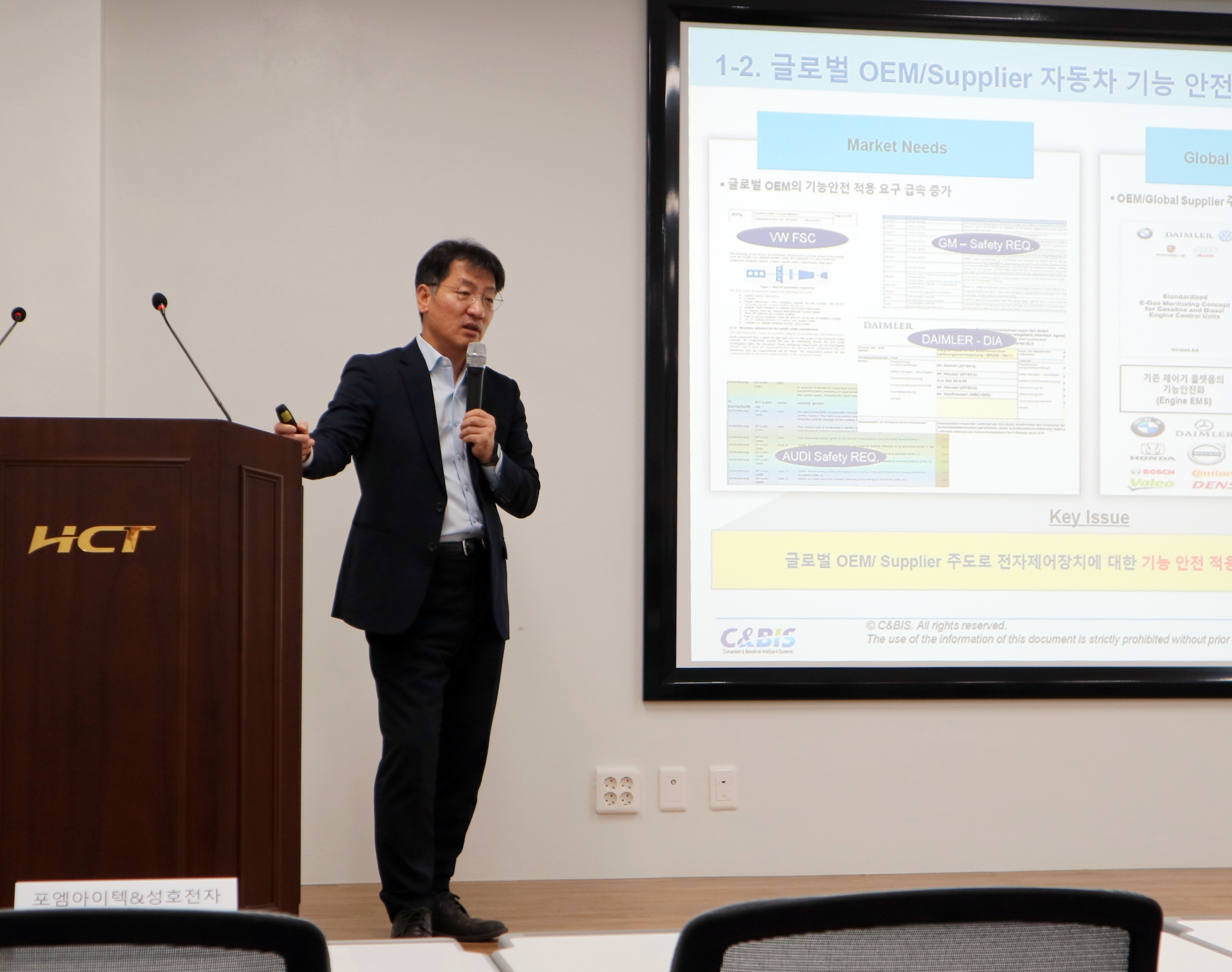
▲씨엔비스 김정기 부사장
김정기 부사장은 이날 세미나에서 국제표준 동향 ISO TC22/SC32에 대해서 발표했다. 그는 “자동차산업에서 전기전자 장치 비중이 확대돼 H사 기준 30%에 달하는 부품이 전기전자 장치로 이뤄졌다”며 “자동차는 고장 시 인명사고 가능성이 높기에 안전 및 보안 이슈가 크게 대두되고 있어 시험 및 검증 관리를 통한 위험 관리가 중요하다”고 강조했다.
해외 사례에서 자율주행의 경우 라이다·카메라 센싱에서의 인식 오류 등으로 인한 주행 사고 발생, 전장제어장치 문제에 따른 급발진 사고 등이 발생하며 신뢰성 과제를 해결하는 것이 화두로 떠오르고 있다.
차량용 전기·전자 부품 및 시스템에 대한 표준 산하에 14개 워킹그룹(WG)에서 표준화 활동이 활발한 가운데 △WG2 Environmental conditions △WG8 기능안전(Functional Safety) 및 SOTIF △WG11 사이버시큐리티(Cybersecurity) 등을 주목할 것을 김 부사장은 언급했다.
자율주행차와 관련된 산업 표준 또는 국가 표준을 제약사항으로 보게 되면 현재 기준으로 150종 표준이 제정 완료됐다. 제정 진행 중인 표준도 60여 종에 달해 마지막 단계인 2024년에 이르면 총 250여종의 표준이 전장 제어 및 자율주행 분야에서 제약사항으로 작용할 수 있다. 이와 관련해 산업계에서 대응책 마련이 필요해 보인다.
UNECE WP 29 사이버 보안 관련 EU 법규가 지난 7월 신차에 적용돼 유럽에 출시하는 신차에는 사이버 보안을 인증하고 소프트웨어 업데이트 관련 인증이 수반돼야 함을 공표했다. 향후 2024년에는 모든 차에 적용될 예정이다. 각 나라별 법제화가 이뤄지고 있는 가운데 한국은 오는 11월경 자동차 안전 기준법 내에 사이버 보안이 자가 인증 형태에서 형식 승인 방식이 채택될 가능성이 있다고 김 부사장은 예상했다. 그는 늦어도 2024년 7월 이전에는 이와 같은 법규가 국내에 마련될 것으로 내다봤다.
■EMC 인증·검증, 설계단에서 고려 必
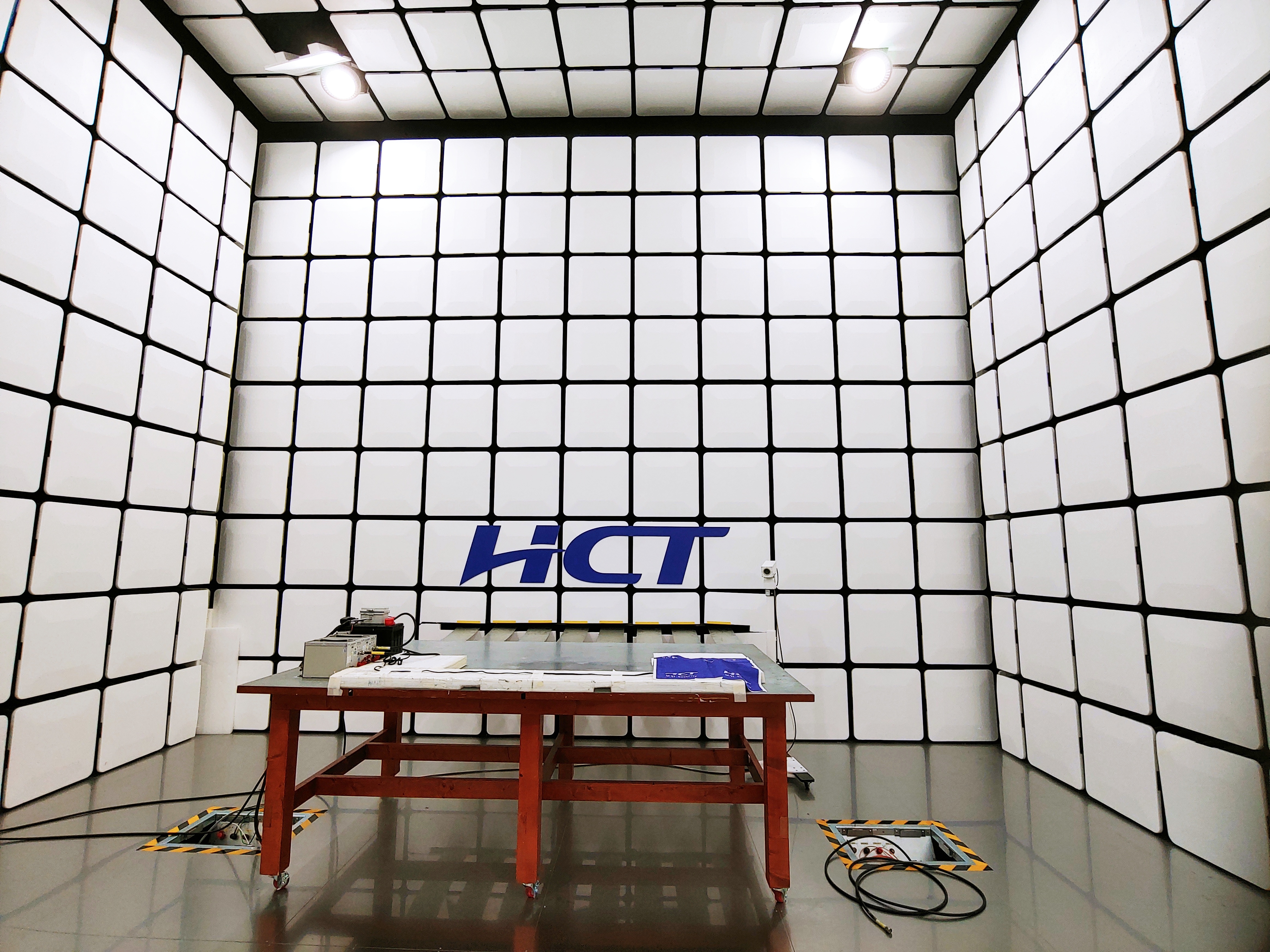
▲HCT 오토모티브 챔버
김종훈 EMC닥터스 대표는 “제품 EMC 디버깅 엔지니어가 제품 테스팅에서 불합격한 뒤에 EMC 설계를 고려하기 보단 제품 설계 단계에서부터 EMC 디자인을 고려해야 한다”고 강조했다.
EMC 설계에 필요한 판단 기준 3가지를 제시했는데 △루프 에어리어(Loop Area) 줄이기 △폴 안테나 길이(Length)를 가능하면 줄이거나 없애기 혹은 차폐하기 △공진 예측은 가능하지만 고단한 작업이기에 회피하는 방향으로 사후대처를 강조했다.
그는 “PCB 아트웍 엔지니어가 회로설계에서 라인을 어떻게 구성할지 고민하는 것이 더 효율적”이라며 “첫 번째 제품 설계 시 설계 기간을 기존 대비 2.5배를 가정하면 성능 좋은 제품이 나올 수 있다”고 말했다. EMI·EMC에서 설계 최적화가 차폐하는 것에 비해 성능이 더 좋기 때문이다.
차폐가 최종 솔루션이라고 말하는 김 대표는 “차폐의 경우 반사 및 공진과 더불어 전자파 내성(EMS)도 고려해야 하는 등 고려 사항이 많아지며 차폐는 잘 막는 기술이 아닌 어디에 구멍을 잘 뚫느냐가 핵심인 기술”이라고 언급했다. 차폐에서 길게 뚫는 것보단 작은 구멍을 여러 개 뚫는 방식이 차폐 효율이 더 좋다고도 덧붙였다.
한편, 이날 세미나에서 주최측인 HCT는 EMI·EMC 시험인증 프로세스를 공개하며 측정 및 인증에 사용되는 시험 장비 등을 관람할 수 있는 자리를 마련했다. 참관객들은 오토모티브 챔버 등을 돌아보며 관련 솔루션에 대한 설명을 들었다.
HCT는 시험인증과 교정기술 서비스를 공급하는 업체로 △오토모티브 △모바일·통신 △의료 △조선 △에너지 △기계 등 산업계 전반 다양한 분야들에서 제품 시험·측정하고 인증 및 엔지니어 컨설팅을 수행하고 있다. HCT는 최근 오토모티브 사이버 보안 강화 기조에 따른 관련 분야 확장까지 모색하며 사업 확대를 도모하고 있는 것으로 전해진다.

Comments
Related news
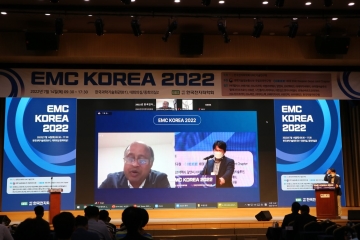
Electromagnetic Society shares the latest EMC technology in the era of digital transformation
The electrical, electronic, and broadcasting/telecommunications sectors are continuously advancing, leading to increased spectrum usage. As the electromagnetic environment becomes more complex, the impact on equipment and systems has grown, and the importance of electromagnetic compatibility (EMC) technology has increased day by day. In this context, a forum for industry-academia-research knowledge exchange has been established, where experts active in various domestic sectors are contributing to the advancement of EMC technology.
2022.07.15by 명세환 기자
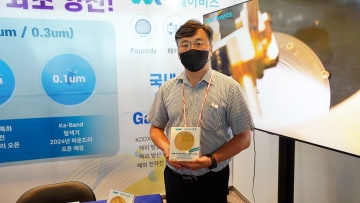
[Electromagnetic Society Summer Conference] Wayvis, “The only GaN semiconductor fab in Korea”
Gallium nitride (GaN) semiconductors, recognized as a next-generation semiconductor device, serve as a core component in low-power solutions. With high power efficiency and the capability to operate at higher frequencies, voltages, and temperatures with lower power loss, the related market is showing a trend of gradual expansion.
2022.08.23by 명세환 기자
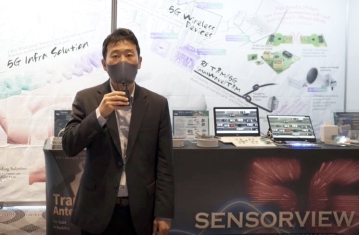
[Electromagnetic Engineering Society Summer Conference] SensorView, “Partner Enhancing RF Engineer Performance”
As the advancement of next-generation 5G and 6G communications is anticipated, market demand for electromagnetic wave solutions is growing. With communication technology-based services and products such as connected vehicles, Internet of Things (IoT), and smart factories and cities rapidly increasing, innovative startups with less than 10 years of history equipped with 5G infrastructure and wireless device solutions are entering the competition with their technological capabilities at the forefront.
2022.08.24by 명세환 기자

[e4ds Tech Day 2026 ⑨] Sim Sang-gyu, Autocrypt CTO: "In the Physical AI Era, Automotive Security Must Extend Beyond the Vehicle"
At e4ds Tech Day 2026, Sim Sang-gyu, CTO of Autocrypt, explained automotive cybersecurity strategies in the era of Physical AI and SDV (Software-Defined Vehicle). Automobiles are evolving as part of an ecosystem connected to AI, cloud, chargers, IoT, and robots, and he emphasized that the scope of security must expand beyond the vehicle interior to the entire connected environment. In particular, AI model tampering, adversarial attacks, OTA updates, and EV charger hacking were identified as major threats. He explained that response measures require zero trust, AI model integrity protection, intrusion detection, Security by Design and Default, and full lifecycle security management, and that proactive security system establishment beyond regulatory compliance is critical for securing future mobility competitiveness.
2026.10.12by 배종인 기자
Practical HIL Construction Strategy for Automotive and Off-Highway Controller Validation
As vehicle E/E architecture transitions to zonal structures and shifts to software-defined vehicles (SDV), the number of controllers (ECUs) requiring validation and software complexity are surging dramatically. Meanwhile, real vehicle testing cannot provide repeated verification under identical conditions and entails lead time and safety concerns. This white paper explains the principles of HIL (Hardware-in-the-Loop) validation and the structure of the NI platform composed of PXI, SLSC, and VeriStand, and through two actual implementation cases—Camera Record & Replay HIL for In-Cabin Monitoring Controller (ICMU) and Forklift Controller (VCU) HILS—describes how controller-level regression testing becomes possible. Additionally, it explicitly states application boundaries and limitations, such as lack of A2B support.
2026.10.12by 편집부











