


Microchip Launches PIC32CM JH MCU Based on Arm Cortex-M0+ Architecture
 Published2022.09.16 11:28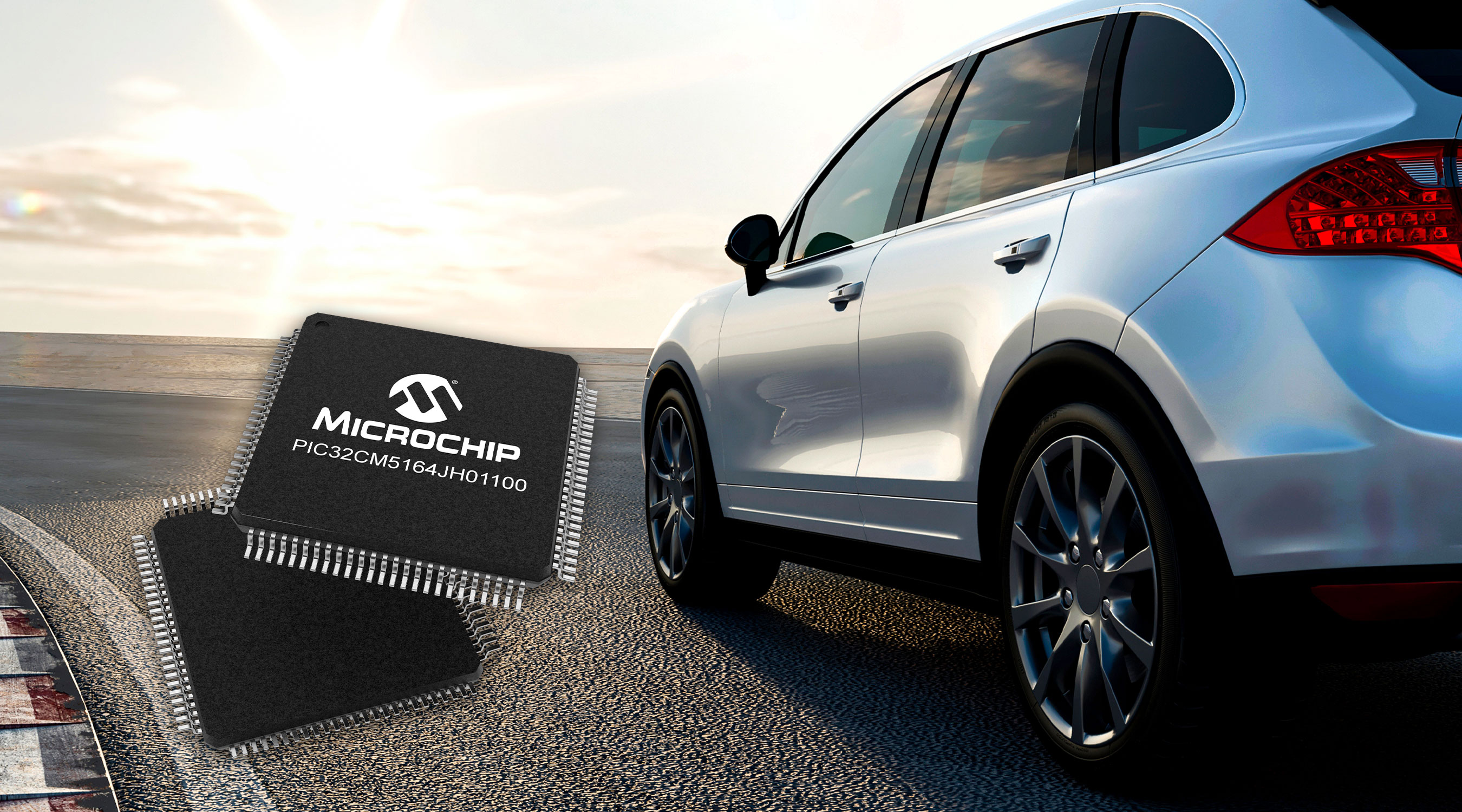
▲ Microchip PIC32CM JH Microcontroller (Photo - Microchip)
As manufacturers of various electronic systems, ranging from automobiles to home appliances, move toward automating and connecting end applications, there is a growing need for industry standards related to functional safety and cybersecurity protection to ensure the safe operation of products.
Microchip Technology (hereinafter Microchip) announced on the 16th that it has launched the PIC32CM JH microcontroller (MCU) to provide a microcontroller (MCU) solution equipped with components compliant with ISO 26262 functional safety and ISO/SAE 21434 cybersecurity engineering standards. This product is the industry's first MCU based on the Arm Cortex-M0+ architecture featuring AUTOSAR support, MBIST (Memory-Built-In Self-Test), and secure boot capabilities.
The PIC32CM JH is compatible with the open software architecture AUTOSAR, allowing vendors to retain original application code even when making lower-level hardware changes, thereby enabling easy migration between different designs. The AUTOSAR-ready feature is designed to streamline the development process and reduce total costs. When using AUTOSAR, Microchip provides the ASIL B MCAL (MCU Abstraction Layer) for functional safety applications, offering a low-level hardware interface to the MCU.
Automotive OEMs require both functional safety and cybersecurity protection for body applications, such as Advanced Driver Assistance Systems (ADAS), as well as many in-vehicle applications like touch buttons and touch wheels, door controls, and console controls. When combined with Microchip's Trust Anchor TA100 CryptoAutomotive security integrated circuit (IC), the PIC32CM JH complies with ISO/SAE 21434, the latest automotive cybersecurity standard. The TA100 eliminates potential backdoors associated with software vulnerabilities by utilizing ultra-secure hardware-based cryptographic key storage and cryptographic countermeasures.
Secure Boot is part of the hardware that authenticates code to verify its validity and prevents malicious code from being loaded into the MCU. Other hardware features included in the PIC32CM JH MCU include Error Code Correction (ECC) via Fault Injection, Loopback for communication interfaces, System Memory Protection, and Memory-Built-In Self-Test (MBIST), all of which are safety mechanisms used to ensure compliance with ISO 26262, IEC 60730, and IEC 60730 standards.
MBIST is an industry-standard method for testing embedded memory that verifies proper operation by rapidly testing the integrity of Static Random-Access Memory (SRAM) before code execution to prevent errors. PIC32CM JH provides developers with functional safety data such as safety manuals, FMEDA (Failure Mode Effects and Diagnostic Analysis), and diagnostic codes targeting ISO 26262 ASIL B (Vehicle Safety Integrity Level), and supports their implementation.
In addition, the PIC32CM JH features advanced touch capabilities with Driven Shield Plus, providing excellent noise and water resistance. This feature is essential for consumer electronics, industrial, and automotive applications where touch functions must operate even in various harsh environments.
"With the PIC32CM JH MCU, Microchip aims to meet the growing demand for MCU solutions with functional safety and cybersecurity protections, which are particularly critical in the automotive industry," said Rod Drake, Vice President of Microchip Technology's 32-bit MCU Business Unit. "OEMs and other manufacturers can now meet compliance requirements that were previously only possible with high-end MCUs using entry-level Arm® Cortex®-M0+ based MCUs."

Comments
Related news
Microchip, KoD Controller Touchscreen Design Innovation
Microchip Technology (Asia President and Korea Representative Han Byung-don) is making a full-scale push to expand design flexibility for displays and reduce system costs through its new Knob on Display (KoD™) touch controller products.
2022.07.01by 배종인 기자
Microchip Launches SAM9X60D1G-SOM for MPU Transitions
As the embedded market continues to grow and evolve, developers are increasingly recognizing the need to transition from microcontrollers (MCUs) to microprocessors (MPUs) in order to optimize product development and handle growing processing requirements.
2022.08.05by 명세환 기자
.jpg)
Microchip Launches Radiation-Tolerant FPGA for Aerospace Applications
Microchip Technology (Asia General Manager and Korea Representative Han Byeong-don) has launched a new radiation-tolerant FPGA suitable for aerospace applications, contributing to the development of aerospace systems.
2022.08.18by 배종인 기자

Intel Unveils Next-Generation 'Core Ultra Series 3' and vPro Platform for Enterprise PCs
Intel has officially unveiled the "Intel Core Ultra Series 3" for next-generation enterprise PCs and the latest vPro platform, addressing a wide range of demands from enterprise notebooks to high-performance workstations.
2026.03.26by 배종인 기자

ROHM Launches ESD Protection Diode Compatible with High-Speed Interfaces of 10Gbps or Higher
Semiconductor specialist ROHM has developed the 'RESDxVx series' of ESD (electrostatic discharge) protection diodes capable of responding to next-generation high-speed data communication environments exceeding 10Gbps, simultaneously enhancing both signal quality maintenance required in high-speed interfaces and IC protection performance.
2026.03.26by 배종인 기자











