



Skychips CEO Lee Kang-yoon: "Implementing AI Technology in RFFE Adaptive Matching"
 Published2022.10.12 09:03
5G 무선 통신칩과 AI 솔루션 웨비나 18일 공개
[편집자주] 통신 환경에서 5G 전환기를 맞이하며 밀리미터파(mmWave) 대역의 활용이 시작되고 있다. 자율주행 및 커넥티드카, 각종 스마트 디바이스, IoT 등 5G 통신을 탑재한 제품들이 속속 등장하는 가운데 밀리미터파는 직진성이 강하고 장애물로 인한 회절, 투과 시 전파손실이 커 경로손실(Path Loss)을 최소화하는 것이 고려돼야 한다. 이에 AI를 활용해 통신의 효율성을 높이는 솔루션이 개발되고 있으며 그 중 뉴로모픽 AI기술을 적용한 저전력 솔루션을 통해 효율을 극대화할 수 있다.
이에 스카이칩스 이강윤 대표를 만나 5G 무선 통신칩과 AI 솔루션에 대한 이야기를 들어봤다.

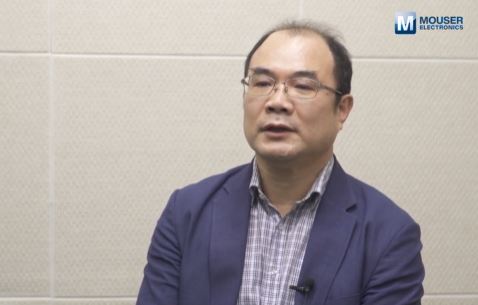
▲이강윤 스카이칩스 대표
스카이칩스는 2019년 성균관대 집적회로 연구실 기반으로 설립된 팹리스 기업이다. △Power IC △RF IC △Analog IC와 저전력 AI IC 기술을 접목하는 지능형 IP와 IC를 설계 및 판매하는 것을 목표로 하고 있다.
현재 90여명의 임직원이 재직하고 있으며 제품 기획, 설계 및 양산을 위한 조직까지 갖춘 가운데 제품 개발에 매진하고 있다.
주요 제품으로는 △저전력 RF 송수신기 △원거리·근거리 무선충전 IC △에너지 하베스팅 IC 등이 있으며, 고성능 Analog·RF·Power IP도 개발해 판매하고 있다.
■ 뉴로모픽 반도체는 무엇인가
뉴로모픽 반도체 기술은 인간 뇌를 모방하는 인공지능 하드웨어로 소자·회로·아키텍처·알고리즘이 하나로 합쳐진 형태이다. Processing-In-Memory(PIM) 기술이라고도 한다.
인간 뇌의 뉴런과 시냅스 간 네트워트와 유사한 뉴럴 네트워크를 아날로그 또는 디지털 방식으로 구현해 병렬로 데이터를 처리하는 동시에 전류 소모를 최소화할 수 있는 기술입니다.
아날로그 PIM 기술은 CMOS 기반의 SRAM을 활용해 덧셈과 곱셈 등을 아날로그적으로 수행할 수 있으며 적은 전력만으로 많은 양의 데이터 처리가 가능하다.
■ AI가 적용된 5G 통신 기술 동향은 어떤가
5G 통신 기술 중에서도 특히 30기가헤르츠(GHz) 대역의 캐리어 주파수를 사용하는 밀리미터파(mmWave) 통신 방식에서 송신기와 수신기 사이의 거리에 따른 경로손실(Path Loss)을 보상하기 위해서 MIMO 기반의 빔포밍(Beamforming)기술을 사용하고 있다.
여기에 AI기술이 적용될 수 있으며, 5G 통신의 넓은 주파수 대역폭을 지원하기 위한 RF Front-End(RFFE)의 Adaptive Matching에도 AI 기술이 적용 가능하다.
■ 마우저와 함께 진행하는 ‘5G 무선 통신칩과 AI솔루션’에서 다루게 될 핵심은 무엇인가
밀리미터파 5G 통신에서는 송신기와 수신기 사이의 거리 및 위치가 동적으로 변화하며 수신기에 도달하는 신호를 키우기 위해서 MIMO 기반의 빔포밍 기술이 널리 사용되고 있다.
송신기와 수신기 사이의 위치와 거리에 따른 자유도를 확보하기 위해서 빠른 시간 내에 수신기 위치 기반의 빔포밍을 구현할 필요가 있으며 AI 기술을 적용한 학습을 통해 가능하다.
SRAM 기반의 뉴로모픽 기술을 적용한 저전력 AI 기반의 빔포밍과 RFFE의 Adaptive Matching을 구현할 수 있는 것이 핵심적인 기술이다.
감사합니다.
한편, 오는 18일 마우저에서 후원하는 기술웨비나에서 이강윤 스카이칩스 대표가 ‘5G 무선 통신칩과 AI 솔루션’을 주제로 웨비나를 발표한다. 저전력으로 AI를 구현할 수 있는 뉴로모픽 회로의 개념과 5G 통신 시스템으로의 적용 가능성을 공유하는 자리가 될 것으로 기대되는 이번 웨비나는 e4ds EEWebinar 플랫폼에서 확인할 수 있다.

Comments
Related news
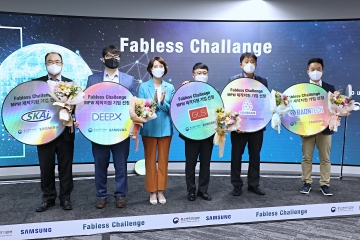
Fabless Special (1) - Fabless Challenge 5 Companies, 5 Colors
[Editor's Note] Domestic fabless companies are striving to reinvent themselves as global innovation leaders amid the barren system semiconductor environment where they hold just 1% of the global market share. Samsung Electronics, which already records over 40% market share in the memory sector, has laid the groundwork for growth by entering the foundry ecosystem. Against this backdrop, domestic fabless companies with the potential to produce tens of thousands of varieties of system semiconductors are dreaming of innovation based on their own semiconductor IP.
2022.08.02by 명세환 기자
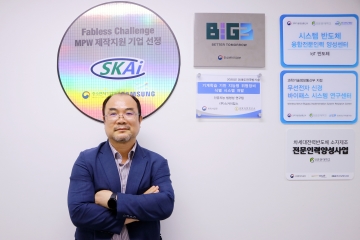
Fabless Special (2) - Lee Kang-yoon, CEO of Skychips: "Planning first, developing second, and considering customer needs are essential."
[Editor's Note] Domestic fabless companies are striving hard to blossom as global innovation enterprises amid the barren system semiconductor environment where they hold merely 1% of the global market share. In July, the Ministry of SMEs and Startups selected five innovative fabless companies through a fabless challenge competition. We met with the fabless companies selected in the challenge competition, which will launch new products through Samsung Electronics Foundry, and heard various stories about their solutions and future plans.
2022.09.06by 명세환 기자
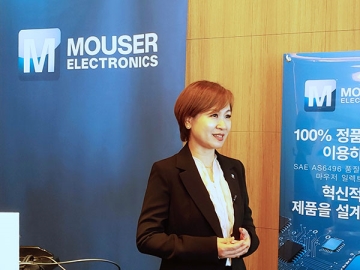
[Interview] Depni Tien, Vice President of Mauser - “Providing Engineer Support Tools… Efficiency and Convenience↑”
An interview with Daphne Tien, Vice President of Marketing and Business Development for Mouser Electronics APAC, provided insights into Mouser's participation in KES 2022, an introduction to Mouser's website service support tools, and the company's future strategy and aspirations.
2022.10.07by 김예지 기자

[e4ds Tech Day 2026 ⑨] Sim Sang-gyu, Autocrypt CTO: "In the Physical AI Era, Automotive Security Must Extend Beyond the Vehicle"
At e4ds Tech Day 2026, Sim Sang-gyu, CTO of Autocrypt, explained automotive cybersecurity strategies in the era of Physical AI and SDV (Software-Defined Vehicle). Automobiles are evolving as part of an ecosystem connected to AI, cloud, chargers, IoT, and robots, and he emphasized that the scope of security must expand beyond the vehicle interior to the entire connected environment. In particular, AI model tampering, adversarial attacks, OTA updates, and EV charger hacking were identified as major threats. He explained that response measures require zero trust, AI model integrity protection, intrusion detection, Security by Design and Default, and full lifecycle security management, and that proactive security system establishment beyond regulatory compliance is critical for securing future mobility competitiveness.
2026.10.12by 배종인 기자
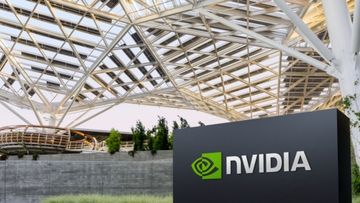
NVIDIA to Invest $1 Billion in U.S. Science Over Next Five Years
NVIDIA has announced plans to invest $1 billion over the next five years to strengthen U.S. scientific and technological competitiveness. The company will enhance cutting-edge artificial intelligence research and development capabilities in key areas including quantum computing, healthcare, and energy security, while expanding support for higher education research institutions and cloud service providers. NVIDIA is participating as a major industry partner in the White House Office of Science and Technology Policy's Genesis Mission, and is promoting supercomputer construction in collaboration with national laboratories including Argonne and Los Alamos.
2026.10.12by 배종인 기자











