


5G/6G communications and PIM have high potential for convergence.
 Published2022.10.18 16:30
.jpg)
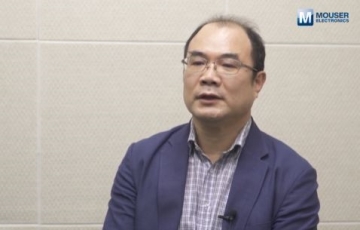
▲마우저 코리아 후원 기술 웨비나 티저 영상 속 이강윤 스카이칩스 대표
이강윤 스카이칩스 대표, “어댑티브 빔포밍 mmWave 경로손실 보상“
5G·6G 차세대 통신 기술 활용이 확대되고 있는 가운데 직진성이 큰 밀리미터파(mmWave) 특성으로 인해 발생하게 되는 경로손실(Path Loss)을 보상하는 지능형 어댑티브 빔포밍 기술 개념이 제시돼 주목을 받았다.
마우저 코리아에서 후원하는 기술 웨비나가 18일 e4ds EEwebinar 플랫폼에서 온라인으로 진행됐다. IT업계 엔지니어들을 돕기 위해 마련된 이번 웨비나에서는 스카이칩스 이강윤 대표가 ‘5G 무선통신칩과 AI 솔루션’을 주제로 발표했다.
스카이칩스(SKAi Chips)는 Power IC·RF IC·아날로그-디지털 혼합 신호 등에서 반도체 설계 및 개발솔루션을 보유한 팹리스 기업으로 AI 뉴로모픽 기술을 적용해 저전력 RF 칩 개발에 집중하고 있다.
이날 웨비나에서도 이강윤 대표는 밀리미터파 대역에서 활용이 필요한 뉴로모픽 기반 어댑티브 빔포밍 기술에 대해서 집중적으로 다뤘다.
최근 통신 환경의 변화로 데이터 트래픽이 전세계 평균 연 47%로 급격히 증가하는 추세 속에서 기가비트급의 높은 전송속도, 1ms 이하 낮은 지연시간(Latancy)과 접속 안정성 등이 핵심 요소로 대두되고 있다.
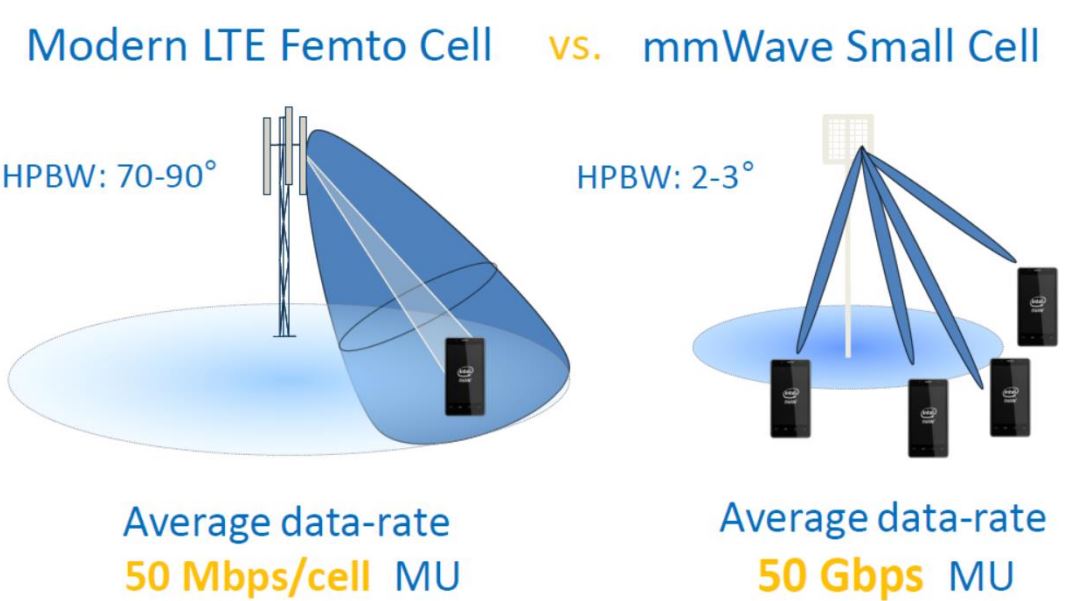
▲LTE 펨토셀과 밀리미터파 스몰셀 비교 (자료-마우저 기술 웨비나 영상 캡처)
밀리미터파는 커버리지가 좁기 때문에 스몰셀 기지국으로 커버리지 확장 및 통신 품질 향상 등을 도모해야 한다. 4G(LTE)부터 데이터 레이트가 높아지며 MIMO(Multiple-Input and Multiple-Output, 다중 안테나 기술)와 빔포밍(Beamforming) 적용되기 시작했는데 주파수 대역이 높아질수록 발생하는 경로손실(Path Loss)에 대응하기 위한 MIMO 기술은 필수적이라고 할 수 있다.
이 대표는 밀리미터파 챌린지로 안테나 기술이 중요하다고 강조하며 “안테나 어레이(Array)에서 안테나 개수를 충분히 늘려 송신부 파워를 키워야 한다”고 설명했다. 안테나에서 송신할 수 있는 파워레벨은 제한되기 때문에 여러 개의 안테나를 써서 이러한 한계를 극복할 수 있다는 것이다.
또한 사용자 디바이스 및 커넥티드카 등 타깃이 이동하는 환경에서 스캐닝 및 무빙 타깃 능력이 필요하며 장애물에 의한 블로킹 등을 고려해야 한다. 통신 빔 조향에서 4G는 조향 각도가 70~90도로 비교적 넓으며 주변 전파성이 높다. 이에 반해 밀리미터파는 2~3도로 조향 각도가 좁지만 평균 데이터 레이트가 50Gbps에 달해 50mbps인 4G 속도와 비교하면 굉장한 차이를 보인다.
이에 이 대표는 “밀리미터파 스몰셀은 원하는 디바이스에 빔을 정확히 보내는 것이 중요하다”며 어댑티브(Adaptive) 빔포밍 기술 개념을 제시했다. 빔포밍 기술에 AI기술을 적용한 것으로 사용자 디바이스 위치가 파악되자마자 빠르게 연결 가능하다고 설명했다.
그는 핵심적인 기술 중 하나로 웨이브프론트(Wavefront)에서 오는 신호의 거리 및 시간 차이를 보상해서 하나로 합쳐지게 하는 것이 중요하다고 언급했다. 더불어 인접한 안테나끼리도 타임 딜레이가 발생해 이를 보상하는 것이 수반돼야 한다고 설명했다.
빔포밍에 적용된 AI는 뉴로모픽 기술을 적용시켜 저전력으로 연산을 수행할 수 있도록 설계했다. 더불어 아날로그 프로세서에서는 실시간 변화에 유연성이 부족했지만 무선통신칩에 AI빔포밍 기술을 적용함으로써 실시간 변화에 유연성을 극대화하는 특성을 갖출 수 있다.
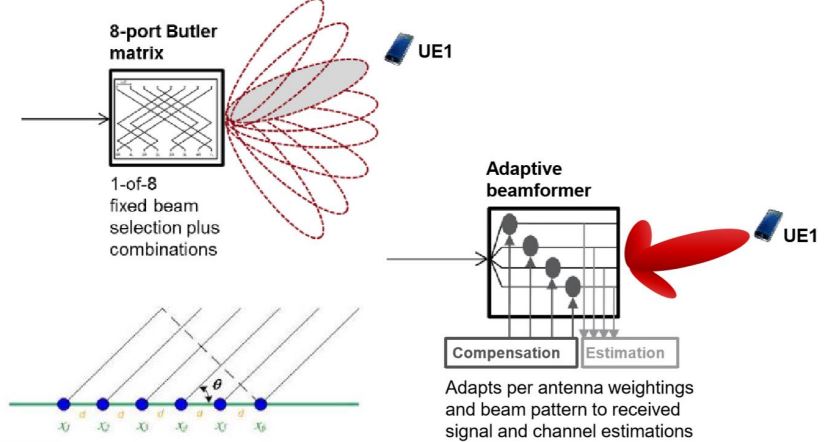
▲빔포밍과 빔스티어링(Beam Steering) 비교. AI 기술을 통해 적응형 빔포머 개발이 가능하다. (자료-마우저 기술 웨비나 영상 캡처)
AI가 적용될 수 있는 분야가 다양하다는 이강윤 대표는 정부가 PIM(Process-In-Memory) 기술에 투자를 많이 하고 있으며 5G 통신과 PIM 기술이 함께 융합할 수 있는 가능성이 높다고 강조했다.
5G 무선통신 시장은 모바일, 오토모티브뿐 아니라 헬스케어, IoT 등에서 높은 미래 성장성과 활용성이 기대되는 분야로 밀리미터파 특성에서 단점은 커버하고 장점은 극대화하는 기술 개발이 필요할 것으로 보인다.
한편, e4ds는 엔지니어 및 개발자들의 역량과 IT산업 발전에 기여하기 위해 다양하고 심도 있는 기술 웨비나 마련에 힘쓰고 있다.

Comments
Related news
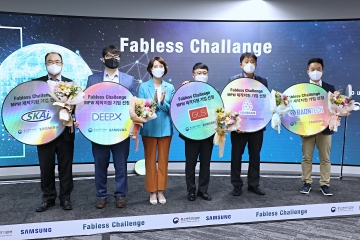
Fabless Special (1) - Fabless Challenge 5 Companies, 5 Colors
[Editor's Note] Domestic fabless companies are striving to reinvent themselves as global innovation leaders amid the barren system semiconductor environment where they hold just 1% of the global market share. Samsung Electronics, which already records over 40% market share in the memory sector, has laid the groundwork for growth by entering the foundry ecosystem. Against this backdrop, domestic fabless companies with the potential to produce tens of thousands of varieties of system semiconductors are dreaming of innovation based on their own semiconductor IP.
2022.08.02by 명세환 기자
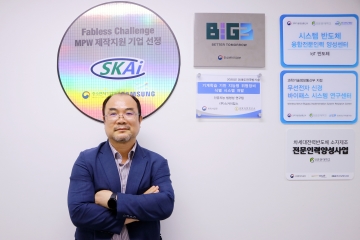
Fabless Special (2) - Lee Kang-yoon, CEO of Skychips: "Planning first, developing second, and considering customer needs are essential."
[Editor's Note] Domestic fabless companies are striving hard to blossom as global innovation enterprises amid the barren system semiconductor environment where they hold merely 1% of the global market share. In July, the Ministry of SMEs and Startups selected five innovative fabless companies through a fabless challenge competition. We met with the fabless companies selected in the challenge competition, which will launch new products through Samsung Electronics Foundry, and heard various stories about their solutions and future plans.
2022.09.06by 명세환 기자
Skychips CEO Lee Kang-yoon: "Implementing AI Technology in RFFE Adaptive Matching"
[Editor's Note] As the telecommunications environment undergoes a transition to 5G, the utilization of millimeter-wave (mmWave) bands is beginning to take hold. With products equipped with 5G communications—including autonomous vehicles and connected cars, various smart devices, and IoT applications—emerging in succession, millimeter-wave signals exhibit strong directivity and incur significant radio propagation loss during diffraction and penetration through obstacles, necessitating consideration of path loss minimization. Accordingly, solutions leveraging AI to enhance communication efficiency are being developed, and efficiency can be maximized through low-power solutions employing neuromorphic AI technology.
2022.10.12by 명세환 기자
Camera for Both Humans and Machines: ST BrightSense 5MP Dual Shutter Image Sensor
Video consumed by humans and imagery analyzed by machines impose different requirements on the sensor in terms of shutter method and wavelength band. Until now, sensors had to be separated or supplemented with companion chips and high-performance processors, and this cost and complexity became a bottleneck in vision system design. The ST BrightSense next-generation 5MP image sensor (VD5943, VD1943, VB5943, VB1943) with 2.25 µm pixels supports both global and rolling shutters, and through on-chip staggered HDR (up to 100 dB), on-chip RGB-IR separation and 5MP NIR smart upscaling, and frame-by-frame context switching, absorbs both requirements internally at the sensor level. This white paper describes the rationale, choices, trade-offs, and results of each design decision based on presentation slides and technical Q&A, and specifies application boundaries. The product is scheduled for mass production in February 2026, and evaluation and sampling are currently available.
2026.10.13by 편집부

AI-based Universal Robots Automation Solution
In manufacturing environments where declining labor populations overlap with frequent production item changes, existing programming-based robot automation requires reconfiguration from weeks to several months each time product models change. This white paper takes this flexibility gap as its starting point and synthesizes, based on webinar presentation materials and technical Q&A, what collaborative robots gain and forfeit compared to industrial robots, why process automation is transitioning from rule-based to learning-based (4th generation) approaches, and how Universal Robots' hardware, software, and partner ecosystem implement this. Additionally, it clarifies the application boundaries and limitations, including that AI Accelerator is still at the development kit stage.
2026.10.13by 편집부











