



[Interview] Park Ki-yoon, Infineon Manager: "IVI and HMI Performance Improvements, Graphics MCUs Increasing Importance"
 Published2022.11.03 09:19
그래픽 엔진 내장 MCU 시스템, SoC 대비 가격 경쟁력 우위
인피니언 T2G, 그래픽 엔진·VRAM·비디오 입출력 성능 향상
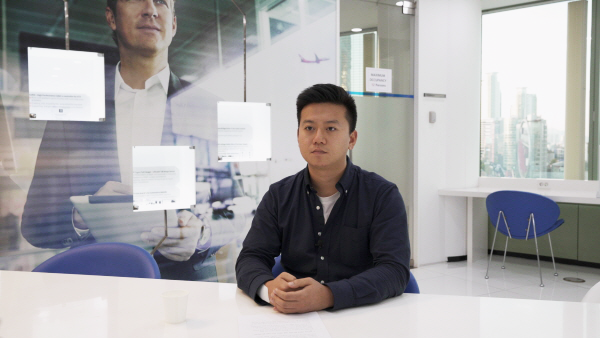
▲ 인피니언 테크놀로지스 박기윤 매니저
■ 업계에서 주목하고 있는 미래 자동차 트렌드는 무엇인가
미래 자동차의 큰 트렌드 중 하나는 ‘디지털화’다. 차량 내 많은 부품들이 전장화되어 기계적인 부품의 집합체에서 다양한 전자 장비 부품들의 집합으로 변화하고 있다.
이제 자동차를 ‘Computer On Wheels’라고 부를 정도로 자동차는 점차 고성능 컴퓨터로 진화하고 있다. 차량의 동력원이 엔진에서 전기 모터로 바뀌었고, 브레이크 및 섀시 등에도 전자 장비가 적용되었다.
IVI(In-Vehicle Infotainment)를 포함한 HMI(Human Machine Interface)도 마찬가지다. 단순 버튼으로 조작하던 장치들이 디스플레이에 그래픽으로 표현되고 터치 스크린으로 조작이 가능하다.
바늘과 7-segment LED로 기본적인 정보만 표시하던 계기판이 디스플레이에 그래픽으로 구현되어 시각적으로 더 다양한 정보를 보다 역동적으로 표현한다. 이와 같이 차량 내에 더욱 많은 디스플레이와 그래픽들이 늘어날 것으로 전망된다.
■ 인피니언은 트렌드에 맞춰 어떠한 기술을 개발하고 있는지 자세히 설명 부탁드린다
인피니언에는 차량 내 늘어나는 디스플레이에 그래픽을 표현하기 위한 제품인 TRAVEO™ T2G Instrument Cluster가 있다.
MCU 제품 내에 그래픽 엔진을 탑재하여 원하는 그래픽 데이터를 처리하고 디스플레이에 표현한다.
T1G(Traveo™ I, 1st Generation)에 비해 T2G(Traveo™ II , 2nd Generation)은 코어뿐 아니라 그래픽 엔진, 비디오 램(VRAM), 비디오 입출력, 외부 메모리 인터페이스 등 모든 면에서 성능이 향상되었다.
디지털 방식 계기판, 헤드업 디스플레이(HUD), 공조 제어 장치, 디지털 사이드 미러, 매트릭스 LED 헤드램프(Matrix LED Headlamp) 등의 애플리케이션에 적용할 수 있는 제품이다.
■ 인피니언의 그래픽 MCU의 장점은 무엇인가
그래픽 엔진이 내장된 MCU를 활용하여 시스템을 구성하게 된다면 SoC를 활용하여 만든 시스템 대비 BOM 측면에서 가격 경쟁력을 가질 수 있다.
또한 좀 더 작은 공간에서 설계가 가능하며, 빠른 부팅 시간을 지원할 수 있다.
빠른 부팅이 요구되고 작은 사이즈의 보드에서 설계가 필요한 그래픽 애플리케이션에는 TRAVEO™ T2G Instrument Cluster 제품이 적합한 솔루션이 될 것이라 생각한다.
■ HUD, 공조 제어 장치 등에 인피니언의 TRAVEO™ T2G Instrument Cluster 제품이 어떻게 활용되는지 설명 부탁드린다
그래픽을 구성하기 위한 아이콘, 숫자, 화살표 등의 그림 파일을 외부 혹은 내부 메모리에 저장한다.
저장된 데이터와 그래픽 엔진으로 만들어낼 수 있는 그래픽을 조합하여 표현하고자 하는 화면 층(graphic layer)을 구성하고, 각 층을 조합하여 하나의 화면을 만든 뒤에 비디오 입출력 인터페이스(RGB, FPD-Link)를 통해 출력한다.
출력된 그래픽 데이터는 디스플레이에 표현되어 HUD, 공조 제어 장치 등의 다양한 애플리케이션으로 응용할 수 있다.
■ 마지막으로 독자들에게 한 말씀 부탁드린다
디스플레이 위의 그래픽 표현뿐 아니라 프로젝터와 같은 원리로 활용되는 매트릭스 LED 헤드램프와 같이 그래픽을 활용한 다양한 애플리케이션에 TRAVEO™ 제품을 적용할 수 있다.
향후에 그래픽 애플리케이션을 개발하실 때 도움이 되기를 바라며 TRAVEO™ T2G Instrument Cluster에 많은 관심 부탁드린다.
Comments
Related news
[Technical Contribution] Infineon Medic Urban & Elvir Kahrimanovic - High-Current Design Using Parallel MOSFETs for Motor Drive Applications
We have arranged a session to hear from Infineon's Medic Urban (Senior Application Engineer in Motor Drives) and Elvir Kahrimanovic (Principal Application Engineer in Motor Drives) about the importance of matching VGS(th) among parallel MOSFETs and the impact of transconductance (gfs) on current sharing.
2022.10.20by 명세환 기자
.jpg)
Infineon Supports Supermicro Data Center Decarbonization
With data volumes expected to increase exponentially through various digital applications such as video streaming, virtual conferences, cloud services, and cryptocurrencies, Infineon Technologies (hereinafter referred to as Infineon) is taking the lead in decarbonizing data centers.
2022.10.31by 성유창 기자
.jpg)
Infineon Leads the Way in Improving Reliability and Performance for Low-to-Mid Power Drive Applications
Infineon Technologies has unveiled a product series that achieves best-in-class switching losses and improves energy efficiency in applications operating at high switching frequencies.
2022.11.01by 성유창 기자
[e4ds Tech Day 2026 ⑨] Sim Sang-gyu, Autocrypt CTO: "In the Physical AI Era, Automotive Security Must Extend Beyond the Vehicle"
At e4ds Tech Day 2026, Sim Sang-gyu, CTO of Autocrypt, explained automotive cybersecurity strategies in the era of Physical AI and SDV (Software-Defined Vehicle). Automobiles are evolving as part of an ecosystem connected to AI, cloud, chargers, IoT, and robots, and he emphasized that the scope of security must expand beyond the vehicle interior to the entire connected environment. In particular, AI model tampering, adversarial attacks, OTA updates, and EV charger hacking were identified as major threats. He explained that response measures require zero trust, AI model integrity protection, intrusion detection, Security by Design and Default, and full lifecycle security management, and that proactive security system establishment beyond regulatory compliance is critical for securing future mobility competitiveness.
2026.10.12by 배종인 기자

Practical HIL Construction Strategy for Automotive and Off-Highway Controller Validation
As vehicle E/E architecture transitions to zonal structures and shifts to software-defined vehicles (SDV), the number of controllers (ECUs) requiring validation and software complexity are surging dramatically. Meanwhile, real vehicle testing cannot provide repeated verification under identical conditions and entails lead time and safety concerns. This white paper explains the principles of HIL (Hardware-in-the-Loop) validation and the structure of the NI platform composed of PXI, SLSC, and VeriStand, and through two actual implementation cases—Camera Record & Replay HIL for In-Cabin Monitoring Controller (ICMU) and Forklift Controller (VCU) HILS—describes how controller-level regression testing becomes possible. Additionally, it explicitly states application boundaries and limitations, such as lack of A2B support.
2026.10.12by 편집부











