


ASML: "Korean Supply Chain Stabilization Begins in Full Swing"
 Published2022.11.15 15:21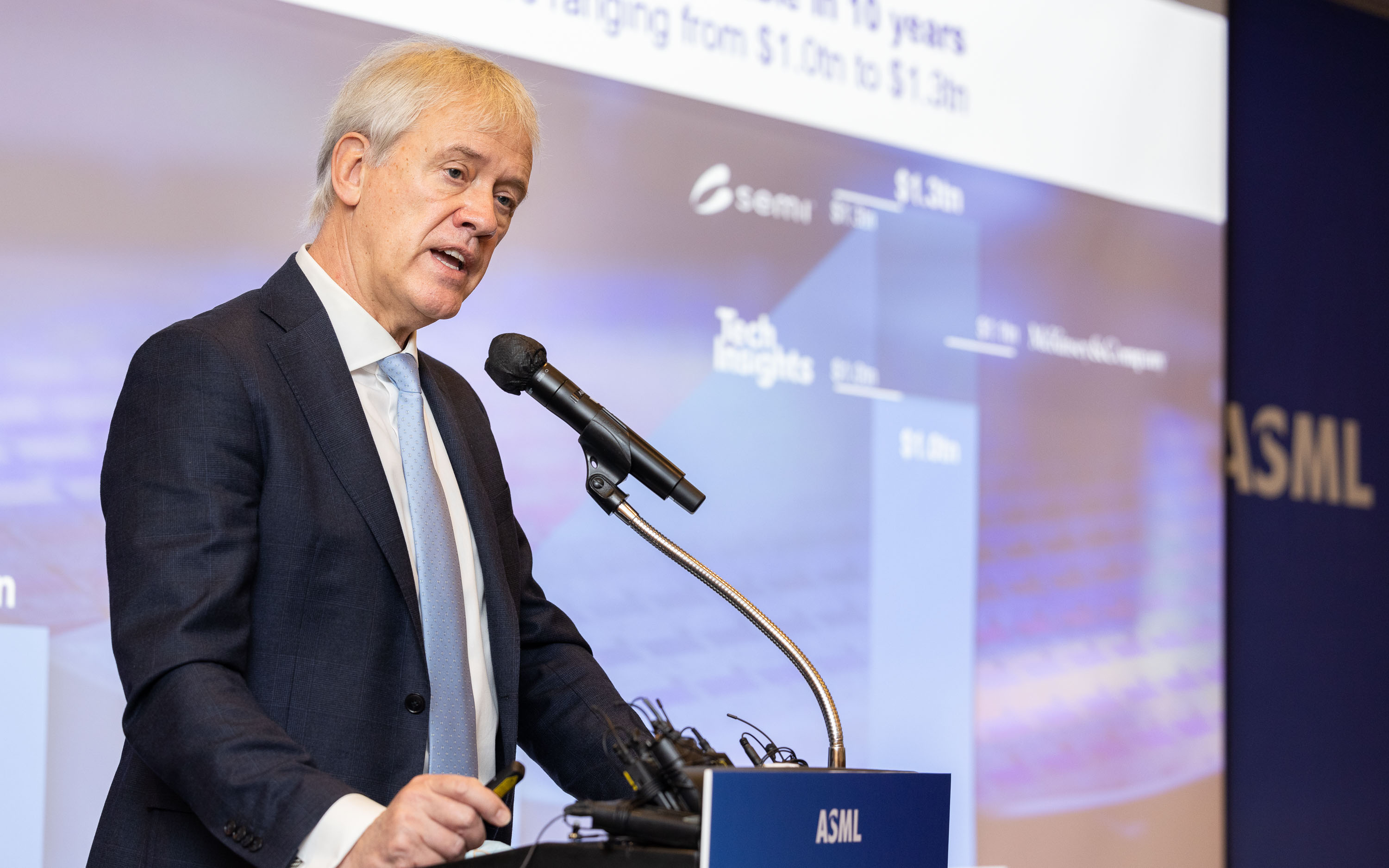
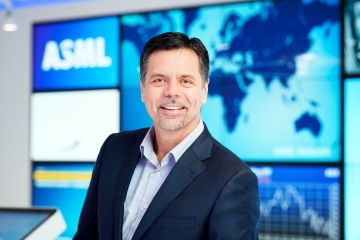
▲Peter Wennink, CEO of ASML (Photo: ASML)
Establishing a domestic campus: "A starting point for expanding partnerships and establishing a manufacturing base."
ASML, the world's largest exposure equipment company and known as the "Super Eul" in the semiconductor industry, has taken its first step toward creating a supply chain ecosystem by making full-scale investments in the domestic semiconductor industry.
Ahead of the groundbreaking ceremony for its new campus in Hwaseong, Gyeonggi Province on the 15th, ASML held a press conference at the InterContinental Seoul Hotel in Samseong-dong, Seoul, and unveiled a blueprint for the establishment and completion of the new Hwaseong campus and its contribution to the development of the domestic semiconductor industry.
Previously, ASML signed an MOU with Hwaseong City and Gyeonggi Province in November 2021 and announced an investment plan worth approximately KRW 240 billion for the completion of the Hwaseong New Campus. The new campus will be built on the land formerly occupied by the Dongtan 2 New Town Urban Support Facility, and will include facilities such as the new ASML Korea building, a remanufacturing center (Local Repair Center (LRC), a global training center, and an experience center).
ASML announced that it plans to hire more than 1,400 new employees over the next 10 years through the establishment of this remanufacturing center, and expects that it will contribute to a quick response and stable supply chain in maintaining equipment for customers such as Samsung Electronics and SK Hynix.
The remanufacturing center is expected to shorten equipment repair times and reduce costs by utilizing domestically produced repair parts. Furthermore, parts repair and remanufacturing will reduce waste and logistics processes, contributing to cost savings and environmental, social, and governance (ESG) management by reducing carbon emissions and waste.
ASML also pledged to strengthen its partnerships with domestic partners. It announced plans to increase outsourcing from domestic companies from 10% to up to 50%, and anticipated indirect employment benefits through shared growth with small and medium-sized enterprises (SMEs).
Peter Wennink, CEO of ASML, who attended the press conference that day, said, “In the short term, the semiconductor industry will face difficulties as it faces an economic downturn in 2023,” but predicted, “However, the use of semiconductors in various applications will become a driving force for growth, and the semiconductor industry will achieve an average annual growth of 9% over the next 10 years.”
With the growing demand for semiconductors necessitating increased wafer production, ASML announced plans to expand its production capacity. Regarding the remanufacturing center, CEO Peter Wennink expressed hope for synergy with numerous Korean partners, but also stated that more partners are essential. ASML projected sales would double over the next 10 years, or even triple in a high-growth scenario. The company added that it would expand its partner network to accommodate this growth.
When asked if they plan to build production facilities beyond the remanufacturing center, ASML stated, "Any country needs to first establish a remanufacturing center and R&D center, then build expertise over the next five to ten years before they can expand into a manufacturing base." At this point, the construction of the Hwaseong campus in Korea marks the starting point for establishing a manufacturing infrastructure.
Meanwhile, ASML's Hwaseong Campus announced that it will establish an experience center along with a global training center for EUV and DUV engineer education, where it will operate exhibitions, science camps, recruitment events, and industry-academia collaboration programs for elementary, middle, high school, and college students in Korea that will provide a glimpse into semiconductor manufacturing processes and ASML's technological history.
Key Points from ASML CEO Peter Wennink's Q&A at the Press Conference
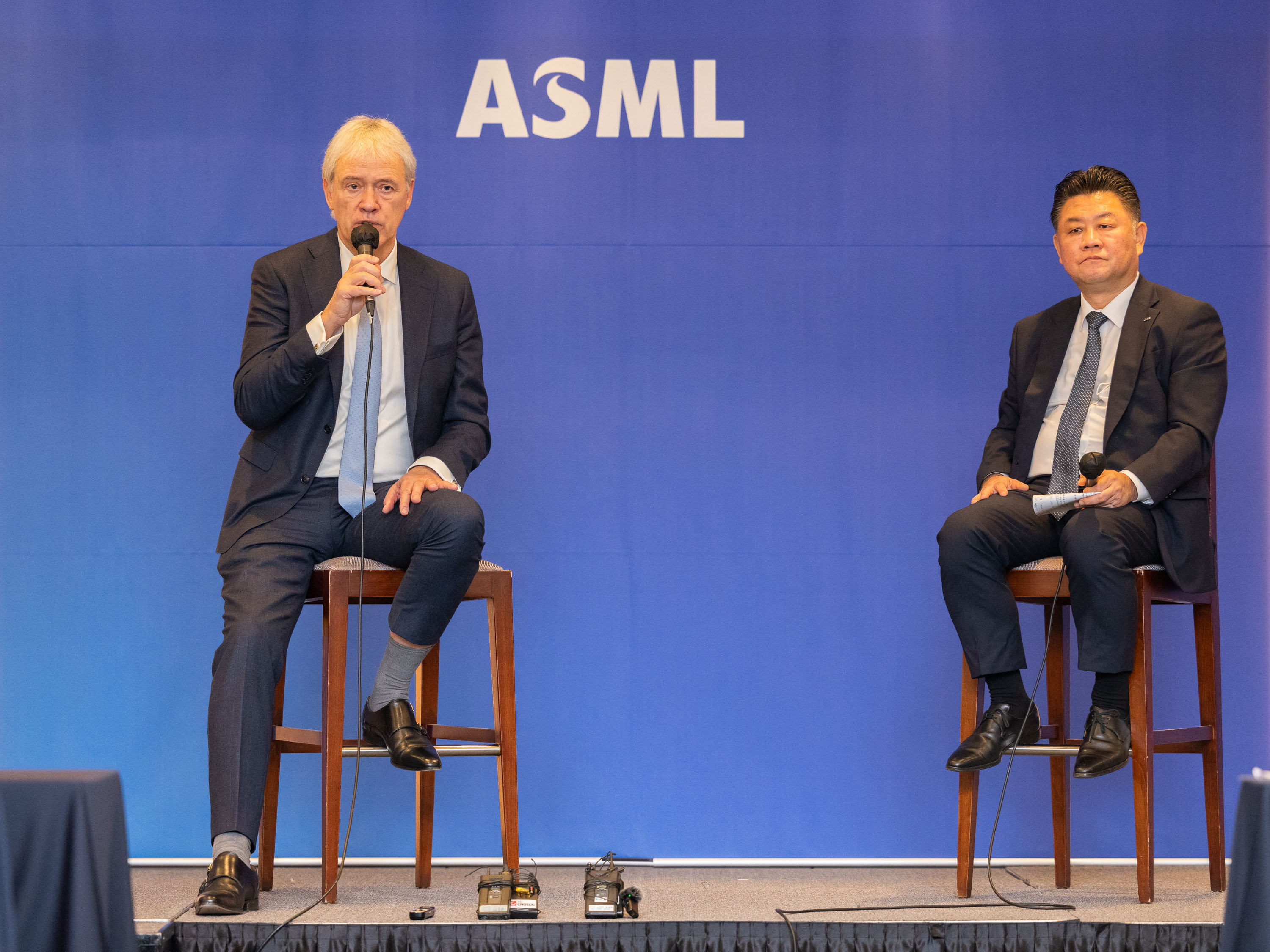
▲ASML CEO Peter Wennink (left) and ASML Korea CEO Lee Woo-kyung (right) are seen holding a Q&A session (Photo: ASML)
■ The reason for building a new campus in Hwaseong-si, Gyeonggi-do
ASML established its Korean branch in Hwaseong in 1996. Because it is so close to its customers, it has consistently felt the need for expansion. In this process, we received a lot of help from the Gyeonggi Province Governor in selecting cities suitable for growth.
■ The domestic investment of 240 billion won seems very small, equivalent to the price of a single EUV device. What are your thoughts on this?
First, the current investment in building a new campus in Mars exceeds €200 million (approximately 240 billion won). However, I want to emphasize that this is just the beginning. As the industry grows, so does ASML, and we are confident that the Korean branch will continue to grow. Furthermore, with the construction of a High-NA EUV Training Center underway, the investment is expected to be even larger.
■ What synergy effects are expected with Korean semiconductor companies when the Hwaseong New Campus is completed?
First, business with Korean customers is growing rapidly. As complexity increases, collaboration with customers is becoming increasingly important. Being closer to customers is crucial in the Korean market. The remanufacturing center allows us to recycle discarded parts into new products, contributing to environmental, social, and governance (ESG) initiatives. Furthermore, it enables us to meet our customers' needs in a timely manner. This is expected to generate synergy with our many Korean partners.
Additionally, producing remanufactured samples requires local sourcing. We've conducted extensive local research and anticipate further expansion of our Korean partner network in the future. I believe Korea is an excellent country for finding such partners.
■ The US is imposing export restrictions on China, which is causing various difficulties. What is the impact on ASML and what is its strategy for responding to the Chinese market?
U.S. export restrictions apply to U.S. products, services, and personnel. Whether these (technology, products, etc.) come from the United States or not is a key issue. Looking at the current market, many non-American products are sourced from countries like Korea, Japan, Taiwan, and Europe, so ASML can clearly continue to sell and expand its technology to China.
ASML has been closely monitoring this regulation, and while some of its US partners are no longer able to make investments in China, this has had little direct impact on ASML.
However, since products are shipped in a long-term, integrated manner, we estimate the indirect impact of regulations will be around 5% of our sales. We will closely monitor this situation over the next few months and provide updates.
■ What is the demand situation for ASML's equipment?
While we currently anticipate a recession in 2023, ASML's equipment supply will struggle to keep pace with demand. Customers should consider how long the recession will last. ASML's lead time is longer than the projected duration of the recession, so we believe this downturn will have no impact on us. Furthermore, our order volume and shipment capacity through the end of 2023 show no signs of a supply-demand contraction. This is due to the long lead time.
ASML will continue to work with its partners to expand its production capacity and strive to produce equipment.
■ What will be the timing and price of full-scale mass production of next-generation High-NA EUV equipment?
High-NA EUV, the successor to Low-NA EUV, is expected to continue Moore's Law. The first High-NA EUV is expected to ship in 2024, with major customers expected to see it in volume production around 2026 or 2027.
The price is expected to be around 300 million euros (about 400 billion won), but many analyst reports show that it is often investigated to be around 350 million euros (about 470 billion won).
Following acquisitions of Barliner Glass and Swissoptic, ASML announced the appointment of Wayne Allen, a supply chain expert, as Managing Director. What is ASML's roadmap for strengthening its value chain, including additional acquisitions?
ASML plans to pursue mergers and acquisitions if necessary for its roadmap. ASML expects its revenue to at least double over the next ten years, requiring a significant increase in its partner base. I believe Korea has a robust partner base. With technological innovation occurring rapidly, ASML believes there will be opportunities to expand its partnerships in Korea in the future.
■ Status of development of next-generation EUV equipment
ASML's EUV roadmap suggests that the pace of technological development will accelerate going forward. Questions about next-generation High-NA EUV products were also raised at Investor Day last Friday. What I can tell you is that technically this is possible.
However, in order to develop new products, it is necessary to understand the needs of the customer, including economic feasibility and other complex costs. Therefore, these needs must be identified first, and if those needs match ASML's, the development of next-generation products is possible.
■ Are there any plans to build an equipment production plant in addition to the remanufacturing center?
First, because this business is technically extremely complex, it must first begin with a remanufacturing center in any country. This process typically requires five to ten years of knowledge transfer. Once this knowledge is accumulated and R&D is added, it will likely provide the opportunity to expand into a manufacturing base over time. Therefore, I believe Korea is just at the beginning.

Comments
Related news
ASML: "Collaboration within the semiconductor ecosystem is essential."
Peter Wennink, ASML CEO, emphasized "innovation through collaboration" at Semicon Korea 2022.
2022.02.09by 성유창 기자
ASML, Q1 Revenue 3.5 Billion Euros...Order Backlog 7 Billion Euros
ASML announced its first quarter 2022 results and revealed that it had received multiple orders for its next-generation EUV equipment, 'High NA'.
2022.04.21by 명세환 기자
ASML, EUV sales of 5 trillion won… 12 trillion won in reservations
Contrary to the pessimistic outlook of equipment manufacturers due to recent weak semiconductor demand, ASML, leading with EUV technology, is demonstrating solid performance trends while showcasing near-monopolistic technological superiority.
2022.10.20by 명세환 기자

Intel Unveils Next-Generation 'Core Ultra Series 3' and vPro Platform for Enterprise PCs
Intel has officially unveiled the "Intel Core Ultra Series 3" for next-generation enterprise PCs and the latest vPro platform, addressing a wide range of demands from enterprise notebooks to high-performance workstations.
2026.03.26by 배종인 기자

ROHM Launches ESD Protection Diode Compatible with High-Speed Interfaces of 10Gbps or Higher
Semiconductor specialist ROHM has developed the 'RESDxVx series' of ESD (electrostatic discharge) protection diodes capable of responding to next-generation high-speed data communication environments exceeding 10Gbps, simultaneously enhancing both signal quality maintenance required in high-speed interfaces and IC protection performance.
2026.03.26by 배종인 기자











