


Promising AI chip startups will be put to the test in 2023.
 Published2023.02.21 16:48
The global economic downturn, coupled with a shrinking investment landscape and a shrinking market, is expected to bring a full-blown crisis to AI chip startups, which had once been on the rise like rising stars, in 2023. Reports suggest that at least two promising AI chip startups facing this challenge could be sold.
According to Omdia's Top AI Hardware Startups Market Radar, more than 100 venture capital (VC) firms have invested more than $6 billion (approximately 7.8 trillion won) in the top 25 artificial intelligence (AI) chip startups since 2018.
Compared to 2021, when the COVID-19 pandemic was at its peak, the current funding environment is a complete turnaround. Omdia forecasts that financing will become more difficult due to the shift from a global chip shortage to an oversupply, a shift in monetary policy, and an economic downturn starting in 2022.
Experts predict that the management pressure surrounding AI chip startups will intensify.
“The most well-funded AI chip startups are under pressure to deliver software that rivals the market leader, Nvidia,” said Alexander Harrowell, senior analyst for Advanced Computing at Omdia. “This is the biggest challenge in bringing new AI chip technologies to market.”
Omdia predicts that at least two major startups will be acquired through trade sales this year, either by hyperscale cloud providers or major chipmakers.
“The most likely scenario is probably a sale to a major supplier,” said Alexander Harrowell, senior analyst at CNBC. “Apple has $23 billion in cash on its balance sheet, Amazon has $35 billion, and Intel, Nvidia, and AMD have around $10 billion.” He noted that these hyperscalers are very keen to adopt custom AI silicon and can afford to maintain the technology.
The analysis also found that half of the $6 billion in VC funding during this period went to a single technology: large-die and CGRA accelerators designed to load entire AI models onto a chip. However, given the continued growth of AI models, there are also questions about this approach.
"In 2018 and 2019, the idea of bringing entire models to on-chip memory was a good fit because it offered very low latency and addressed the input/output challenges of large AI models," explained Alexander Harrowell, a senior analyst at Intel. However, as these models have continued to evolve since then, scalability has become a critical issue. "More structured and internally complex models mean AI processors need to offer more general-purpose programmability," he said. "Thus, the future of AI processors may lie in a different direction."

Comments
Related news

[e4ds Tech Day 2026 ⑨] Sim Sang-gyu, Autocrypt CTO: "In the Physical AI Era, Automotive Security Must Extend Beyond the Vehicle"
At e4ds Tech Day 2026, Sim Sang-gyu, CTO of Autocrypt, explained automotive cybersecurity strategies in the era of Physical AI and SDV (Software-Defined Vehicle). Automobiles are evolving as part of an ecosystem connected to AI, cloud, chargers, IoT, and robots, and he emphasized that the scope of security must expand beyond the vehicle interior to the entire connected environment. In particular, AI model tampering, adversarial attacks, OTA updates, and EV charger hacking were identified as major threats. He explained that response measures require zero trust, AI model integrity protection, intrusion detection, Security by Design and Default, and full lifecycle security management, and that proactive security system establishment beyond regulatory compliance is critical for securing future mobility competitiveness.
2026.10.12by 배종인 기자
NVIDIA to Invest $1 Billion in U.S. Science Over Next Five Years
NVIDIA has announced plans to invest $1 billion over the next five years to strengthen U.S. scientific and technological competitiveness. The company will enhance cutting-edge artificial intelligence research and development capabilities in key areas including quantum computing, healthcare, and energy security, while expanding support for higher education research institutions and cloud service providers. NVIDIA is participating as a major industry partner in the White House Office of Science and Technology Policy's Genesis Mission, and is promoting supercomputer construction in collaboration with national laboratories including Argonne and Los Alamos.
2026.10.12by 배종인 기자
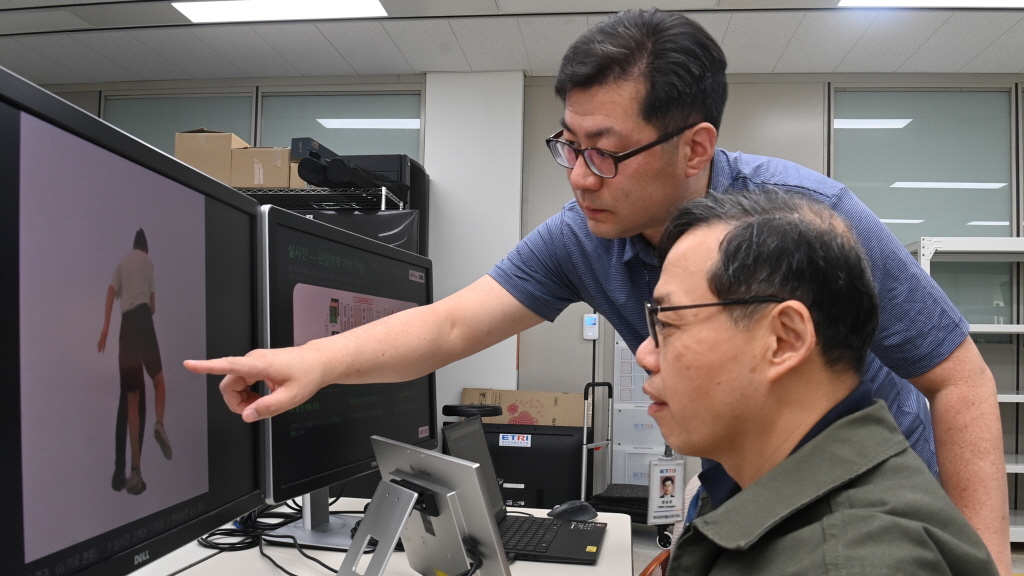
ETRI Unveils 3 Next-Generation Media Technologies Including AI-Dedicated Video Compression
ETRI has unveiled three next-generation media technologies optimized for AI. These include AI-based video encoding (VCM), 3D human generation based on sparse cameras, and generative AI-based pre-visualization technology. In environments where AI directly processes video such as autonomous vehicles, robots, and drones, these technologies enable efficient compression and transmission of large-scale data, and can be applied across various industrial sectors including smart cities, video security, and sports broadcasting.
2026.10.12by 배종인 기자
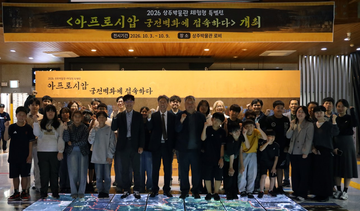
KETI Connects Domestic and Uzbekistan Museums Through Robot Telepresence for Remote Exhibition
The Korea Electronics Technology Institute (KETI) has hosted a remote experiential exhibition that connects domestic museums with an Uzbekistan museum in real-time using robot telepresence technology. Elementary school students in the Sangju area were able to directly operate autonomous robots to remotely view 7th-century Goguryeo envoy palace murals at the Afrasiab Museum in Samarkand, and the exhibition provides spatial experience comparable to on-site visits by combining real-time high-quality video transmission, AI docent, and autonomous driving technologies.
2026.10.12by 배종인 기자

Arduino UNO Q Technical Whitepaper: MPU·MCU Hybrid Board for Cloud-Free Edge AI
Arduino UNO Q is a product that integrates a Qualcomm Dragonwing QRB2210 microprocessor (MPU) running Debian Linux and an STM32U585 microcontroller (MCU) executing Arduino sketches on Zephyr RTOS into a single UNO form factor board. The two processors do not share RAM and resources, exchanging data only through remote procedure calls (RPC) of Arduino_RouterBridge, and the development environment Arduino App Lab and apps reside within the board. This whitepaper describes the design intent of this hybrid architecture, development workflow, hands-on verification results, and limitations in industrial application based on webinar presentation materials and technical Q&A.
2026.10.09by 편집부











