



Securing AI Sovereignty: Minimizing Regulation and Tailored Support Are Essential
 Published2023.06.01 14:49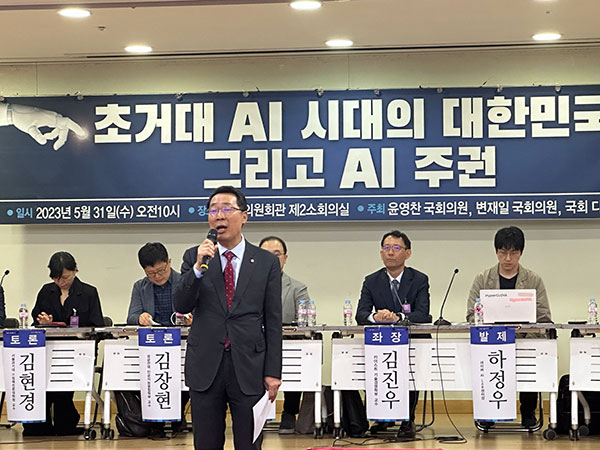
▲Representative Yoon Young-chan
Presentations by AI experts from Naver, Kakao, SKT, KT, LG, and academia
Building a massive AI ecosystem... Government emphasizes active support.
Emphasize the development of a large-scale AI public sector centered on Diplomacy
In the era of hyper-large-scale AI, there is a consensus that the government should minimize regulations and actively consider tailored support policies for industry and academia to secure AI sovereignty.
On May 31st, a discussion was held in the 2nd small conference room of the National Assembly on ways to expand the South Korean super-large AI ecosystem following the generative AI boom, such as ChatGPT, under the theme of “South Korea in the era of super-large AI and AI sovereignty.”
The presenters included △Naver AI LAB Center Director Ha Jung-woo, △Kakao AI Policy Support Director Kim Kyung-hoon, △SKT Vice President of Policy Cooperation Seong Seong-ham, △KT Large AI Business Managing Director Lee Jin-hyung, △LG AI Research Institute AI X Unit Director Kim Yoo-cheol. The discussion was participated by △KAIST Professor Kim Jin-woo of the Department of Technology Management, △Pukyong National University Professor Kim Jeong-hwan of the Human ICT Convergence Department, △Sungkyunkwan University Professor Kim Jang-hyun of the Department of Artificial Intelligence Convergence, △Seoul National University of Science and Technology Professor Kim Hyeon-gyeong of the IT Policy Graduate School, △MSIT Director Eom Yeol.
AI sovereignty refers to the ability to independently build and operate an overall ecosystem through industrialization. Our country is evaluated to be maintaining the next largest AI-based technology and infrastructure competitiveness after the United States and China.
Rep. Yoon Young-chan, who hosted the seminar, said, “Chat GPT is a general-purpose technology that will be an important mechanism for leading the future. Industry, academia, and research should discuss together whether we can build an ecosystem based on competitiveness to lead technology in the AI era and what we can do.”
Each company and faculty agreed that securing Korea's AI sovereignty requires creating points of differentiation and fostering competitiveness, ultimately leading the ecosystem. In particular, there was unanimous agreement on the need to increase government support, including project discovery to secure early market access, while simultaneously minimizing regulations.
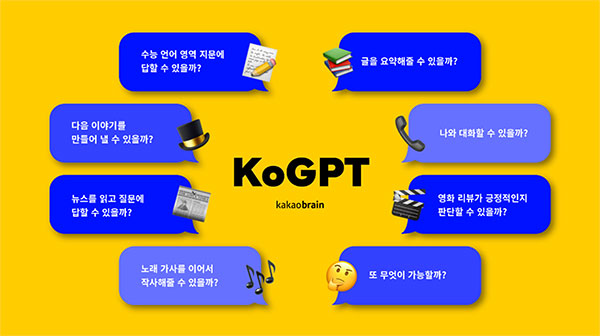
▲Kakao KoGPT
According to Naver Center Director Ha Jung-woo, Chat GPT has become a general-purpose technology, with over 80% of workers now experiencing at least a 10% impact from AI. Furthermore, a Goldman Sachs report from April estimated that hyperscale AI has had an impact of over 7% on global GDP.
Director Ha argued that building a country-centered ecosystem is essential. To this end, support measures must be put in place as a means of development, including taxation, government joint investment, data sharing, and regulatory systems.
Director Ha said, “As a country with its own search engine, our country has sufficient competitiveness in ultra-large AI, and we will grow through innovation in the public sector based on ultra-large AI centered on Diplomacy.” He added, “Legislation must be done carefully, and ultra-large AI itself must be exported as a new industry.”
Kakao's Director Kim Kyung-hoon also agreed, saying that domestic AI must protect its AI technology sovereignty by preventing dependence on global big tech companies. Kakao Brain has released its AI models in API form and released Coyo, a dataset for training image generation models.
We are also working on social acceptance, such as announcing and internalizing an algorithmic ethics charter to realize responsible AI. Kakao Brain's KoGPT and image model Karlo are scheduled to release version 2.0 in the second half of the year.
The three major mobile carriers are actively developing large-scale AI services.
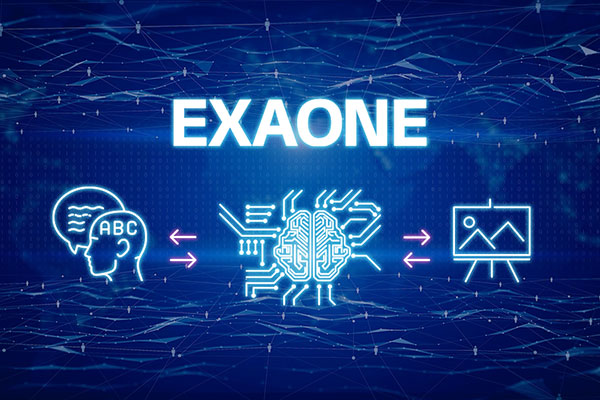
▲LG ExaOne
SKT, KT, and LGU+ have called for early and active government support to build an AI ecosystem in the non-telecommunications sector.
SKT argued that it was time for the government to proactively implement AI by proactively developing technologies difficult for the private sector to implement, supporting R&D and building public infrastructure to generate private demand. To achieve this, the company urged support for domestically produced AI semiconductors and the development of specialized models for each field to overcome the limitations of general-purpose models and open up new markets.
Demand for AI semiconductors is increasing as a new growth engine for the semiconductor market, and while Nvidia's stock price continues to rise, concerns about high GPU unit prices and power consumption are also being raised. SKT Vice President Sung Sung-ham asserted, "To ensure the competitiveness of domestic AI semiconductors, we need to identify early demand-generating projects for Sapion."
KT also advocated for national-level cooperation between large and small businesses. In particular, KT proposed expanding the availability of high-quality Korean language data to ensure the performance of ultra-large AI models. He argued that we should boldly invest the budget to activate domestic Korean language data.
Regarding copyright issues, Managing Director Lee Jin-hyung said, "While we are enacting laws and conducting research to protect sensitive data, we are concerned that if copyright issues are raised frequently, the industry will decline." He added, "To address this, we can apply the same regulations to global companies to avoid unreasonable competition in securing AI sovereignty."
According to LG Researcher Kim Yu-cheol, AI ExaOne differentiates itself by focusing on specialized knowledge-based learning. It focuses on specialized data and simultaneously learns Korean, English, tables, text, and images. In particular, it signed a contract with image company Shutterstock to purchase data without copyright issues, ensuring high usability in the field.
Researcher Kim argued, “We need to create examples that enhance expertise and foster an ecosystem to advance into overseas markets.”
■ Universities and businesses coexist in the AI era.
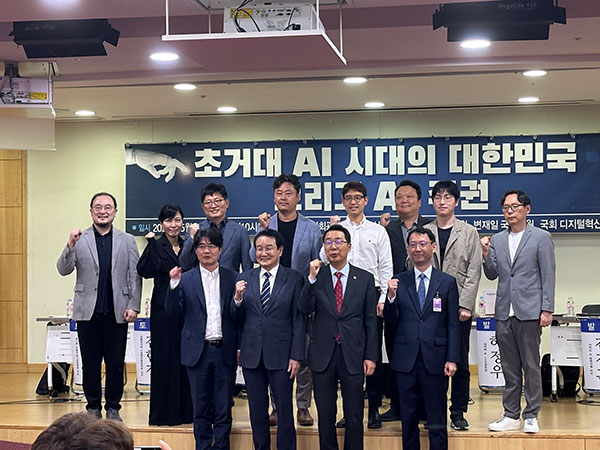
A new trend is emerging in academia, with universities and businesses collaborating and pursuing joint academic and industrial development. Faculty members participating in the discussion addressed the role of schools in the AI era, calling for diverse support in addition to the input of businesses.
Professor Kim Jang-hyun of Sungkyunkwan University emphasized the need to expand support for global expansion to ensure domestically produced, large-scale AI gains credibility. In particular, in the field of language, the combination of domain-specific academic disciplines, such as database-izing dialects, was considered an important value.
Professor Kim stated, "We need to continue to collaborate with schools to establish departments and cultivate specialized talent, and consider supporting research lab startups and other forms of support." He also urged development focused on the medical, defense, and mobility sectors.
Professor Kim Jeong-hwan of Pukyung National University argued that sharing public data should be expanded by prioritizing qualitative indicators. He stated, "To enable the use of domestic platforms, we need targeted support policies, not regulatory ones." He added, "Businesses and the government should work together to develop customized support policies tailored to each company, large and small, based on consideration of these policies."
Professor Kim Hyun-kyung of Seoul National University of Science and Technology emphasized the role of the National Assembly. She argued that fundamental considerations are necessary, as regulations related to database handling can influence the direction of industry.
Finally, Director Eom Yeol of the Ministry of Science and ICT outlined the government's efforts to maintain AI sovereignty. He stated, "We will expand technological R&D investment and support model development companies and specialized AI companies to jointly secure technological capabilities and take the lead in global expansion."
The government's key will likely be to strike a balance in the process of providing customized support policies for each large, medium, and small business and startup.
Ultimately, what consumers should be given in the AI era is increased productivity through Chat GPT or domestic AI services and platforms. Even if there are excellent, large-scale AI models, you need to know the type of service that is right for your business and be able to choose appropriately.
In this regard, while similar AI development strategies and directions are being proposed, it is expected that measures will need to be developed to support competitive business models that can lead the market.
Comments
Related news
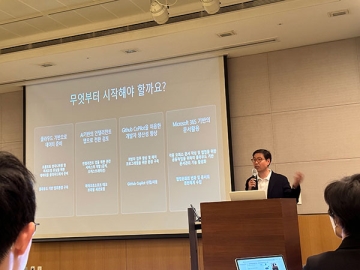
MS, “Integration of mega-AI cloud services is key”
Experts have presented arguments that by securing high-performance computing infrastructure capable of improving scalability through the convergence of ultra-large-scale AI and cloud services, companies can enhance their competitiveness through the development of customized AI services.
2023.04.28by 김예지 기자
“ChatGPT, a shield or spear for cybersecurity”
As global competition for AI technology supremacy intensifies, there is a growing need for consideration and response to cybersecurity challenges related to ultra-large-scale AI technologies such as ChatGPT, which serve as next-generation core competencies. At the 21st Hacking Security Seminar held at the National Assembly Members Hall on the 3rd, Kim Seok-joong, Assistant Manager at KT, presented on the theme of "Opportunities and Threats of ChatGPT," addressing what opportunities and threats ChatGPT presents in the cybersecurity domain.
2023.05.04by 김예지 기자

Discovering mega-scale AI-powered manufacturing service models
The Ministry of Trade, Industry and Energy announces the "2023 Knowledge Service Industry Business Idea-Linked Research and Development Project."
2023.05.08by 배종인 기자
.jpg)
“AI Fusion Digital Twin Service Entire Process Must Be Connected as One”
The Korea Industrial Technology Advancement Association (Koita) held a "Koita-Hankyung AI Economic Research Institute Joint Forum" on its YouTube channel on the 9th, providing a venue for sharing Industrial AI application cases. Expert opinions were presented arguing that to provide digital twin technology that fuses with generative AI and other technologies for process optimization in cutting-edge manufacturing facilities, all processes from development to customer service must be connected as a single integrated process.
2023.05.09by 김예지 기자
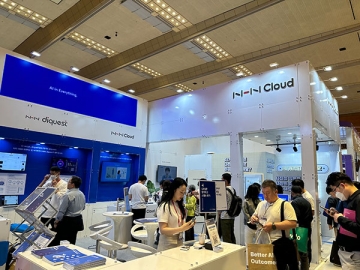
[2023 International AI Exhibition] Hot AI Craze… Comprehensive Overview of Hardware and Software
The '2023 International Artificial Intelligence Expo (AI EXPO KOREA 2023)', marking its sixth edition this year, will be held at Seoul COEX Hall D from the 10th to 12th. This exhibition, featuring approximately 300 companies and 500 booths, is the largest scale in Korea, drawing over 28,000 visitors from the previous year. #ChatGPT #NaverCloud #NHN Cloud #Intel #Supermicro
2023.05.11by 김예지 기자











