



Understanding Logistics Dynamics is a Prerequisite for Implementing AI in Logistics and Distribution
 Published2023.06.22 09:26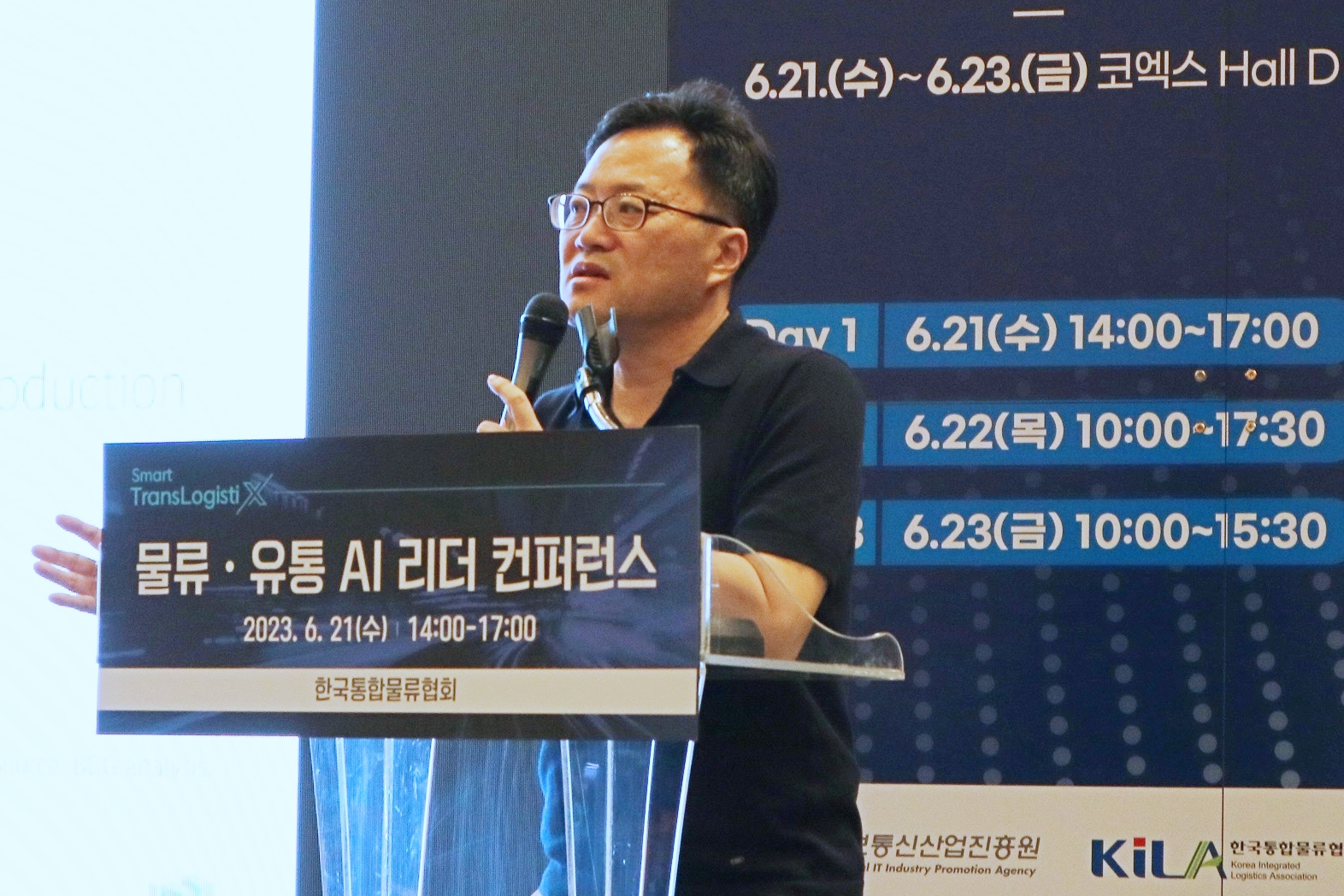
▲Professor Jang Yoon-seok of Korea Aerospace University
Industrial workforce declines by 5.4%, with 60% of the population in urban areas.
Logistics AI, including Amazon's Kiva system and AutoStore, is on the rise.
The need for logistics innovation continues to grow. With a global decline in the industrial workforce observed, the adoption of logistics automation requires the capacity to respond to "logistics dynamics."
On the 21st, the 'Logistics and Distribution AI Leader Conference' was held at COEX in Samseong-dong, Seoul, hosted by the National IT Industry Promotion Agency and the Korea Integrated Logistics Association.
This event is a place to explore the future of the logistics industry using AI and big data, and the direction in which the smart mobility field will be integrated into the logistics industry. The following topics will be discussed over three days: △Direction of logistics innovation using AI, △2023 logistics AI technology convergence trends, and △Chat GPT and smart logistics mobility.
On the first day, Professor Jang Yoon-seok of Korea Aerospace University presented the prerequisites and challenges for adopting logistics AI technology, emphasizing the importance of "dynamic processes" in logistics. The dynamic aspect of logistics is a key factor to consider, such as the connection between serial and batch processes. A serial process is a process that performs one task at a time, while a batch process is a process that performs multiple tasks at once.
Professor Jang explained, "In batch processes, items come out all at once," and that if serial processes are followed, bottlenecks and other issues can arise. He added, "In factories and logistics settings, there are limitations to dynamic process analysis. While these aspects need to be considered in the process, the field lacks the capacity to build systems."
To achieve this, it is crucial that developers and field managers with the knowledge and capabilities to interpret these dynamics collaborate when building AI algorithms and automation systems.
The global trend of decreasing industrial workforce continues, and Professor Jang, citing data from the Boston Consulting Group (BCG), predicted that “by 2030, the industrial workforce pool will decrease by 5.4% and 60% of the world’s population will live in urban areas.”
Professor Jang emphasized that AGV (Automated Guided Vehicle) and AMR (Autonomous Mobile Robot), which are autonomous driving mobility technologies used in logistics automation, each have clear advantages and disadvantages. In the case of AMR, “if the level is not good, it can be recognized as an obstacle, and in spaces where people work together or where there are many table legs, it stops too much, so the work efficiency is only about 20%.” AMRs are currently difficult to use for logistics automation in manufacturing processes due to their low precision.
He also said, “Autostore’s solution, which offers excellent space utilization and density, is expected to be useful in certain logistics applications in logistics warehouses in urban areas where space is limited,” but “it is not suitable for places with high volumes of goods or excessively heavy products.”
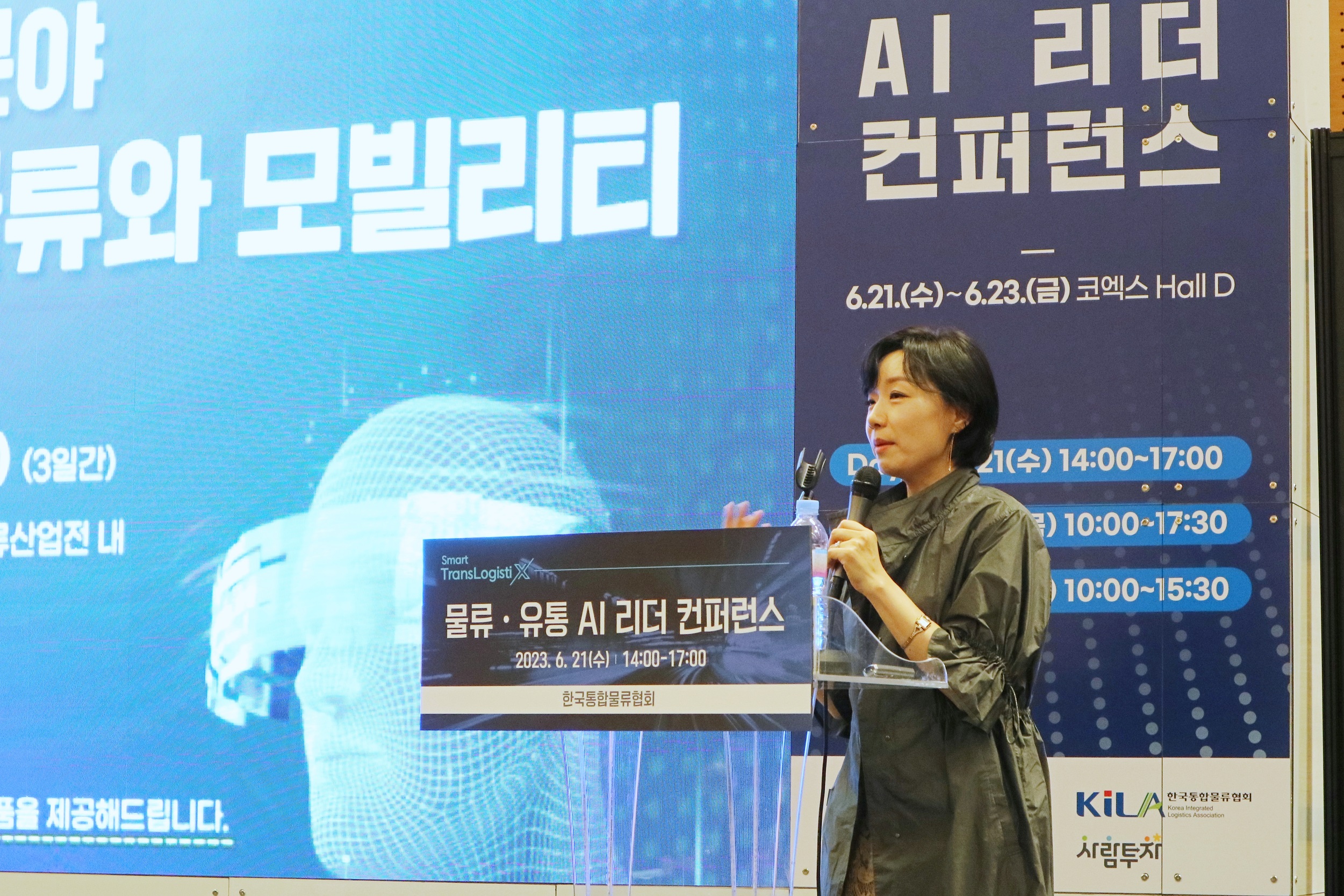
▲Professor Son Byeong-hee of Kookmin University
Professor Son Byeong-hee of Kookmin University, who explained the direction of AI innovation and the convergence of logistics and mobility, said, “The importance of AI utilization in the logistics and mobility fields lies in △real-time monitoring and decision-making support △improving customer experience for workers and users △flexibility △automation △future prediction, etc.”
When deep learning and machine learning, leveraging big data, are applied to predict the future, logistics networks can be optimized for inventory management and warehouse operations. These technologies are already being adopted by major logistics companies like Amazon. Examples include AutoStore's logistics automation solution and Amazon's Kiva system.
He pointed out that it is necessary to consider the challenges that AI will face in the future, such as the quality and availability of learning data, AI human resources technical capabilities, data security and privacy protection, and the occurrence of ethical issues.

Comments
Related news
AI semiconductor demand surges… GPUs from Nvidia, FPGAs from Intel and AMD
Nvidia's market capitalization recently approached $1 trillion (approximately 1.3 quadrillion Korean won), marking an all-time high. Nvidia, the first semiconductor company to join the $1 trillion club, is showing remarkable growth in shipments driven by increased demand from the artificial intelligence (AI) boom.
2023.05.31by 명세환 기자
“AI-based manufacturing innovation is slower than expected”
The innovation of manufacturing technology leveraging AI is progressing more slowly than anticipated, and experts shared their experience that the confidentiality of manufacturing-related data makes it difficult to apply to AI.
2023.06.15by 성유창 기자

7 out of 10 Korean IT leaders: “AI cannot be introduced due to lack of IT infrastructure and capabilities”
Despite groundbreaking artificial intelligence (AI) innovation and adoption in the business-to-business (B2B) and business-to-consumer (B2C) sectors, domestic companies have shown a lack of confidence in their digital infrastructure and capabilities for AI implementation.
2023.06.20by 명세환 기자
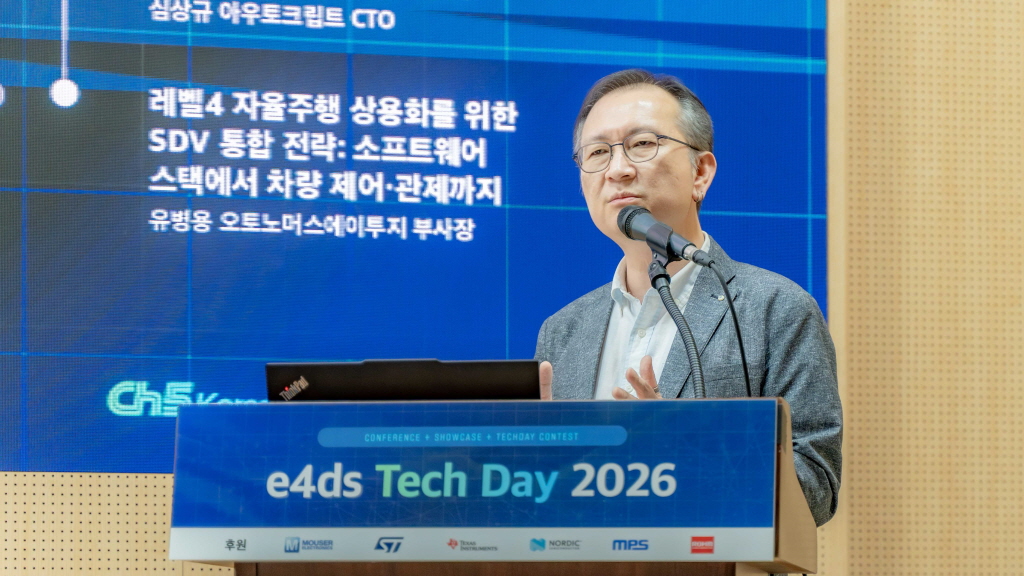
[e4ds Tech Day 2026 ⑨] Sim Sang-gyu, Autocrypt CTO: "In the Physical AI Era, Automotive Security Must Extend Beyond the Vehicle"
At e4ds Tech Day 2026, Sim Sang-gyu, CTO of Autocrypt, explained automotive cybersecurity strategies in the era of Physical AI and SDV (Software-Defined Vehicle). Automobiles are evolving as part of an ecosystem connected to AI, cloud, chargers, IoT, and robots, and he emphasized that the scope of security must expand beyond the vehicle interior to the entire connected environment. In particular, AI model tampering, adversarial attacks, OTA updates, and EV charger hacking were identified as major threats. He explained that response measures require zero trust, AI model integrity protection, intrusion detection, Security by Design and Default, and full lifecycle security management, and that proactive security system establishment beyond regulatory compliance is critical for securing future mobility competitiveness.
2026.10.12by 배종인 기자
NVIDIA to Invest $1 Billion in U.S. Science Over Next Five Years
NVIDIA has announced plans to invest $1 billion over the next five years to strengthen U.S. scientific and technological competitiveness. The company will enhance cutting-edge artificial intelligence research and development capabilities in key areas including quantum computing, healthcare, and energy security, while expanding support for higher education research institutions and cloud service providers. NVIDIA is participating as a major industry partner in the White House Office of Science and Technology Policy's Genesis Mission, and is promoting supercomputer construction in collaboration with national laboratories including Argonne and Los Alamos.
2026.10.12by 배종인 기자











