



“Korean semiconductors to continue growth with increased investment in AI and HPC”
 Published2025.02.24 11:53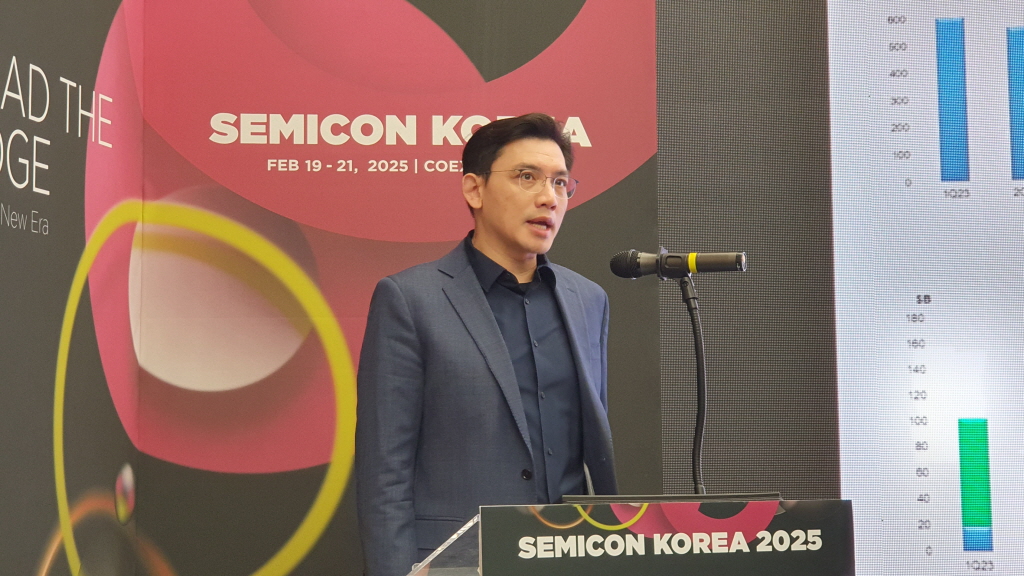
▲SEMI Director Clark Tseng is giving a presentation at the SEMICON Korea 2025 press conference.
Korea's semiconductor exports expected to decline slightly in Q1 2025, recover in mid-half
“The Korean semiconductor industry will continue to grow thanks to increased investment in artificial intelligence (AI) and high-performance computing (HPC).”
Clark Tseng, CEO of SEMI, predicted at a press conference held at SEMICON Korea 2025 on February 19 that Korea’s semiconductor industry will continue to grow driven by demand for AI and HPC.
Director Clark Cheung first analyzed the global electronics sales trends in 2024, noting that although there was good growth due to peak season sales in the first quarter of 2024, the annual growth rate was only 2%.
This result fell short of the 5-6% growth predicted in the mid-term.
On the other hand, sales of electronic devices showed a positive signal, predicting an annual growth of 5% in 2025.
Semiconductor sales have grown much stronger than electronics sales over the past two years.
This is due to improved memory prices and increased demand for AI chips, and an annual growth rate of more than 20% is expected in the first quarter of 2025.
This trend is expected to lead to double-digit IC sales this year. It was expected that the growth rate would be recorded.
Clark Chung, the executive director, explained that semiconductor inventory levels have been higher than expected since the second half of 2024, which has had some impact on consumer demand and sluggish demand in the automotive and industrial sectors.
Manufacturers' operating rates also remained low, and a quick recovery was expected to be difficult until inventory levels were brought down to healthy levels.
South Korea's semiconductor exports also showed strong growth.
It has recorded growth for seven consecutive quarters since the first quarter of 2023, and its annual growth rate exceeded 50% in the first half of last year.
On the other hand, exports are expected to decline slightly in the first quarter due to memory prices and seasonal factors, but are expected to recover from the second half.
AI investment is also an important keyword.
As cloud service providers (CSPs) increase their spending on AI, its impact on the semiconductor equipment market is growing.
Leading CSPs’ spending on AI has surged from $80 billion in 2018 to $200 billion last year, and is expected to reach $250 billion this year.
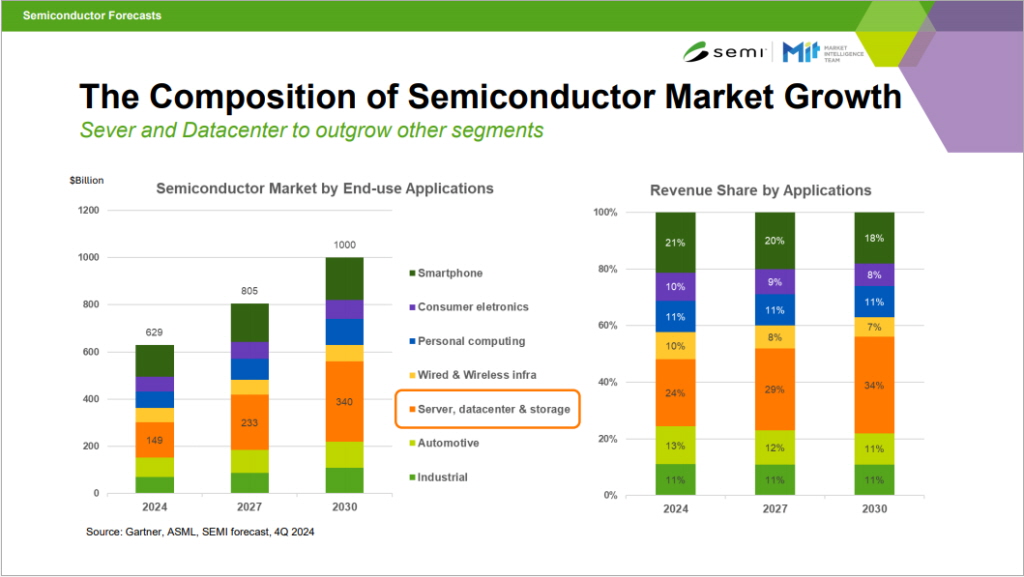
Investments in AI and high-performance computing (HPC) are expected to account for half of the semiconductor equipment market by 2028.
Investments by Korean semiconductor manufacturers are also noteworthy.
Annual investment in semiconductor fabs is expected to reach approximately $30 billion in 2024 and 2025, with strong growth expected from 2026.
The proportion of DRAM investment will decrease somewhat, but NAND flash investment and logic and foundry investment will show strong growth.
Finally, Director Clark Chung mentioned the production capacity outlook for Korean semiconductor manufacturers, noting that production capacity for DRAM and NAND flash is also expected to grow strongly. I expected it to be visible.

Comments
Related news
.jpg)
Imec, “CFET Application After 3rd Generation of Semiconductor Nanosheets”
Luke Van den Hove, CEO of Imec, a global comprehensive semiconductor research and development institute, emphasized collaboration for advancing next-generation semiconductor technology and unveiled a vision for future semiconductor technology development looking ahead 5 to 10 years. CEO Luke Van den Hove forecast, "We expect that CFET technology will be applied after the third generation of nanosheet."
2025.02.18by 명세환 기자
Coolike & Sofa, “Actively Targeting the Korean Market with Innovative Semiconductor Packaging Technologies, Including Fluxless TCB”
Global semiconductor equipment company Kulicke & Soffa (K&S) announced that it will actively pursue the Korean market by leading with various semiconductor packaging technologies that remove oxides and enable high-quality bonding in semiconductor packaging processes in the AI era.
2025.02.18by 배종인 기자
SEMICON Korea 2025 Opens, Previewing the Changes and Opportunities Ahead of AI-Reshaping the Semiconductor Industry
Semicon Korea 2025 will be held for three days from February 19 to 21 at Seoul COEX. As the global semiconductor supply chain faces enormous changes due to AI's rapid advancement, the semiconductor festival has opened its doors as a venue where industry trends and new opportunities can be identified. This year, the event will be held at its largest scale ever, utilizing not only COEX's A, B, C, D, and E halls, but also additionally the Grand Ballroom and Platz.
2025.02.19by 명세환 기자
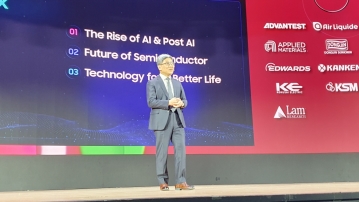
Samsung Electronics President Song Jae-hyuk: “'AI Semiconductor' Develops to Aim at Human Brain”
"Semiconductor technology capable of emulating human brain functions will become essential to AI technology." At the Semicon Korea 2025 keynote speech, Samsung Electronics President Song Jae-hyuk emphasized future prospects and the importance of the semiconductor ecosystem under the theme of semiconductors for a better life.
2025.02.19by 명세환 기자
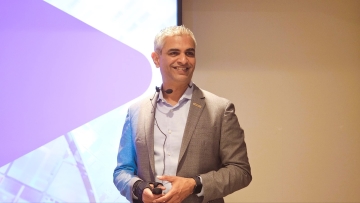
Merck, Convergence of Material Science and AI… “New Material to Overcome 600-fold ‘Memory Wall’ Gap is Necessary”
Merck held a press conference on the 20th in Samseong-dong, Seoul, and announced that it will showcase AI-based materials solutions and digitalization capabilities through Merck's Materials Intelligence Platform at Semicon Korea 2025. At the press conference, Anand Nambiar, Senior Vice President and CCO of Merck Electronics Business, stated that semiconductor materials innovation will be a key factor in overcoming the Memory Wall, and explained that the performance gap between logic and memory—the Memory Wall—is continuously widening, having expanded to a 600-fold difference over the past 20 years, necessitating new materials innovation for memory advancement.
2025.02.20by 명세환 기자











