


China's auto industry likely to remain 'domestic' for a long time.
 Published2025.11.10 06:00
As in the past, direct government intervention is difficult to achieve in the short term due to industrial restructuring.
Despite China's automotive industry ranking first in global production, the entire automotive ecosystem is facing difficulties due to excessive investment and cutthroat competition. Various factors surrounding the automotive industry are expected to prolong this situation.
On the 10th, the Korea Automobile Research Institute published an industry analysis report titled ‘(Industry Analysis Vol. 156) Paradox of the Chinese Automobile Industry, Internal Volume’.
According to this, the Chinese automobile industry has established itself as the world's largest market, but behind it, it is facing a structural problem called 'internal power'.
Internal power refers to an irrational state in which qualitative improvement in the overall industry is not achieved despite the competitive efforts of participants.
China has achieved remarkable results through its electric vehicle-focused development policy, but it is now facing a paradoxical situation of excessive competition and declining profitability.
China is expected to surpass 30 million automobile production units in 2024, ranking first in the world for the 17th consecutive year.
In particular, the production of electric vehicles (BEV·PHEV) is overwhelming, accounting for two-thirds of the global market.
On the other hand, behind the external growth lies excessive investment and cutthroat competition.
The internal power phenomenon in China's automobile industry has deepened in three stages.
The first is the subsidy-based growth period from 2009 to 2017. The Chinese government designated electric vehicles as a key industry and promoted technological development and production expansion with an average annual subsidy of $6.7 billion. However, policies during this period focused on expanding production capacity rather than stimulating demand.
The second period was the period of intended market expansion from 2018 to 2022. The government expanded the market by abolishing foreign investment restrictions and new factory approval requirements, and global competition intensified with Tesla's establishment of its own factory. Local governments offered various incentives to attract production facilities, and as of 2019, over 500 automakers were established.
The third period is the intensifying price war after 2023. When Tesla cut the prices of the Model 3 and Y by up to 9%, BYD countered with a strategy of "electric vehicles = internal combustion engine vehicle prices." Subsequently, even the slogan "electric vehicles are cheaper than gas-powered vehicles" emerged, and major companies jumped into the price-cutting race. In 2024, 227 models saw price cuts, and by September 2025, 112 models had done so.
This oversupply exceeded demand, eroding profitability across the industry. China's finished vehicle production capacity is projected to reach approximately 55.07 million units in 2024, but domestic sales will reach only 26.9 million units.
Even including exports, there are over 20 million idle units. The average operating rate is a mere 72.2%, and for all manufacturers, the figure is estimated to be around 50%.
Profitability has also deteriorated. The average selling price of major electric vehicle manufacturers has fallen 21%, from $31,000 in 2021 to $24,000 in 2024, and industry profit margins have fallen from 8% in 2017 to 4.3% in 2024. The restructuring of insolvent companies is being delayed due to the vested interests of local governments, further exacerbating the phenomenon of internal power.
To overcome this situation, the Chinese government is pursuing anti-domestic policies. With projections that only about 15 companies will be financially viable by 2030, the government is encouraging market restructuring by reducing subsidies and establishing industrial order.
The 15th Five-Year Plan excluded electric vehicles from the list of strategic industries and is regulating cutthroat competition through measures such as the Anti-Unfair Competition Act and the Stable Automobile Growth Plan.
However, as in the past, direct government intervention to restructure the industry in a short period of time seems unlikely. This is due to complex factors, including the automotive industry's symbolic nature, fragmented market structure, and local government support for survival.
Accordingly, the dissolution of internal control in the Chinese automobile industry is likely to be prolonged, and companies are expected to seek survival in a low-profit environment through various strategies such as indirect price competition, contract manufacturing, and exports to emerging markets.

Comments
Related news
.jpg)
Hanjayeon, Establishment of a Base for Supporting the Full Cycle of Autonomous Driving and Automotive Semiconductors
The Korea Automobile Research Institute (KAERI) has broken ground on a "Comprehensive Support Center for Autonomous Driving and Automotive Semiconductors" at a site near Cheonan-Asan KTX Station in Baebang-eup, Asan-si, Chungcheongnam-do, to establish a hub for technological self-sufficiency and full-cycle support in the autonomous driving and automotive semiconductor industries.
2025.06.09by 배종인 기자
Hanjayeon, presents a solution for future car reliability
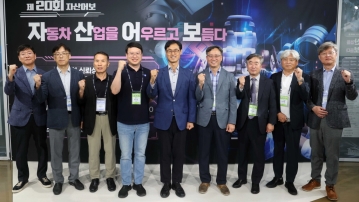
The Korea Automotive Research Institute (Director Jin Jong-wook) held the 20th Jasan Automotive Forum on the 10th at COEX Startup Branch under the theme of "Promise Beyond Future Vehicle Reliability Performance, Future Vehicle Reliability Innovation."
2025.06.11by 배종인 기자
“Autonomous driving and SDV, rapid rise of product differentiation”
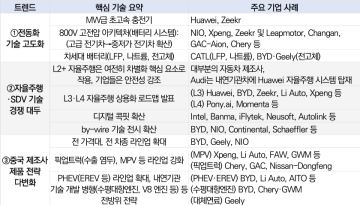
According to the special industrial analysis report "The Current State of China's Automotive Industry as Seen Through the Shanghai Motor Show," released by the Korea Automotive Research Institute on the 7th, the 2025 International Motor Show held in Shanghai, China clearly demonstrated that the global automotive industry is undergoing a paradigm shift beyond mere technology exhibition. In particular, five key trends emerged from this motor show: advanced electrification, competition in autonomous driving and SDV (Software-Defined Vehicle), diversification of product strategies across vehicle types, price segments, and powertrains, the shift of ICT technology companies toward the center of the industry, and global manufacturers' localized strategies tailored to the Chinese market.
2025.07.08by 배종인 기자
Domestic auto parts industry in the midst of global shocks must respond to structural advancement
According to Industry Analysis Vol. 149 titled "Environmental Changes in the Parts Industry and Response Directions," recently published by the Korea Automotive Research Institute (KARI), domestic major automotive parts companies are showing improvement trends in management performance and technology investment, but analysis indicates they still lag behind global competitors. As multiple factors such as industrial paradigm shifts and intensifying protectionism overlap, there is a point that strategic responses from both the private sector and government are urgently needed for structural upgrading.
2025.07.24by 배종인 기자
.jpg)
Hanjayeon undertakes organizational restructuring, laying the foundation for a leap forward as a future mobility research hub.
The Korea Automotive Research Institute (Director General Jin Jong-wook, hereinafter KARI) has undertaken a major organizational restructuring to secure leadership in future mobility technologies including AI, autonomous driving, and carbon neutrality.
2025.08.04by 배종인 기자











