



From Fingertips to Voice: Infineon's Answer to the Future of 'Listening AI'
 Published2025.11.12 15:17
손가락 끝으로 세상을 움직이던 ‘터치’의 시대가 저물고, 목소리로 모든 것을 명령하는 ‘음성’의 시대가 빠르게 열리고 있다. 챗GPT(ChatGPT)로 촉발된 생성형 AI 혁명은 이제 PC와 스마트폰을 넘어 모든 기기 속으로 스며들며 개인화된 AI 에이전트로 진화하고 있다. 이 거대한 변화의 흐름 속에서, 온디바이스 AI 혁명의 성공을 좌우할 핵심 병목점이 드러났다. 바로 기계가 인간의 말을 ‘얼마나 잘 듣는가’이다. 이것은 단순한 기술적 과제를 넘어, AI 시대의 성패를 가르는 근본적인 전제 조건이다.
이 거대한 기술적 전환의 가장 중요한 열쇠는 의외로 손톱보다 작은 부품, ‘MEMS(Micro-Electro-Mechanical Systems) 마이크’에 있다. 그리고 2023년 기준, 이 시장의 상당수 이상의 마켓 쉐어를 점유하고 있는 독일의 반도체 기업 인피니언(Infineon)이 그 해답을 쥐고 있다. AI 시대, ‘듣는 기술’의 미래는 어디로 향하고 있는가. 인피니언 아시아 퍼시픽 마케팅 담당 신재욱 씨와의 인터뷰를 통해 그 실마리를 찾아봤다.
1. 소음 속에서 길을 잃은 AI, ‘목소리’가 문제였다
인공지능 시대에 왜 다시 마이크 기술이 주목받는 것일까? 이유는 명확하다. AI 시스템의 성능은 전적으로 입력되는 데이터의 품질에 좌우되기 때문이다. 특히 음성 AI의 경우, 부정확하고 잡음 섞인 목소리는 시스템 전체를 마비시키는 치명적인 약점이 된다. 아무리 뛰어난 AI 모델이라도 제대로 듣지 못하면 오답을 내놓을 수밖에 없다. 컴퓨터 과학의 오랜 격언인 "Garbage in, garbage out(쓰레기를 넣으면 쓰레기가 나온다)"은 AI 시대에 더욱 절실한 진리가 되었다.
기존의 마이크 기술은 원거리에서 희미하게 들리는 목소리를 포착하거나, 시끄러운 카페 같은 복잡한 소음 환경 속에서 사용자의 명령만을 정확히 분리해내는 데 명백한 한계를 보였다. 부정확한 음성 입력은 단순한 인식 오류를 넘어, AI 시스템의 연산 부담을 가중시키고 전력 효율을 떨어뜨리는 연쇄적인 문제로 이어진다.
이러한 시장의 변화에 대해 신재욱 담당자는 다음과 같이 진단했다.
“최근 AI 솔루션들이 너무나 자연스럽게 발달하면서, 이제는 무언가를 검색하기 위해 앱을 켜고 로그인하는 과정들이 점점 줄어들 것입니다. 결국 보이스를 정확하게 알아듣는 디바이스들이 앞으로 더욱 중요해질 것입니다.”
결국, AI의 지능을 온전히 활용하기 위해서는 소리의 가장 원초적인 단계, 즉 목소리를 데이터로 변환하는 마이크의 성능 혁신이 선행되어야만 한다. 인피니언이 독자적인 기술력으로 이 문제를 어떻게 해결하고 있는지 그 핵심을 들여다보자.
2. 인피니언의 해답: 소리의 본질을 담는 두 가지 기술
인피니언이 MEMS 마이크 시장의 상당 부분 차지하며 독보적인 리더십을 유지하는 배경에는 단순히 규모의 경제를 넘어선 독자적인 기술 IP(지적재산권)가 자리하고 있다. 인피니언은 시장의 다양한 요구에 대응하기 위해 두 가지 핵심적인 MEMS 마이크 구조를 제공한다.
SBP(Single Backplate): 업계에서 널리 쓰이는 표준 기술이지만, 인피니언은 독자적인 ‘Flap 구조’와 ‘Landing Pads’ 설계를 더해 성능과 신뢰성을 극대화했다. 이는 견고함과 안정성이 중요한 다양한 애플리케이션에 최적화된 솔루션이다.
SDM(Sealed Dual Membrane): 인피니언만이 보유한 고유 IP 기반의 차세대 기술이다. 말 그대로 두 개의 막(Membrane)을 사용하는 이 독창적인 구조는 외부 소음은 효과적으로 차단하면서 사람의 목소리는 가장 순수하고 명료하게 포착한다. 이는 최고의 음향 성능, 즉 높은 신호 대 잡음비(High SNR)를 구현하는 인피니언의 ‘비장의 무기’다.
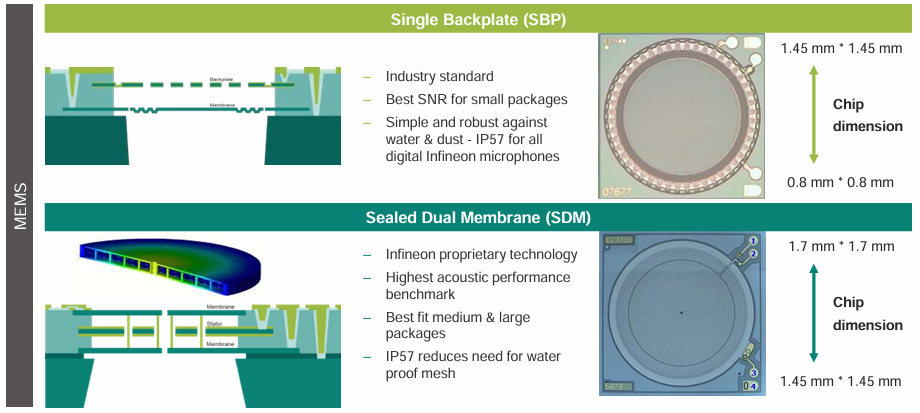
인피니언은 독자적인 ‘Sealed Dual Membrane(SDM)’ 구조를 통해

신재욱 담당자는 특히 SDM 기술의 중요성을 힘주어 말했다.
“SDM 기술은 경쟁사 대비 인피니언만 가지고 있는 차별화된 장점이자, 시장을 선도하는 핵심 코어테크입니다.” 단순한 기술적 개념을 넘어, 이 독보적인 기술이 실제 AI 성능에 얼마나 극적인 차이를 만들어내는지는 구체적인 데이터가 증명하고 있다.
3. ‘더 멀리, 더 선명하게’ - 숫자로 증명된 High SNR의 힘
기술적 우위는 결국 실제 사용 환경에서 증명될 때 비로소 가치를 가진다. 인피니언은 자사의 High-SNR 마이크 기술이 AI 음성 인식률에 미치는 영향을 ‘단어 오류율(Word Error Rate, WER)’이라는 객관적인 지표를 통해 명확하게 보여준다. WER은 AI가 사람의 말을 얼마나 정확하게 텍스트로 변환하는지를 측정하며, 수치가 낮을수록 성능이 우수함을 의미한다.
인피니언의 내부 테스트는 마이크 성능이 실제 인식률에 어떤 차이를 만드는지 극명하게 보여준다. 아래 표는 스피커와 마이크 사이의 거리가 멀어짐에 따라 마이크에 도달하는 음압 레벨(dBA)이 낮아지는 상황을 시뮬레이션한 결과다.
|
희미한 음성 수준
(거리 시뮬레이션)
|
마이크 성능 (SNR) | 단어 오류율 (WER) |
| 47 dBA / 2.8m | 65 dBA (Mid-SNR) | 69.4% |
| 47 dBA / 2.8m | 73 dBA (High-SNR) | 27.5% |
결과는 명확하다. 0.35미터의 가까운 거리에서는 두 마이크의 성능 차이가 1% 미만으로 미미했지만, 2.8미터처럼 “거리가 멀어지고 소리가 희미해지는” 실제 사용 환경에 이르자 결과는 극적으로 갈렸다. 일반적인 성능의 마이크(65dBA)는 단어의 70% 가까이를 놓쳤지만, 인피니언의 High-SNR 마이크(73dBA)는 오류율을 27.5%까지 획기적으로 낮췄다. 이는 스마트 스피커를 거실 끝에서 부르거나, AI 비서에게 조금 떨어진 곳에서 명령을 내리는 바로 그 순간, High-SNR 기술의 프리미엄 가치가 증명되는 순간이다.
이러한 압도적인 성능 차이는 단순히 깨끗한 음질을 제공하는 것을 넘어, AI 기기 시스템 전체의 효율성을 바꾸는 거대한 나비효과를 일으킨다.
4. 단순 부품을 넘어 시스템을 혁신하다
여기서 우리는 인피니언의 전략이 단순한 부품 성능 개선에 머물지 않는다는 점을 주목해야 한다. 마이크 성능의 혁신은 AI 기기 전체의 효율성을 바꾸는 ‘시스템 레벨 혁신’으로 이어진다. 매 밀리암페어(mA)를 아끼기 위해 사투를 벌이는 모바일 기기 배터리 수명이라는 전쟁터에서, 인피니언은 부품 단의 혁신이 어떻게 시스템 레벨의 결정적 승리를 가져올 수 있는지 증명하고 있다.
신재욱 담당자는 “고품질 마이크를 사용함으로써 전체 시스템에서의 전력을 줄여주는” 효과가 있다고 설명했다. 원리는 이렇다. 인피니언의 High-SNR 마이크가 잡음 없이 깨끗한 음성 데이터를 AI 프로세서에 전달하면, 프로세서는 불필요한 노이즈를 제거하고 신호를 보정하는 복잡한 연산 과정(processing layers)을 대폭 줄일 수 있다. 이는 곧바로 AI 프로세서의 부하 감소로 이어지고, 결과적으로 시스템 전체의 전력 소모를 크게 낮춘다.
이러한 시스템 관점의 저전력 효과는 TWS(완전 무선 이어폰), 스마트폰, AI PC 등 배터리 수명이 곧 제품 경쟁력인 ‘온디바이스 AI’ 기기에서 절대적인 전략적 이점이 된다. 여기에 인피니언의 모든 디지털 마이크로폰 제품군에 적용된 IP57 등급의 방수/방진 기능과 차량 내외부 통신, 소음 감지 등 극한의 신뢰성이 요구되는 자동차 애플리케이션으로의 기술 확장은 이들의 경쟁력을 한층 더 공고히 한다.
‘듣는 센서 플랫폼’의 미래를 설계하다
이제 MEMS 마이크는 더 이상 단순한 소리 입력 부품이 아니다. AI 시대의 성능과 효율을 좌우하는 핵심 전략 부품으로 그 위상이 완전히 달라졌다. 인피니언은 이러한 변화의 중심에서 ‘듣는 기술’의 미래를 새롭게 설계하고 있다.
인피니언의 최종 목표는 단순히 마이크를 판매하는 것을 넘어, ‘시스템 어프로치’ 전략을 통해 고객의 혁신을 근본적으로 지원하는 것이다. 신재욱 담당자는 인피니언의 미래 청사진을 다음과 같이 요약했다.
“MEMS 마이크뿐만 아니라 AI MCU, 모델링 솔루션, 혁신 센서 제품군과도 연계하여 고객의 혁신 경험 설계를 선도해 나가려고 합니다.”
이는 마이크로 시작된 ‘듣는 기술’이 인피니언의 PSoC™ MCU, ModusToolbox™ 소프트웨어, 그리고 다양한 평가 키트와 결합하여 더욱 지능적이고 효율적인 ‘센서 플랫폼’으로 진화할 것임을 시사한다. 단순한 마케팅 비전이 아닌, 엔지니어들이 즉시 활용 가능한 실질적인 솔루션을 제공하겠다는 의지다.
결국 AI 시대의 승자는 가장 잘 듣고, 가장 잘 이해하는 플랫폼을 만드는 자가 될 것이다.

Comments
Related news
[Technical contribution] Infineon Technologies - High-performance MEMS microphone ideal for conversational AI
As the conversational AI market experiences rapid growth, Infineon Technologies engineers discuss the technologies necessary for humans and machines to interact effectively.
2024.01.04by 편집부
Infineon's high-performance MEMS microphones boost AI voice assistant recognition accuracy.
On February 20th, Infineon's Manager Kim Sung-tae presented at the e4ds webinar on the topic of "Fundamentals of MEMS Microphones and How to Select High-Performance Microphones Aligned with AI Trends."
2024.03.04by 김예지 기자
ESP32 Development Environment Selection and GPS Application Implementation
The ESP32 is a microcontroller that integrates Wi-Fi, Bluetooth, 12-bit ADC, capacitive touch, PWM, DAC, and UART in a single SoC. However, the abundance of features does not by itself solve the designer's problems. The real challenges lie in selecting the appropriate development environment, determining which pins can be used and which must be avoided, and converting raw data from modules into usable information. This document addresses ESP32 peripheral constraints (ADC2 and Wi-Fi coexistence limitation, UART1 occupancy, ADC non-linear regions), the trade-offs between Arduino IDE and ESP-IDF, and the process from connecting NEO-6M/NEO-M8N GPS modules to UART2, parsing NMEA sentences, and visualizing routes in Google Earth, all organized based on documented references.
2026.10.12by 편집부
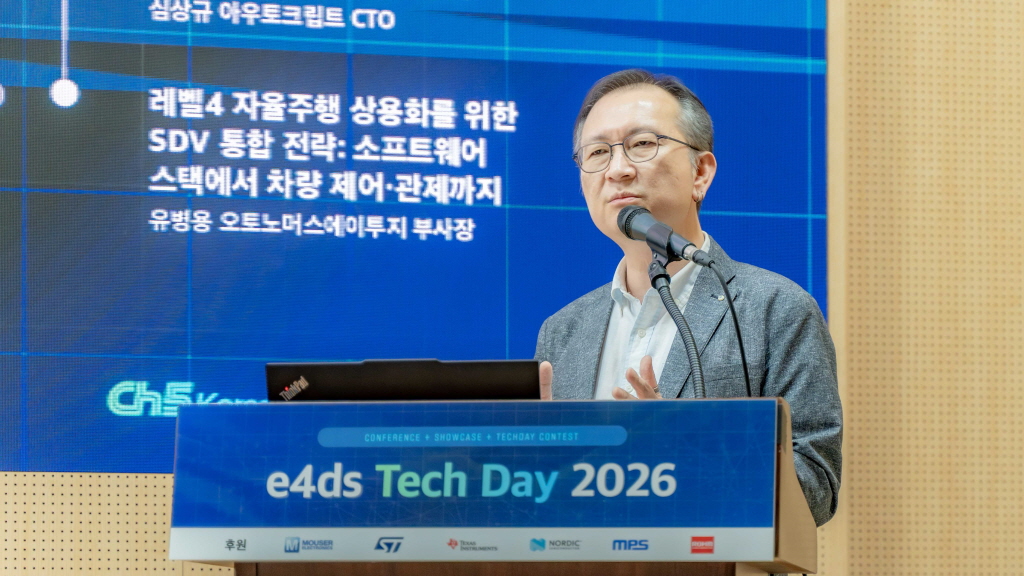
[e4ds Tech Day 2026 ⑨] Sim Sang-gyu, Autocrypt CTO: "In the Physical AI Era, Automotive Security Must Extend Beyond the Vehicle"
At e4ds Tech Day 2026, Sim Sang-gyu, CTO of Autocrypt, explained automotive cybersecurity strategies in the era of Physical AI and SDV (Software-Defined Vehicle). Automobiles are evolving as part of an ecosystem connected to AI, cloud, chargers, IoT, and robots, and he emphasized that the scope of security must expand beyond the vehicle interior to the entire connected environment. In particular, AI model tampering, adversarial attacks, OTA updates, and EV charger hacking were identified as major threats. He explained that response measures require zero trust, AI model integrity protection, intrusion detection, Security by Design and Default, and full lifecycle security management, and that proactive security system establishment beyond regulatory compliance is critical for securing future mobility competitiveness.
2026.10.12by 배종인 기자
MIPI CSI-2, DSI-2, C-PHY, D-PHY Test Solution Technical White Paper
The MIPI interface adopts a burst mode that transitions between low-power (LP) and high-speed (HS) states for low-power consumption, and in return, strict timing rules are imposed on state transitions. Additionally, the high-speed section operates as a packet-based protocol with headers, ECC, and CRC, so verification engineers must handle waveforms and protocols simultaneously. Traditional configurations combining general-purpose oscilloscopes and AWGs reveal limitations in setup complexity, measurement uncertainty, and lack of reproducibility when faced with these requirements. This white paper, based on webinar materials, organizes the structure of this problem and describes how the SV5C-DPTXCPTX generator for receiver testing and SV5C-DPRXCPRX analyzer for transmitter testing integrate state transition testing, stressed eye testing, and protocol analysis into a single bench, along with their application boundaries.
2026.10.12by 편집부











