



Microchip Unveils SDI IP Core and Quad CoaXPress Bridge Kit
 Published2026.01.20 15:51
.jpg)
Microchip Technology, a global leader in microcontrollers and mixed-signal semiconductors, is targeting the next-generation medical, industrial, and robotics vision markets with high-performance, low-power FPGA-based image processing solutions.
Microchip Technology Inc. (NASDAQ: MCHP) today announced the expansion of its PolarFire® FPGA-based smart embedded video ecosystem.
This expansion includes new Serial Digital Interface (SDI) receive and transmit IP cores and a quad CoaXPress™ (CXP™) bridge kit, providing a complete video pipeline for high-reliability, high-bandwidth applications such as medical imaging, industrial machine vision, and robotic vision.
Microchip is currently the only FPGA supplier offering a standalone quad CoaXPress FPGA-based solution that supports direct bridging between SLVS-EC (up to 5 Gbps per lane) and CoaXPress 2.0 (up to 12.5 Gbps per lane) without third-party IP.
This significantly improves the connectivity between high-resolution cameras and high-speed image processing systems, demonstrating its strengths in medical diagnostic and low-latency imaging environments where real-time image transmission is essential.
The SDI Rx/Tx IP core released this time complies with the SMPTE standard. It is compliant and supports 1.5G, 3G, 6G, and 12G-SDI transmission.
It also provides HDMI-to-SDI and SDI-to-HDMI bridging functions, supporting a wide range of video formats, including 4K and 8K.
It is designed to reliably process high-quality video signals not only in broadcasting equipment but also in embedded imaging systems.
PolarFire FPGAs are known for their ultra-low power, security-enhanced, and non-volatile architecture.
Building on these advantages, Microchip offers an integrated solution stack that enables OEMs to implement compact, high-performance video systems in a fanless architecture.
In particular, reduced BOM cost, reduced design complexity, and advanced tamper-resistant features provide high value in security-critical medical and industrial environments.
“Next-generation medical, industrial and robotic vision systems require both superior image quality and energy efficiency,” said Shakeel Peera, vice president of Microchip’s FPGA business unit. “The expansion of our PolarFire FPGA-based video ecosystem is a significant step forward, enabling our customers to develop high-reliability, high-performance systems faster and more efficiently.”

Comments
Related news

Microchip Innovates Global Infrastructure Timing
Microchip Technology has announced 'SkyWire™' technology, which enables precise comparison and synchronization of geographically distributed clocks at nanosecond-level accuracy, realizing the level of clock synchronization that was previously only possible in specialized metrology laboratories within general infrastructure environments.
2025.10.16by 배종인 기자

Microchip Accelerates Transition to Open Automotive Connectivity Standards
Microchip Technology has successfully demonstrated interoperability between its chipset and AVIVA Links and ASA Motion Link (ASA-ML) based chipsets.
2025.10.21by 명세환 기자
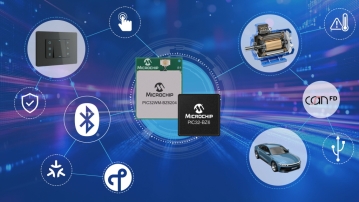
Microchip, Smart Connectivity Optimization
Microchip Technology, a global leader in microcontroller and analog semiconductor fields (Korea Representative: Han Byung-don), has launched the 'PIC32-BZ6 MCU,' a highly integrated single-chip wireless platform that combines advanced connectivity, touch, and motor control capabilities. By integrating multiple wireless protocols including Bluetooth® Low Energy, Thread®, and Matter on a single chip, the platform maximizes design flexibility and development efficiency across diverse applications such as smart homes, industrial automation, and automotive connectivity.
2025.10.22by 명세환 기자

Microchip Realizes Sub-nanosecond Time Transmission Over 800km Range Without GNSS
Global semiconductor company Microchip Technology has launched TimeProvider® 4500 v3 Grandmaster Clock (TP4500), a high-precision timing solution that can reduce dependence on GNSS (Global Navigation Satellite System) and strengthen the resilience of critical infrastructure.
2025.10.29by 배종인 기자
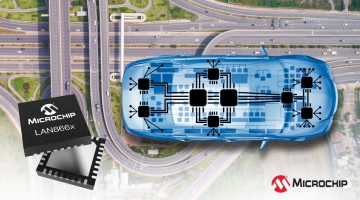
Microchip Launches LAN866x 10BASE-T1S Endpoints Optimized for Automotive Zoning Architectures
Microchip Technology, a global leader in microcontrollers and mixed-signal semiconductors (Asia General Manager and Korea Representative Han Byung-don), has launched the LAN866x 10BASE-T1S endpoint product family for implementing smart vehicle networks, accelerating technological innovation in vehicle networks for the SDV era.
2025.11.13by 배종인 기자











