



High-performance SoCs, accelerating the era of autonomous driving, are rapidly emerging as a key player in the automotive industry.
 Published2026.01.27 11:00
▲Visualizing ADAS functions for autonomous driving in software-defined vehicles that analyze environmental data (Photo: TI)
Armv9 core lockstep feature meets the highest safety level ASIL-D under ISO26262.
With autonomous driving and advanced driver assistance systems (ADAS) becoming key keywords in the automotive industry, the importance of the semiconductor technology that underpins them is growing more than ever. Recently, automakers are accelerating the transition to software-defined vehicles (SDVs), moving away from distributed electronic control units (ECUs) and embracing centralized computing platforms. At the heart of these changes is a high-performance system-on-chip (SoC) that offers both scalability and performance.
Texas Instruments recently introduced SoCs for next-generation automotive design in a technical article titled, “ Why Scalable, High-Performance SoCs Are the Future of Autonomous Vehicles .”
The automotive industry is already moving beyond SAE Level 1 and 2 autonomous driving standards to Level 3, which goes beyond simple driver assistance to enable conditional autonomy.
To achieve this, computing power capable of processing massive sensor data and performing artificial intelligence (AI) calculations in real time is essential.
A central computing architecture meets these needs, enabling integrated management of vehicle-wide functions on a single, high-performance platform.
The TDA5 series SoC introduced by Texas Instruments (TI) is a representative example of this trend.
This product family integrates various computational blocks, such as CPUs, GPUs, and neural processing units (NPUs), into a single chip based on a heterogeneous computing architecture.
Scalable APU from 10 TOPS up to 1,200 TOPS, especially with TI's proprietary C7™ architecture-based NPU.I provides performance and secures both power efficiency and performance.
This enables a wide range of applications, from basic ADAS functions such as adaptive cruise control to conditional autonomous driving.
Safety is also an essential element in next-generation SoC design.
The TDA5 SoC applies a hardware-based cross-domain safety architecture to support real-time monitoring and error detection that are difficult to implement using software alone.
It is designed to meet ASIL-D, the highest safety level stipulated in ISO 26262, through the lockstep function of the latest Armv9 core.
This is a strategy to address vehicle safety requirements that become increasingly important as autonomous driving functions expand.
Another thing to note is the chiplet-compatible architecture.
The TDA5 series supports the UCIe interface, enabling modular design for future functional expansion or performance enhancement.
This helps automakers flexibly configure different vehicle classes and features based on the same platform.
As a result, it lays the foundation for advanced autonomous driving features, previously only available in premium vehicles, to be expanded to popular models.
Experts predict that within the next 10 years, ADAS and autonomous driving features will become standard features rather than optional features.
High-performance, highly scalable SoCs are the core technologies that enable these changes and will become a factor in determining the competitiveness of the automotive industry.
Within the paradigm of centralized computing and software-defined vehicles, SoCs with scalable AI performance and safety are accelerating the era of autonomous driving.

Comments
Related news
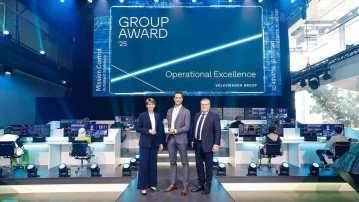
TI Confirms Key Partner Status with Automobile Manufacturers
Texas Instruments (TI) recently won the "Operational Excellence" award at the 2025 Volkswagen Group Awards held in Wolfsburg, Germany, once again demonstrating its status as a key partner to automotive manufacturers.
2025.07.17by 명세환 기자

“The Future of Autonomous Driving Depends on Semiconductor Technology”
Today's automotive industry is evolving beyond being simply a means of transportation into a comprehensive collection of cutting-edge technologies. In particular, the proliferation of ADAS (Advanced Driver Assistance Systems) functions is serving as a full-scale turning point toward the autonomous driving era, with semiconductor technology at its core. According to Texas Instruments (TI), semiconductors are a key element enabling vehicle sensing, processing, communication, and power management, with their importance growing to the point where 1,000 to 3,500 units are now mounted in a single vehicle.
2025.07.23by 명세환 기자
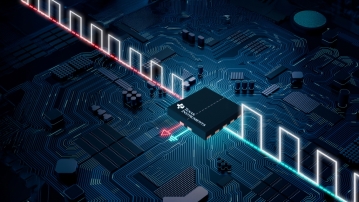
"Communication errors between different grounding and voltage domains solved with a single chip."
As low-voltage modular systems become increasingly prevalent, the risk of communication errors between different ground and voltage domains has risen. Texas Instruments (TI) recently introduced the '±80V ground level translator' through a Technical Article. This product reliably transmits signals between low-voltage systems with voltage levels of 1.71V to 5.5V while capable of handling maximum ±80V DC ground offset and eliminating up to 140Vpp AC noise at 1MHz.
2025.08.05by 배종인 기자
.jpg)
[2025 e4ds Tech Day] TI Vice President Seungmok Kim: "GaN Automotive Power Systems Open New Possibilities"
As automotive power systems rapidly evolve, GaN (Gallium Nitride) solutions are gaining attention as next-generation automotive power semiconductors, moving away from the previous trend of utilizing silicon (Si) semiconductors in the low-voltage range and silicon carbide (SiC)-based semiconductors in the high-voltage range. GaN provides optimal efficiency in the 200–500V power supply range and enables wide power scaling from 50W to 25kW, allowing simultaneous realization of both power density and system miniaturization. Recently, GaN applications are expanding even in low-voltage systems of 200V or below, making it possible to select the optimal device according to design requirements. In this context, Texas Instruments will participate in the '2025 e4ds Tech Day' event on September 9th to present on the topic of 'Implementing High Power Density and Efficient Digital Power Systems with TI GaN FETs.' We have arranged an interview with Kim Seung-mok, Section Chief at TI, who will be giving the presentation, to learn more about TI's GaN devices.
2025.08.28by 명세환 기자
.jpg)
[2025 e4ds Tech Day] "GaN, the Future of Power Semiconductors, is Ready for Commercialization in 48V Power Systems."
Texas Instruments (TI) Manager Kim Seung-mok presented on the topic of "Implementing High Power Density and Efficient Digital Power Systems with TI GaN FET" at the '2025 e4ds Tech Day' event held on September 9th, emphasizing that power semiconductors are the core of next-generation industries such as electric vehicles, renewable energy, and high-efficiency power supplies. Manager Kim Seung-mok first reviewed the evolution of power semiconductors, stating, "Until 20 years ago, IGBTs were mainstream, but with the emergence of SiC, it began to be applied to high-voltage systems above 1,200V. However, there were limitations in terms of switching frequency. In contrast, GaN can switch up to 12MHz at voltage levels of 600-650V, making it possible to dramatically increase power density."
2025.09.29by 배종인 기자











