



SK Hynix: “Autonomous Fabs Are the Solution for Manufacturing Innovation in the AI Era”
 Published2026.03.18 15:17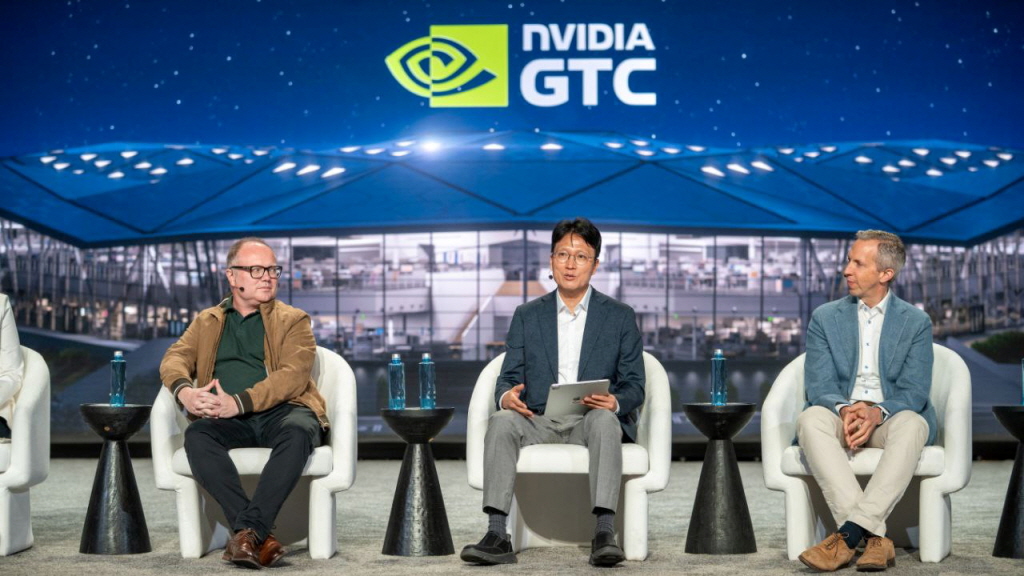
▲ (Center) Do Seung-yong, Vice President of SK Hynix (Head of DT Division), is speaking at the NVIDIA GTC 2026 panel session.
Presenting Operational AI, Physical AI, and Digital Twin as Core Axes
With the complexity of semiconductor manufacturing sites rapidly increasing amidst a surge in demand for AI, SK Hynix has presented the 'Autonomous FAB' as a key solution for next-generation manufacturing innovation.
Do Seung-yong, Vice President of SK Hynix (Head of DT Division), who attended the NVIDIA GTC 2026 panel session 'Building the Future of Manufacturing' held on the 17th (local time in the U.S.), stated, “In the AI era, we must simultaneously address the dual challenges of expanding production capacity and increasing manufacturing complexity.”
The explanation is that while semiconductor demand is increasing rapidly, there are structural limitations that make it difficult to expand manufacturing infrastructure at the same pace.
Vice President Do Seung-yong explained that the company is pursuing the expansion of production capacity in Korea and globally to meet the increasing demand for AI memory, and that the investment in Indiana, USA, is also part of this strategy.
However, he emphasized that since the new fab requires a significant amount of time from construction to mass production stabilization, efficiency improvements for existing production lines must be carried out in parallel.
The complexity of the manufacturing environment is also rapidly increasing.>
As the proportion of high value-added and customized products such as HBM has increased, the difficulty of fab operations has risen, and decision-making to balance quality, cost, and speed has become more difficult.
Accordingly, pointing out the limitations of existing experience and rule-based automation methods, it was stated that more fundamental manufacturing innovation is needed.
To address this, SK Hynix is pursuing the construction of an autonomous fab with a target of 2030.
The goal is for the factory to learn and make decisions on its own to drastically shorten the transition speed from design to mass production.
Operational AI, physical AI, and digital twin were presented as the core pillars of the autonomous fab.
Operational AI has implemented engineers' judgment and know-how based on data, reducing equipment maintenance and defect analysis time by more than 50%.
Physical AI is expected to improve logistics efficiency and safety and reduce parts inventory by about 30% by intelligentizing transport systems, robots, and autonomous logistics.
Digital twins enable simulation, AI training, and operational optimization without production interruption through NVIDIA Omniverse-based virtual fabs.
Vice President Do Seung-yong emphasized, “We will build a faster and more flexible next-generation manufacturing system by organically combining the three axes,” adding that “the core of manufacturing competitiveness in the AI era is autonomy and agility.”

Comments
Related news
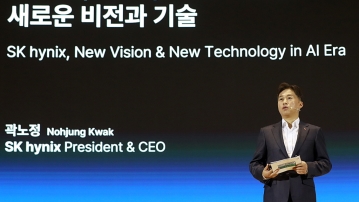
Kwak No-jeong, CEO of SK Hynix, said, "As a 'full-stack AI memory creator,' we will deliver value that exceeds customer expectations."
SK Hynix CEO Kwak No-jung announced a new vision to lead the AI era, "Full Stack AI Memory Creator," at the 'SK AI Summit 2025' held on the 3rd, presenting the future direction of the global memory market. CEO Kwak No-jung stated, "So far, SK Hynix has played the role of a 'Full Stack AI Memory Provider,' supplying products that customers want in a timely manner," and emphasized, "Going forward, we will evolve into a creator that creates AI memory as a co-architect and eco-contributor."
2025.11.03by 명세환 기자
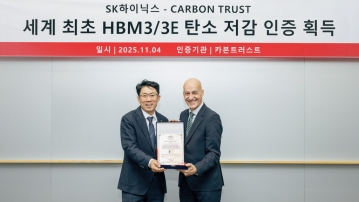
SK Hynix Leads the Way in Sustainability in the Semiconductor Industry
SK Hynix has obtained 'Carbon Reducing' and 'Carbon Footprint' certifications from Carbon Trust, a global environmental certification body in the UK, for a total of 15 memory products including high bandwidth memory (HBM), DRAM, NAND, and storage devices.
2025.11.05by 배종인 기자
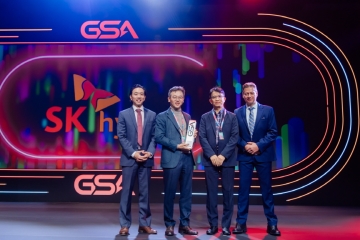
SK Hynix Wins Two GSA Awards 2025 Awards
SK Hynix won both the "Best Financial Management Semiconductor Company Award" and the "Excellence Asia Pacific Semiconductor Company Award" at the 'GSA Awards 2025', receiving recognition for its advanced AI memory technology capabilities including HBM and financial soundness.
2025.12.09by 명세환 기자
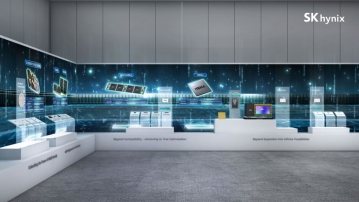
SK Hynix Unleashes Innovations, Including HBM4, LPDDR6, and 321-Layer QLC
SK Hynix showcased its position as a leading provider of differentiated memory solutions tailored to AI-era demands at CES 2026, unveiling AI-optimized memory including HBM4 16-layer 48GB, LPDDR6, and 321-layer QLC eSSD.
2026.01.06by 명세환 기자
.jpg)
SK Hynix Invests in New Advanced Packaging Fab P&T7 in Cheongju
Global semiconductor company SK Hynix is making a new investment in an advanced packaging fab, P&T7, in Cheongju, North Chungcheong Province, to respond to global demand for AI memory.
2026.01.13by 명세환 기자











