


Frequency Domain-Based Debugging is Essential for SI and PI Problems with Unidentifiable Causes Even with Oscilloscopes
 Published2026.03.31 12:37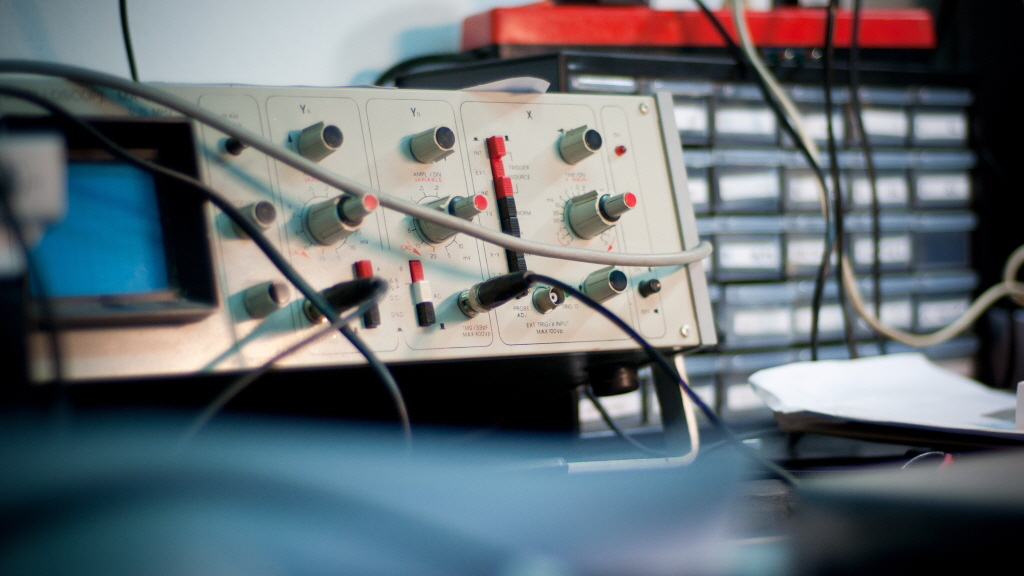
Extending beyond simple EMI compliance standards to a system-level scope including structures
Recently, as embedded systems have rapidly advanced in performance, miniaturization, and modularization, high-speed digital signal and power systems are operating more closely within a single board.
In this process, issues of signal integrity (SI), power integrity (PI), and electromagnetic interference (EMI) have become areas that are no longer easy to handle as separate items.
In actual debugging situations, there are quite a few cases where the cause cannot be identified even after checking the waveform with an oscilloscope, or where it is not clearly distinguished whether the current phenomenon is an SI problem or a PI problem.
It is a situation where the waveform is abnormal but the cause is not visible, and while there are measurement results, the criteria for judgment are wavering.
For this reason, in recent hardware design and verification, it is becoming increasingly important to move away from interpreting problems solely through time-domain waveforms and instead adopt an approach that seeks to re-read phenomena in the frequency domain.
This is because even phenomena that appear to be the same, such as ringing or noise, can be interpreted differently depending on which frequency band the energy is concentrated in.
Rather than simply looking at the result that the waveform is distorted, a more accurate analysis of the cause is possible by examining the reflection, resonance, and power network response characteristics that generated the waveform together.
Especially in high-speed digital environments, using only waveforms There are many cases that are difficult to judge.
Typically, via stubs or residual stubs in connectors can cause reflection and resonance, distorting the signal.
As Return Loss increases, signal energy is not fully transmitted and returns, degrading the eye diagram and reducing the timing margin.
On the other hand, this phenomenon may appear in the time domain merely as the "waveform being messy."
In this case, frequency domain analysis becomes a tool that more clearly reveals in which bands specific discontinuous structures cause problems.
The situation is similar in terms of power integrity.
Recent devices require higher current at lower voltages, and because of this, the response characteristics of the PDN directly affect system operation.
The instantaneous voltage drop that occurs during load changes, known as Dynamic Voltage Drop, may appear to be a simple voltage fluctuation, but the actual cause may lie in PDN resonance or decoupling design imbalance.
In particular, in environments where multiple signals switch simultaneously, problems that appear to be SI are often actually caused by PI issues.
Conversely, there are cases where discontinuities in the signal path worsen switching current characteristics and manifest as PI problems. Ultimately, the two are not separate items but interconnected issues that influence each other.
EMI is also a prime example of an area where it is difficult to find a solution by looking only inside the PCB.
As systems become smaller and wireless modules are integrated at high densities, internal interference and external radiation issues become more complex.
It is easy to miss the cause if you do not approach it from the perspective of the whole system, including cables, housing, grounding structure, and surrounding module placement.
Even if it appears fine at the board level, radiation characteristics may differ in the actual product state, and internal interference can lead to performance degradation or malfunction.
Therefore, recent EMI response is expanding beyond simple specification compliance to system-level analysis that includes structures.
Ultimately, the important thing is not to first determine whether it is SI or PI.
The more important questions are closer to “through which energy pathway did this phenomenon manifest,” “in which frequency band is the problem prominent,” and “whether changing the signal, power supply, or structure results in the greatest improvement.”
What is required of a hardware engineer is not merely a sense of interpreting waveforms themselves, but an integrated perspective that reads signal paths, power networks, and system structures together based on measurement theory.
If you look at the waveform with an oscilloscope but still can't find the answer, it is time to suspect the frequency components and resonance structure hidden behind the waveform first, rather than the shape of the waveform.
As the boundaries between high-speed digital design, power design, and EMC compliance become increasingly blurred, frequency domain-based debugging is approaching a necessity rather than an option.
Meanwhile, a webinar will be organized to examine the challenges of such hardware debugging in a more structural way.
This webinar Wave Incense CTO Kim Gwi-soo will present on the topic of ' Debugging SI/PI/EMI in the Frequency Domain: Integrated Analysis Strategies for Hardware Engineers ,' covering a practical approach to diagnosing complex hardware problems through frequency domain analysis based on measurement theory.
The key is not merely to interpret time-domain waveforms, but to identify the more fundamental cause of the problem by examining frequency characteristics, resonance, reflection, and power network response characteristics together.
To participate in the webinar, click the webinar guide banner on the right.

Comments
Related news
DDR/LPDDR Protocol Analyzer Technical Whitepaper: Non-Invasive Observation of Live Memory Links
This whitepaper addresses the live memory link observation solution composed of Introspect Technology's DDR/LPDDR protocol analyzer (M7030), remote sampling head (RSH, multi-channel active probe), and integrated tip interposer. Based on maximum 36-channel aligned capture and 80 Gsps asynchronous sampling, automatic command and timing verification based on JEDEC specifications, and field measurements of probing in non-terminated mode LPDDR5X 8533 MT/s systems, this document describes the causality and trade-offs of each design decision and their application boundaries. All figures are based on webinar presentation slides and technical Q&A; items that were not cross-verified have been excluded from the main text and separately organized as review items.
2026.10.12by 편집부
War on Noise: Piercing Through SI/PI/EMI in the Frequency Domain
In high-speed digital design, SI, PI, and EMI are not separate issues but a single physical phenomenon sharing Vias, PDN, coupling, and return paths. Based on WaveInSense webinar materials, this white paper organizes the causal chain of frequency domain analysis—from transmission line theory through Via Stub resonance, PDN anti-resonance, to a three-element model of system-level EMI. Finally, through an ultrasonic equipment EMC certification case study, it demonstrates how minimal changes targeting root cause structures led to certification acquisition and cost reduction (external chamber monthly usage reduced to 1/18 compared to the highest user).
2026.10.12by 편집부

Infineon Launches 27kW 3-Phase PSU Solution for AI Servers
Infineon has launched a reference design for a 27kW 3-phase power supply unit for AI servers. By integrating its own components including CoolSiC MOSFET and PSOC microcontroller, the solution simultaneously achieves a power density of 116W/in³ and peak efficiency exceeding 98%. It meets the OCP Open Rack V3 specification and addresses the increasing power requirements of data centers driven by the proliferation of AI workloads.
2026.10.12by 배종인 기자

Microchip Launches Parallel Sensing Turnkey Touch Controller MTCH3380P·MTCH3240P
Microchip Technology has launched capacitive touch controllers MTCH3380P and MTCH3240P that drive 12 on-chip ADCs in parallel. Supporting up to 64 sensors simultaneously, they deliver fast response speed and high signal-to-noise ratio. With support for 105°C outdoor environments and functional safety certification, they are utilized in display-less HMI designs for home appliances, EV chargers, and kiosks.
2026.10.12by 배종인 기자

The first signal determines the fate of the system
This whitepaper, based on the presentation materials and technical Q&A from the WaveInsense webinar 'Power & Boot Sequence Measurement Know-how,' summarizes measurement techniques for the initial operation interval spanning from the power-on sequence (Power-on Sequence) to the boot sequence (Boot Sequence), clock stability, and DC power quality in embedded systems. It presents a measurement procedure for narrowing down the causes of intermittent boot failures from the perspective of power rail sequence, PGOOD, reset, and clock quality, and addresses measurement pitfalls such as aliasing, low-frequency attenuation in AC coupling, and probe ground loops along with avoidance methods. Finally, it clarifies the boundary leading to integrated verification of power integrity (PI) and signal integrity (SI).
2026.10.09by 명세환 기자











