



[Reporter's Notebook] Have We Ever Been This Thirsty for 'Artificial Intelligence'!
 Published2016.03.28 18:13
“In the age of artificial intelligence, what would you tell the next generation to learn?”
The audience burst into laughter. A professor of brain and cognitive science at the Massachusetts Institute of Technology (MIT) also laughed and replied, "I would tell them to study mathematics."
This happened not long ago at an artificial intelligence symposium held at COEX. Due to the aftermath of the Go match between Google DeepMind's AI AlphaGo and Lee Sedol, the venue was packed with people, leaving no room to even stand. The organizers of the seminar went out of their way to emphasize that the event was scheduled before the announcement of the 'Go match of the century,' and could not hide their mixed feelings of joy and bitterness regarding the unexpected 'success.'
Interest in the event was not solely due to the large number of attendees. What was distinctly different was the media attention, which had not been seen in previous years. Broadcast cameras set up camp at a symposium on the specialized field of artificial intelligence, a subject that sounds like a headache just to hear about. Didn't a certain scholar once say something similar when the book *Justice: What Is It?* refused to leave the bestseller list? "Have our people ever been this thirsty for 'justice'!"
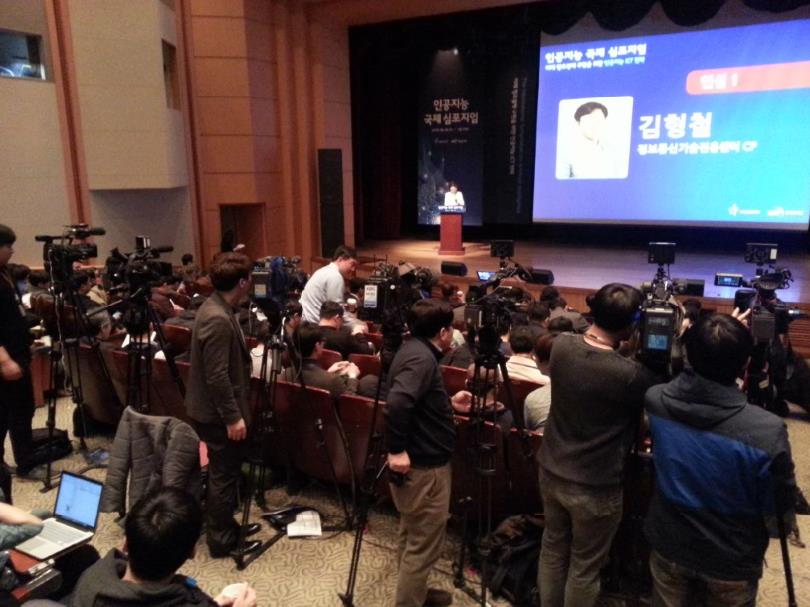
▲ Media competition for coverage at the AI symposium held at COEX was fiercer than ever.
People and the media, thirsty for 'artificial intelligence ,' concentrated intently, not wanting to miss a single word from the seminar speakers. At the symposium, AI experts from companies including IBM (home to Watson, famous for defeating a human in a chess match), Microsoft, Samsung Electronics, and MIT took the stage to share their views on the current state of AI technology and its impact on humans.
Is artificial intelligence poison or medicine for humanity?
IBM’s Chief Technology Officer Rob High stated, “The ultimate goal of artificial intelligence is to reflect human emotions and thoughts,” adding, “We will face changes that impact our lives within the next five years.” He emphasized the positive aspects of artificial intelligence, stating that Google's AlphaGo had a positive impact on the industry through Go and that AI would enhance human cognitive abilities, enabling us to become better 'humans'.
MS Research Asia Vice President Wei-Ying Ma also expressed a cautious stance, reflecting people's expectations and concerns regarding artificial intelligence, stating, "The replacement of humans by artificial intelligence is becoming a reality," and adding, "It is necessary for increasing productivity, but we will have to wait and see how far it evolves."
Lee Keun-bae, Executive Vice President of Samsung Electronics, who says that artificial intelligence will "enter our lives more" in the future, also suggested a compromise(?) by saying, "While artificial intelligence will play a role in helping people or even replacing them, ultimately we must find a way for humans and artificial intelligence to coexist."
During the discussion held after the lecture, more realistic(?) topics emerged. It was noted that artificial intelligence, sparked by AlphaGo, is a field that has been researched for a long time. Over the years, it has repeatedly faded from public attention and reappeared, undergoing two or three ups and downs. The sentiment that computing power is now different from the past, leading to the realization of previously imagined things, resonated with many.
The meaning of 'waiting' and 'basic physical strength'
However, domestic panelists voiced concerns regarding the high level of interest in artificial intelligence. They lamented that while the fundamental technologies for AI must ultimately originate from academia, the current environment forces universities to focus solely on research into technologies that can be applied immediately. It sounded even more bitter to the reporter because such painful words were not heard only in the field of artificial intelligence.
In this context, the words of a panelist who has dedicated decades to the field of artificial intelligence left a lasting impression. Regarding the recent trend of eagerness for AI, he emphasized the need to reflect on the concepts of "patience" and "fundamental strength." He argued that since AI research is not a field where immediate results are obtained, one must wait, and the foundation must be solidified by integrating data computing operations with education. He suggested that, paradoxically, taking things slowly is the way to achieve greater progress.
Waiting and fundamental physical strength are exactly what is needed in an era where people are making a fuss about 'creating' an 'economy'.
Comments
Related news
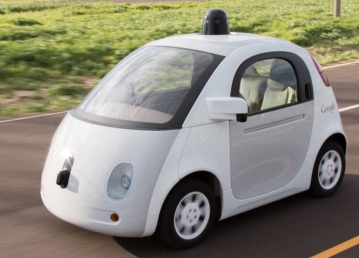
Domestic push for autonomous vehicles on actual roads is in its infancy, while overseas markets are racing to fully apply artificial intelligence.
As the government has decided to implement autonomous vehicle road tests, attention is once again focusing on core autonomous driving technologies. The Ministry of Land, Infrastructure and Transport (Minister Kang Ho-in) announced its '2016 Business Plan' on the 28th of last month, selecting autonomous vehicle industry development as one of the seven new industries in land, infrastructure and transport. This development plan includes technology development support projects such as real-road testing of autonomous vehicles, designation of pilot operation zones, and construction of experimental cities.
2016.02.01by 신윤오 기자
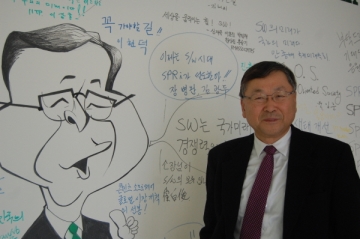
[Interview] Outstanding Domestic AI Technology Needs Regulations Lifted and Ecosystem Established to Develop
After IBM's 'Deep Blue' defeated a human opponent in chess in 1997, there were predictions that Go would still be difficult. The reason was that Go has far more cases and is much more complex than chess. However, on January 19th, at 'e4ds,' the words of Kim Jin-hyung, Director of the Software Policy Research Institute, differed. "Artificial intelligence will win at Go before long. If we make up our minds and invest money intensively, we will win," he said. Starting with his words, "don't get excited and don't be cynical," we were able to hear candidly about the current state and future of artificial intelligence in our country.
2016.02.01by 명세환 기자
[Kim's e-Column] Artificial Intelligence vs. Human Go Match, Which Side Would You Bet On?
Last year, AlphaGo defeated European Champion Fan Hui, 2-dan, in a match, securing five consecutive victories. This caused a global sensation, though it came later than IBM's 'Deep Blue' defeating a chess champion in 1997, as Go was thought to be difficult to win easily due to the vast number of possible moves—10 to the power of 170. Google has already issued a challenge to South Korea's Lee Sedol, 9-dan, and plans to hold a total of five matches, identical to those with Fan Hui. The century's matchup, beginning next month, will take place on March 9, 10, 11, 13, and 15, and will be broadcast live on YouTube. The prize money is set at 1 million dollars (approximately 1.2 billion won), and Google has announced that if AlphaGo wins, it will donate the entire prize amount to charitable organizations. Given the magnitude of this century's matchup, predictions about the outcome are also heating up online. As opinions on the result of the human versus artificial intelligence battle vary, we examined diverse public discourse.
2016.02.15by 명세환 기자
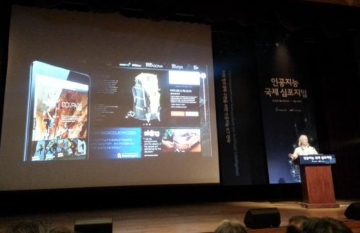
[AI Symposium] Rob High, IBM Chief Technology Officer: No Need to Fear AI. It Will Give Humans More Freedom
Reflecting the century's showdown between Google's artificial intelligence AlphaGo and professional Go player Lee Sedol, approximately 500 industry officials gathered at the International Symposium on Artificial Intelligence held in the COEX Conference Room. The International Symposium on Artificial Intelligence, organized under the theme of artificial intelligence ICT strategy for implementing future creative economy, was conducted by the Ministry of Science, ICT and Future Planning and the National Research Foundation of Korea (NRF).
2016.03.16by 신윤오 기자
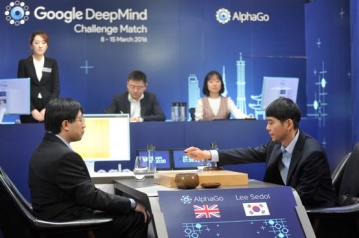
Following the rise of AlphaGo, a decision has been made to invest 1 trillion won in Korean-style 'artificial intelligence'.
Following the recent match between Lee Sedol, 9-dan professional, and AlphaGo, which has become a national point of interest, President Park Geun-hye held a 'Public-Private Joint Discussion on Intelligent Information Society' on the afternoon of the 17th at the Blue House, inviting approximately 20 executives and experts from companies related to artificial intelligence (AI) and software (SW) technology. The discussion was attended by Choi Yang-hee, Minister of the Ministry of Science, ICT and Future Planning, Yoo Il-ho, Deputy Prime Minister and Minister of Strategy and Finance, Kim Jin-hyung, Director of the SW Policy Research Institute, and Kim Dae-sik, Professor at the Korea Advanced Institute of Science and Technology (KAIST), among others.
2016.03.18by 신윤오 기자











