


5G is within sight; domestic competitiveness is high, but concerns remain about rising patent royalties.
 Published2016.04.11 13:49
#Scene 1 : Boarding the subway on his way home from work, Mr. Oh picked up his smartphone to relieve the day's stress. He selected his favorite action movie and downloaded it. It took just 8 seconds to download the movie, which was a little over 1GB. This was thanks to the fast speed of 5G communication, which is 1,000 times faster than existing 4G. After watching the movie and arriving home, Mr. Oh picked up his VR (Virtual Reality) device after dinner. This is because data transmission capabilities have improved 20-fold since VR first emerged, allowing him to enjoy VR content in real-time over the internet. This, too, is made possible by 5G communication. That is not all. Since 5G communication can provide Internet of Things (IoT) services to 1 million devices within a 1km radius, IoT life has become a part of Mr. Oh's daily routine both at home and outside. Mr. Oh plans to go out the following day, a holiday, in his self-driving car. In the era of 5th generation communication, where free communication is possible even on high-speed trains traveling at 500 km/h, autonomous vehicles exchange data seamlessly with the outside world to help Mr. Oh drive safely.
Companies Moving Rapidly to Respond to 5G Standardization
Interest in 5G technology is rising as the government begins full-scale preparations to secure 5G (fifth-generation communication) frequencies. In particular, with commercial services scheduled for 2020, competition among companies to secure 5G-related technologies and patents is expected to intensify, leading to predictions that technological dependence and patent disputes will become more apparent in the future.
The Ministry of Science, ICT and Future Planning announced on the 5th that it has formed the Korea World Radiocommunication Conference Preparatory Team to prepare for the World Radiocommunication Conference (WRC-19) scheduled to be held in Geneva, Switzerland in 2019. The Korea WRC-19 Preparatory Team will consist of a Steering Committee and five agenda study groups, in accordance with the International Telecommunication Union (ITU) WRC-19 study framework. The World Radiocommunication Conference is the highest decision-making body in the field of radio waves, responsible for revising the Radio Regulations, an international treaty that includes international frequency allocation and standards for preventing radio interference between nations.
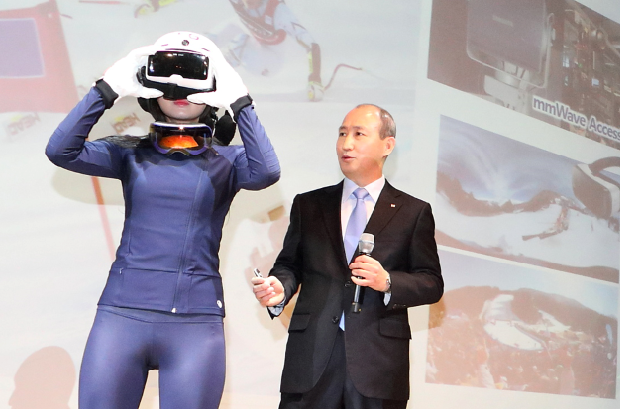
In February, KT Network Division Head Vice President Oh Seong-mok is demonstrating 5G-based '360-degree VR'.
At WRC-19, international frequency allocation will be discussed, including the agenda for securing 5th generation (5G) mobile communication frequencies led by Korea, additional securing of IMT and wireless LAN frequencies, and intelligent road traffic systems (ITS) and railway radio frequencies. Globally, efforts are underway to secure broadband frequencies to cope with the surge in wireless data traffic resulting from the widespread adoption of smart devices.
The government is pursuing the securing of additional frequencies in the high-frequency band above 6 GHz through WRC-19, taking into account technological advancements for 5G mobile communications. Furthermore, to protect terrestrial services in the 2.1 GHz band, it is seeking protection from satellites and securing priority rights for the 2.1 GHz band, which is scheduled to be used for terrestrial IMT. South Korea plans to launch 5G pilot services during the 2018 PyeongChang Olympics, while Japan plans to commercialize 5G during the 2020 Tokyo Olympics.
Not only in Korea but also overseas, efforts are being made rapidly to prepare for 5G standardization. Europe has finalized and is proceeding with a plan to invest 700 million euros to establish a 5GPP organization and lead 5G standardization, China has completed the IMT-2020 (5G) organization to support 5G R&D, and Japan has also formed and is operating the 5G Mobile Promotion Group to support 5G R&D and standardization.
The top 10 applicants account for 43.9% of the total patents.
The problem is that patent competition for 5G standardization and technological leadership is also fierce beneath the surface. With pilot services and commercialization scheduled for 2020, securing 5G technology patents has become a crucial criterion for preempting the market. In particular, it has been found that urgent countermeasures are needed, as disputes over key patents are expected to arise and royalty requests are projected to increase.
5G mobile communication core technologies are divided into about five categories. These include ▲5G wireless transmission capacity enhancement technology (Massive MIMO and 4 other detailed technologies), along with ▲mobile network technology (high-performance infrastructure communication technology and 4 other detailed technologies), ▲low-latency high-reliability technology and multi-device accommodation technology (SHORT TTI technology and 4 other detailed technologies), ▲5G small cell technology (wireless backhaul technology and 4 other detailed technologies), and ▲mobile hologram and ultra-multi-view service platform technology (thin-film holographic panel technology and 5 other detailed technologies).
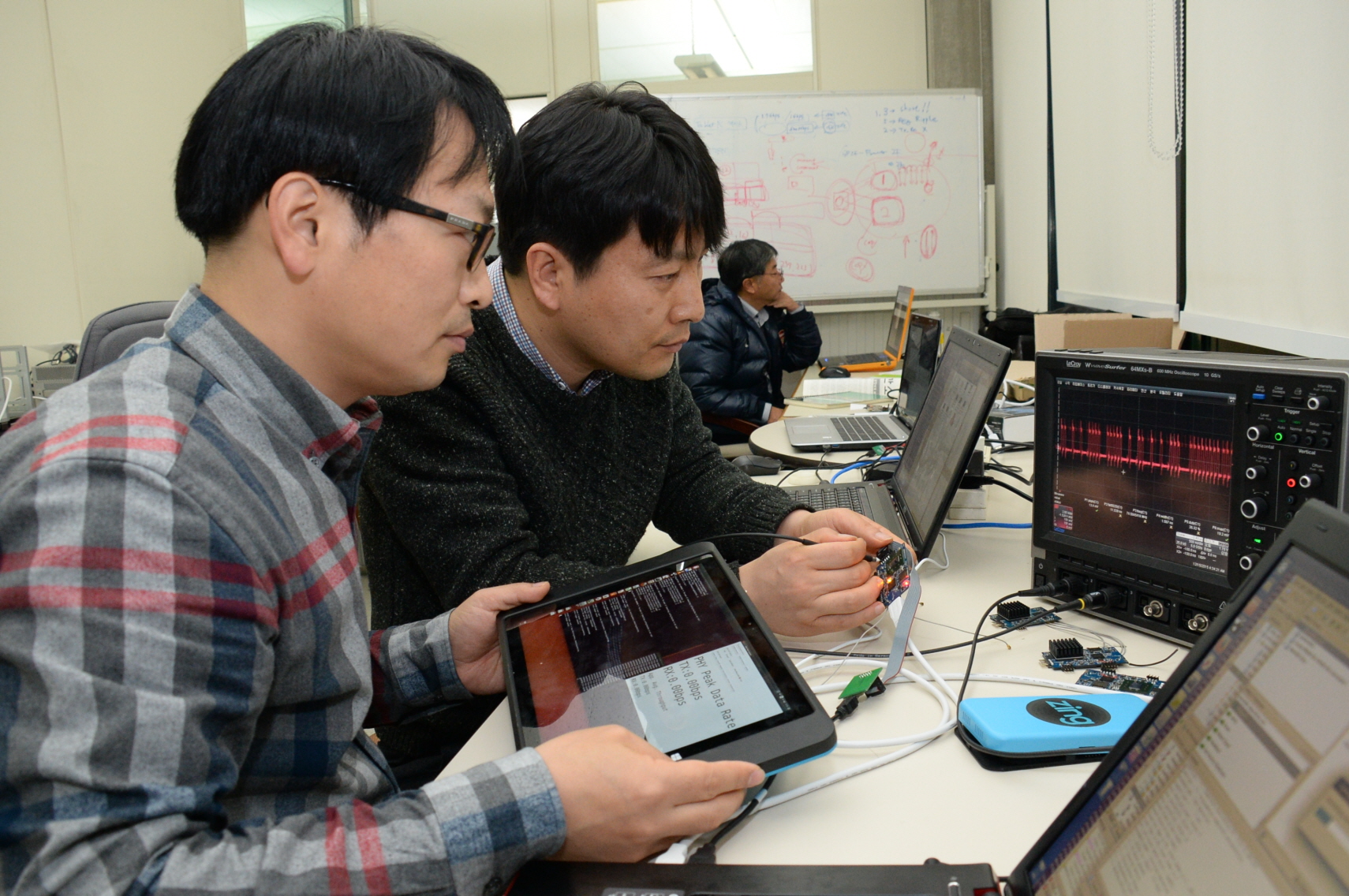
Last December, ETRI (Electronics and Telecommunications Research Institute) [discussed] future SNS services along with millimeter-wave beam switching technology, etc.
It announced that it has succeeded in developing core 5G element technologies.
Current patent application trends by national patent office show that the U.S., Korea, Japan, and European markets exhibit the highest volume of application activity, in that order, displaying an overall steady pattern. Regarding applicant nationality, the U.S., Korea, Japan, and France show the highest volume of application activity. In particular, for U.S. applicants, interest in increasing wireless transmission capacity, mobile networks, low-latency high-reliability technology, and accommodating multiple devices has been increasing since 2009.
Looking at the application status by company and institution in more detail, Qualcomm filed the most patents with 1,659 related patents as of last year, followed by Samsung Electronics (1,211), LG Electronics (737), ETRI (559), and Ericsson (442), showing that the top 10 applicants accounted for 43.9% of the total patents.
Patent focus on low-latency, high-reliability, and multi-device support technologies
Samsung is good at connecting multiple devices, while LG Electronics is good at connecting a large number of devices.
By examining the situation by technology, one can understand the current technological issues in 5G communication. Technologies where applicants' patents are concentrated include low-latency, high-reliability, and multi-device accommodation technologies, as well as wireless transmission capacity enhancement technologies, mobile network technologies, and small cell technologies.
Qualcomm, which has the most patent applications, was analyzed to have filed the most patents in 'low-latency, high-reliability, and multi-device support technology.' The situation is similar for Samsung Electronics, LG Electronics, and ETRI (Electronics and Telecommunications Research Institute).
Qualcomm has concentrated a relatively large number of patents on New Waveform, Samsung Electronics on multi-device connectivity, and LG Electronics on large-scale device access technology. ETRI, Intel, and Alcatel are concentrating their patents on multi-device connectivity technology. In addition, Intel and Broadcom are concentrating their patents on wireless transmission capacity enhancement technology, while Alcatel-Lucent is focusing on small cell technology.
In the case of wireless transmission capacity enhancement technology, Qualcomm has filed a relatively large number of patents for Massive MIMO and LTE Unlicensed technologies, and LG Electronics, Ericsson, Pantech, and others are also focusing on this. Samsung Electronics holds many patents for mmWave-based broadband communication technology, and Broadcom, Intel, ETRI, Sony, and others are also focusing on this technology.
In mobile network technology, Qualcomm and Samsung Electronics filed a relatively large number of patents in multiflow technology, while major Japanese companies such as NTT Docomo, Fujitsu, and NEC filed numerous patents in the field of vehicle-mounted mobile cell technology. Additionally, GM Global, Denso, and Mitsubishi filed many patents in high-performance infrastructure communication and direct vehicle-to-vehicle communication. In the highly anticipated small cell technology sector, Qualcomm and Alcatel filed numerous patents in wireless backhaul technology, while Korean applicants, primarily Samsung, LG, and ETRI, filed a relatively large number of patents in multi-RAAT, multi-layer cell, and cloud RAN technology. Ericsson and Intel held more patents than other companies in Advanced SON technology.
Kim Yung, a senior researcher at the Korea Intellectual Property Strategy Institute, stated through an analysis of LTE/5G mobile communication patents, “Overall, there has been a continuous trend of increasing patent applications in all countries from the beginning to the present,” adding, “The analysis results showed that high-speed handover between beams, Fast Context Link, large-scale device access, multiple device connection, Multi-RAT, and multi-layer cell Cloud RAN technologies have the highest technological competitiveness and Korea’s IP competitiveness.”
In addition, Senior Researcher Kim stated, “In terms of detailed technology analysis as well, Korea’s overall competitiveness in 5G mobile communication is assessed as high.” "However, it is necessary to respond strategically by securing key standard patents, joining situational strategic patent pools, and negotiating royalty discounts or waivers," they stated.
Comments
Related news
SK Telecom and Nokia Secure 5G Core Technology Beyond Wireless to Wired Infrastructure
SK Telecom has successfully demonstrated 5G technology in the core network, the wired infrastructure, following their successful demonstration of the world's fastest speed of 19.1Gbps in October. The company announced on the 11th that it has successfully established the nation's first end-to-end 5G technology lineup encompassing both wired and wireless services. SK Telecom, together with global network equipment manufacturer Nokia, has successfully demonstrated wired infrastructure 5G technology for the first time in Korea at the '5G Global Innovation Center' located at the Bundang Comprehensive Technology Institute.
2016.01.11by 명세환 기자
5G, VR, and Smart Cars: 'MWC 2016' is a Hot Topic
The global mobile exhibition MWC 2016 reflected this year's increasingly heated IoT (Internet of Things) trend, with a large number of products related to 5G, VR (Virtual Reality), and smart cars on display. At MWC 2016, which gauges the future direction of IT technology, what products and technologies did Korea's representative mobile and telecommunications companies showcase? First, Samsung Electronics presented an Unpacked event utilizing the virtual reality device 'Gear VR' and a new MWC exhibition configuration. The Unpacked event featured the theme 'Beyond Barriers,' showcasing innovative presentations that transcended temporal and spatial constraints, while delivering a new experience to people worldwide through 360-degree real-time video streaming of the Unpacked venue.
2016.02.22by 신윤오 기자
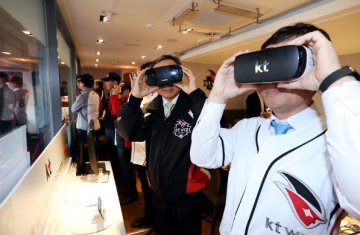
KT Chairman Hwang Chang-kyu Demonstrates 5G Leadership by Experiencing VR Live Streaming at Suwon Baseball Stadium
KT (Chairman Hwang Chang-kyu) announced on the 6th that it provided the world's first GiGA VR mobile baseball live broadcast at the KT Wiz home opening game held on the 5th at Suwon KT Wiz Park. Chairman Hwang Chang-kyu, the owner of the KT Wiz baseball club, directly encouraged the KT Wiz players before the start of the home game, and after the game began, experienced the GiGA VR mobile baseball live broadcast together with KT Group employees and executives, strongly demonstrating the company's commitment to leading the 5G communication era in which services such as 'GiGA VR' will become commonplace.
2016.04.06by 명세환 기자
ESP32 Development Environment Selection and GPS Application Implementation
The ESP32 is a microcontroller that integrates Wi-Fi, Bluetooth, 12-bit ADC, capacitive touch, PWM, DAC, and UART in a single SoC. However, the abundance of features does not by itself solve the designer's problems. The real challenges lie in selecting the appropriate development environment, determining which pins can be used and which must be avoided, and converting raw data from modules into usable information. This document addresses ESP32 peripheral constraints (ADC2 and Wi-Fi coexistence limitation, UART1 occupancy, ADC non-linear regions), the trade-offs between Arduino IDE and ESP-IDF, and the process from connecting NEO-6M/NEO-M8N GPS modules to UART2, parsing NMEA sentences, and visualizing routes in Google Earth, all organized based on documented references.
2026.10.12by 편집부
MIPI CSI-2, DSI-2, C-PHY, D-PHY Test Solution Technical White Paper
The MIPI interface adopts a burst mode that transitions between low-power (LP) and high-speed (HS) states for low-power consumption, and in return, strict timing rules are imposed on state transitions. Additionally, the high-speed section operates as a packet-based protocol with headers, ECC, and CRC, so verification engineers must handle waveforms and protocols simultaneously. Traditional configurations combining general-purpose oscilloscopes and AWGs reveal limitations in setup complexity, measurement uncertainty, and lack of reproducibility when faced with these requirements. This white paper, based on webinar materials, organizes the structure of this problem and describes how the SV5C-DPTXCPTX generator for receiver testing and SV5C-DPRXCPRX analyzer for transmitter testing integrate state transition testing, stressed eye testing, and protocol analysis into a single bench, along with their application boundaries.
2026.10.12by 편집부











