



Intel Announces New Processors for High-Performance Computing and Machine Learning
 Published2016.06.22 20:33
Meeting the demands of the machine learning and HPC industries with outstanding performance, scalability, programmability, and investment protection.
As data becomes increasingly complex and exponentially more abundant, the need for next-generation hardware, software, and architectures that can provide deep insights into machine learning and artificial intelligence analytics performance and accelerate new discoveries and business innovation is growing.
Intel has launched the new Intel® Xeon Phi™ processor as a solution to enable these deep insights.
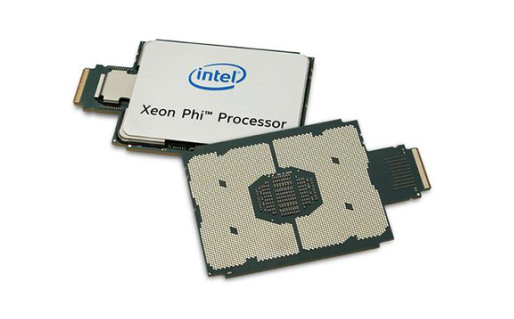
The Intel Xeon Phi family, a key element of the Intel® Scalable System Framework (Intel SSF – Intel’s reference system architecture for HPC), combines key technologies to form high-performance clusters and provides a complete solution for easy deployment.
The new Intel Xeon Phi processor is Intel's first bootable host processor, specifically designed for highly parallel workloads, and the first to combine memory and fabric technologies. As a bootable x86 CPU, the Intel Xeon Phi processor can effectively scale without limitations, unlike GPU accelerators that must rely on the PCIe bus. By eliminating these dependencies, Intel Xeon Phi processors deliver superior scalability and the performance to manage a wider range of workloads and specifications than any other accelerator family.
Additionally, this product family combines 16GB of high-bandwidth memory, providing up to 500GB/s of sustained memory bandwidth for memory-intensive workloads2, and when combined with the dual-port Intel® Omni-Path Architecture (Intel OPA), can further reduce solution costs, power consumption, and footprint. As a general-purpose CPU developed based on open standards, the Intel Xeon Phi processor enables future-proofing of existing software investments.
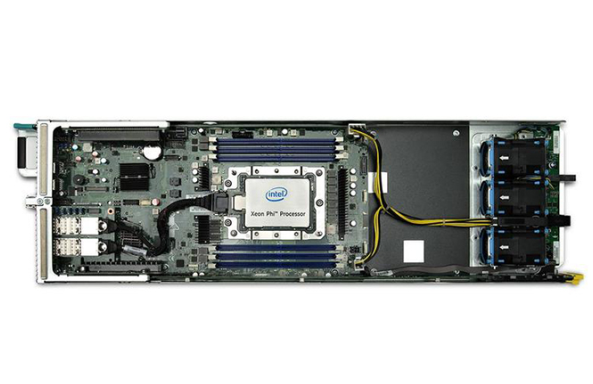
Intel Xeon Phi processors deliver exceptional efficiency and scalability to accelerate the most demanding computational tasks across a wide range of environments and applications, from machine learning to high-performance computing (HPC). 3 This family also enables new innovations using high-performance modeling and simulation, virtualization, and data analytics.
A wide range of vendors today unveiled systems featuring the new Xeon Phi processor family, with products expected to be available around September of this year. Intel has shipped tens of thousands of units to vendors so far and expects to sell more than 100,000 units this year. This processor will be supported by a broad ecosystem including over 50 OEMs, ISVs, and middleware partners.
Machine Learning Gets Even More Powerful with Intel Xeon Phi Processors
Implementing machine learning requires extremely powerful computing power to run computational algorithms and process massive amounts of data. To meet this need, Intel has launched the Intel Xeon Phi processor family, further expanding the range of technologies available for machine learning.
The Intel Xeon Phi processor delivers powerful performance for training machine learning models and, as a bootable host processor, offers the flexibility to handle multiple analytics workloads. Additionally, clusters based on Intel SSF, powered by Intel Xeon Phi processors, and the combined Intel OPA, enable data scientists to run complex neural networks and train models in a fraction of the time. The Intel Xeon Phi family delivers up to 1.38x better scalability than GPUs on a 32-node infrastructure, and up to 50x faster model training on a 128-node infrastructure.3
The Intel Xeon Phi family can also deliver enhanced performance when combined with the Intel Xeon processor E5 family, the most widely adopted infrastructure for machine learning. The Intel Xeon processor E5 v4 family is optimized for machine learning scoring models and delivers outstanding performance and value for a wide range of data center workloads. The combination of Intel Xeon Phi and the Intel Xeon processor E5 v4 family will give developers a consistent programming model for training and scoring, and a common architecture for high-performance computing, data analytics, and machine learning workloads.

Comments
Related news
5 Things You Need to Know About Intel at Computex Taipei
Intel will once again be at the center of attention at the Computex Taipei event opening this week. As computing boundaries expand, Intel will showcase how global industries are transforming through technology. Billions of smart connected devices enabled through IoT, new data-centric services and cloud applications will provide novel and compelling experiences in everyday life, and will herald the beginning of the next generation computing era.
2016.05.31by 명세환 기자
Intel Launches New Home Gateway, Delivering High-Performance, Secure Connectivity
At this Computex event, Intel introduced the Intel AnyWAN GRX 750 System-on-Chip (SoC), Intel's 5th generation 11ac MU-MIMO Wi-Fi product family, and leading OEM home gateway portfolios for the retail networking industry. Intel's connectivity products for the connected home provide the foundation necessary to support an increasing number of connected "things" and Internet-based cloud services, delivering reliable and seamless experiences for consumers and small businesses. Home connectivity through the Intel AnyWAN GRX750 SoC product family for home gateways: The Intel AnyWAN GRX750 SoC product family is a high-performance, low-power broadband and communications processor SoC based on the Intel Atom™ microarchitecture. Intel's latest SoC not only enables service providers and retail OEMs to rapidly deliver innovation to the connected home, but also enables cost reduction, operational simplification, development of new services and applications, and meeting evolving customer expectations.
2016.06.02by 명세환 기자
Intel Announces New Xeon Processor Delivering Real-Time Analytics and In-Memory Computing
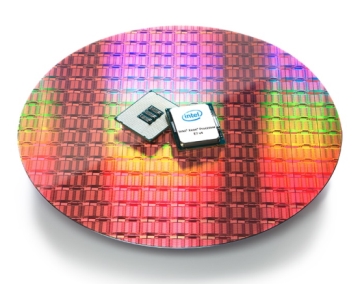
The Intel Xeon Processor E7-8800/4800 v4 product family delivers robust performance for real-time analytics, industry-leading per-socket memory capacity, high levels of reliability, and enhanced hardware-based security, enabling enterprises to rapidly extract actionable insights from vast and complex data sets. This product family is optimized for scale-up platforms, enabling data-intensive workloads such as online transaction processing (OLTP), supply chain management (SCM), and enterprise resource planning (ERP), as well as large-scale in-memory computing for real-time analytics. The Intel Xeon Processor E7 v4 product family also delivers up to 1.4 times higher performance at half the power consumption and up to 10 times better dollar-per-performance compared to IBM Power8-based solutions.
2016.06.08by 명세환 기자
.jpg)
SalePoint Signs Multi-Year Partnership Agreement with AWS… Promoting Identity Security that Integrates Even AI Agents
Sailpoint has entered into a multi-year strategic partnership agreement with AWS and is moving forward with establishing an integrated governance system that manages both human and non-human identities together. The plan is to consistently manage access permissions in an environment where AI agents are increasing as work execution entities, while applying the principle of least privilege and automated policy enforcement. The two companies plan to jointly expand capabilities to manage the identities of various entities, including AI agents, within a single layer in the AWS environment. This collaboration is interpreted as a move to design security and governance together in corporate environments where AI adoption is expanding.
2026.03.26by 배종인 기자
.png)
Databricks Unveils Open AI Security Monitoring 'Lakewatch'
Databricks entered the security market on March 24 by unveiling LakeWatch, an open-source agentic SIEM. The core functionality of this product is to integrate and analyze security, IT, and business data in a single environment to support AI-based threat detection and investigation. The company explained that it reduces the limitations of existing security operations centers, which have had to forgo some data due to high cost structures, and enables large-scale data analysis and automation based on open formats and ecosystems. LakeWatch is currently offered as a private preview, with Adobe and Dropbox mentioned as early customers. Databricks also announced an expanded partnership with Anthropic as well as the acquisition of Antimatter and SiftD.ai.
2026.03.26by 배종인 기자











