



[Reporter's Notebook] What can we learn about the iPhone 8 from Apple's patents from the past three years?
 Published2016.12.05 18:38
This proverb can also be applied to the field of patents. When Apple's iPhone first came out in 2007, the world was captivated by its innovative touch UI. The iPhone's emergence ushered in a new paradigm for smartphones. However, going back two years, this innovation was already anticipated.
In 2005, Apple acquired Fingerworks, a company specializing in touch recognition technology. At the time, the company held only five patents, but Apple acquired a total of 17 patents by 2007. By filing a large number of patent applications, Apple foreshadowed the arrival of the touch-based iPhone. This trend was also evident with the iPhone 4, released in 2011. Apple acquired Siri in 2010, prior to the launch of the iPhone 4, which featured Siri, to prepare for its voice recognition technology.
In other words, a close look at patent technology trends can reveal which technologies will emerge and be commercialized in the future. It's as if a smoking chimney already had a fire (patent registration) burning before it even started. According to iPnomics's patent future technology in the machinery and device sector, interesting results can be found.
For example, the growth rate of wearable technology, which is technology that attaches computers to clothing or the body, reached 72.8% over the past three years. This demonstrates a high level of commercialization and citations. The company with the most patents is Google, with 205, followed by Samsung Electronics with 78. Regarding flexible device technology, which has a 54.1% growth rate, Samsung Display holds 206 patents, while LG Display holds 68.
Let's look at a few more. Google holds 146 patents related to autonomous driving, Bosch 113, and Boeing holds 113 patents for drones, while Honeywell holds 83. Moving on to software patents, looking at AI algorithm patents, Microsoft (204) leads the pack, followed by IBM (158) and Google (74).
Patents in the electrical and electronics field are also worth examining. FinFET semiconductor patents accounted for 66% of the total patents over the past three years, with GlobalFoundries (649), Taiwan Semiconductor (559), and IBM (197) holding the patents. Samsung Electronics (231), Qualcomm (221), and WiTricity (113) ranked in the top three for wireless power transmission patents. Microsoft (140), Magic Leap (131), and Qualcomm (86) held the most AR patents.
Companies with such a large number of patents are either already leaders in their fields or not, and some even specialize solely in patents. Having so many patents can have the effect of enabling companies to develop products using their patented technologies in the coming years or preemptively blocking other companies from easily commercializing them. It goes without saying that if these patents are bought back or infringed upon, enormous costs will be incurred.
In light of these facts, the reality that domestic companies are failing to secure a lead in future device technologies like self-driving cars, 3D printing, drones, and electric vehicles, as well as patented technologies in biochemistry and software, is bleak. Of course, owning a patent doesn't guarantee future technology, but you can't expect smoke to build in a house without firewood.
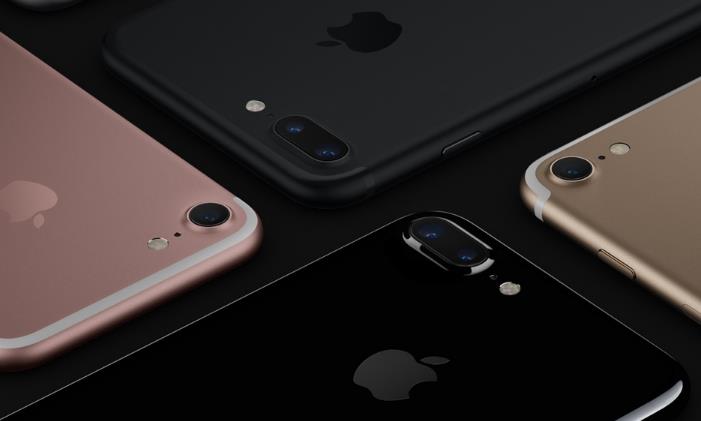
So, back to the beginning, what does Apple have in store for its next-generation weapon? Next year marks the 10th anniversary of the iPhone, so many are predicting further innovations in terms of specs. So far, there's been a lot of talk about OLED displays, all-glass designs, and wireless charging. However, a look at Apple's recent patent trends might offer a glimpse into the iPhone 8, which will be unveiled in the second half of next year.
The technologies that Apple has focused on acquiring in the past three years are patents for telecommunications (99.5%), antennas (100%), memory circuits (100%), data transmission between computers (84.4%), image analysis (100%), and information security (95.2%). The technologies that it has focused on self-citing in 2014 are patents for speech recognition and audio signal processing (595), image analysis (99), UI and screen expression (91), data transmission between computers (43), and information security (28). In addition, the technologies that it has focused on registering in the past three years are patents for graphics processing (77.7%), UI and screen expression (76.4%), telecommunications (76.8%), antennas (79.4%), image analysis (80%), and information security (73.3%).
Comments
Related news
Counterattack by Patent Trolls: Will Autonomous Vehicle Patent Disputes Intensify?
What fields of autonomous vehicles are NPEs focusing on? These entities have shown considerable interest in accident prevention/avoidance systems and vehicle state monitoring systems. The detailed technologies with the most litigation patents were automotive SoC technology, vehicle state monitoring systems, and accident prevention/avoidance systems, in that order. Among these, vehicle state monitoring systems and accident prevention/avoidance systems were patents favored by NPEs, which is because these two technologies have high infringement potential and are technologies where infringement is easy to prove.
2016.09.09by 신윤오 기자
Why does Disney have so many drone patents?
A recent analysis of drone-related patents registered with the U.S. Patent Office over the past four years revealed that patents are most frequently registered in the service sector, followed by function and platform, urban infrastructure, and privacy patents, in that order. Cha Weon-yong, director of ASPEC Future Technology Management Research Institute and a representative futurologist in Korea who also serves as a government ICT convergence specialist committee member, published a report based on an intensive analysis of approximately 500 global patents related to drones, unmanned aerial vehicles (UAV), or unmanned aerial systems (UAS) registered with the U.S. Patent Office (USPTO.GOV) from June 7, 2012 to August 4, 2016. The analysis focused on 130 patents among these that were deemed to have a high likelihood of being realized within 10 to 25 years or were judged to be particularly significant.
2016.09.26by 신윤오 기자

Patent applications for improving LCD color reproducibility using quantum dots are actively being filed.
LCD showed relatively lower color reproduction compared to OLED, but patent applications aimed at improving LCD's color reproduction using quantum dots have been increasingly active recently. According to the Korean Intellectual Property Office (Commissioner Choi Dong-gyu), domestic patent applications (based on filing date) applying quantum dots to LCD are being analyzed as steadily increasing. Quantum dot-related patent applications (based on filing date) totaled 268 cases over the past 10 years (2006-2015), with filing volumes surging in 2014 (63 cases) and 2015 (84 cases), accounting for 54.8% (147 cases) of the total filings over the past 10 years.
2016.09.26by 홍보라 기자

ESP32 Development Environment Selection and GPS Application Implementation
The ESP32 is a microcontroller that integrates Wi-Fi, Bluetooth, 12-bit ADC, capacitive touch, PWM, DAC, and UART in a single SoC. However, the abundance of features does not by itself solve the designer's problems. The real challenges lie in selecting the appropriate development environment, determining which pins can be used and which must be avoided, and converting raw data from modules into usable information. This document addresses ESP32 peripheral constraints (ADC2 and Wi-Fi coexistence limitation, UART1 occupancy, ADC non-linear regions), the trade-offs between Arduino IDE and ESP-IDF, and the process from connecting NEO-6M/NEO-M8N GPS modules to UART2, parsing NMEA sentences, and visualizing routes in Google Earth, all organized based on documented references.
2026.10.12by 편집부

MIPI CSI-2, DSI-2, C-PHY, D-PHY Test Solution Technical White Paper
The MIPI interface adopts a burst mode that transitions between low-power (LP) and high-speed (HS) states for low-power consumption, and in return, strict timing rules are imposed on state transitions. Additionally, the high-speed section operates as a packet-based protocol with headers, ECC, and CRC, so verification engineers must handle waveforms and protocols simultaneously. Traditional configurations combining general-purpose oscilloscopes and AWGs reveal limitations in setup complexity, measurement uncertainty, and lack of reproducibility when faced with these requirements. This white paper, based on webinar materials, organizes the structure of this problem and describes how the SV5C-DPTXCPTX generator for receiver testing and SV5C-DPRXCPRX analyzer for transmitter testing integrate state transition testing, stressed eye testing, and protocol analysis into a single bench, along with their application boundaries.
2026.10.12by 편집부











