



Brain health maintenance mechanisms, artificial intelligence, etc. selected for Samsung Future Technology Development Project
 Published2017.04.07 18:53
Designated themes will also be selected to recruit separate support projects... 1.5 trillion won to be contributed over 10 years.
Samsung Electronics’ Future Technology Development Project, funded by research grants, selected 40 projects for support in the first half of 2017.
There are 18 projects in the field of basic science supported by the Samsung Future Technology Foundation and 22 projects in the fields of materials technology and ICT operated by the Samsung Electronics Future Technology Center.
The Samsung Future Technology Development Project is a program launched in 2013 that supports the development of national future technologies by contributing a total of 1.5 trillion won over 10 years to three research fields: basic science, materials technology, and ICT.
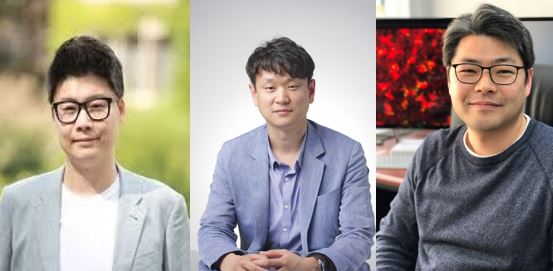
In the field of basic science, 18 projects were selected, including 'Research on mechanisms regulating the maintenance of brain health during sleep states and the aging process' (Professor Won-Seok Jung of KAIST).
In the field of materials technology, 7 projects were selected, including 'Research on next-generation low-power memory devices' (Professor Yang Hee-jun, Sungkyunkwan University), and in the field of ICT (Information and Communication Technology), 15 projects were selected, including 'Research on showing scenes desired by viewers using artificial intelligence technology during video viewing' (Professor Kim Sun-ju, Yonsei University).
Since starting the support program in August 2013, Samsung Electronics has selected a total of 312 projects and provided research funding to date.
Samsung Electronics accepts open call projects for three research fields year-round through its website, and a review committee composed of domestic and international scholars and experts evaluates the projects based on research originality and excellence through written and presentation reviews, selecting supported projects twice a year in the first and second halves.
Meanwhile, for the projects supported in the second half of this year, the results of the written review will be announced on July 25, and the final selection results will be announced on September 28. In addition to the open call, Samsung Electronics also operates a 'Designated Theme Project Call' every year to support research in future technology fields that are nationally necessary.
This year's designated themes, selected through recommendations from industry and academia, are ▲ next-generation semiconductor materials and devices and ▲ intelligence for smart machines. Proposals for designated theme projects can be submitted through the Samsung Electronics Future Technology Incubation Center website (www.samsungftf.com) from April 25 to May 6, and the selection results are scheduled to be announced on July 11.
♦ Details of Major Tasks
Basic Science Field : Research on New Mechanisms Regulating Brain Homeostasis in Sleep and Aging <Lead Researcher: Professor Won-Seok Jung (KAIST)>
It has recently been revealed that glial cells are cells that perform the important function of supplying necessary substances to brain neurons and enabling them to function, and that they also play a crucial role in maintaining brain health by removing unnecessary parts of the brain's neural networks.
By studying the phenomenon in which these functions of glial cells change with sleep and aging, it is expected that the mechanisms regulating brain homeostasis will be elucidated, thereby providing a new foundation for inhibiting brain aging and preventing/treating diseases.
Materials Technology Field : Neuroristor Integrated Circuits Based on Electronic Structure Phase Transition Materials <Principal Researcher: Professor Hee-Jun Yang (Sungkyunkwan University)>
The goal is to develop a new two-dimensional material capable of reversibly transitioning between semiconductor and conductor phases through electrical gating, thereby realizing not only next-generation two-terminal devices but also neuromorphic circuits.
If material development is successful, through electrical gating It can identify phase transitions for the first time in the world and, due to the characteristics of the memristor structure, can be used as an ultra-high integration device.
It is expected to be utilized as a candidate for next-generation semiconductors capable of low-power operation compared to existing *RRAM and PRAM.
ICT Field : Development of Visual and Language Intelligence Convergence Technology for Query-Based Video Highlight Production <Lead Researcher: Professor Sun-Ju Kim (Yonsei University)>
This is a technology development project that implements more advanced artificial intelligence technology capable of simultaneously understanding visual and linguistic information to display video highlights in response to user queries from long-duration videos.
It is expected to elevate the level of artificial intelligence technology to the next level by expanding into various application fields such as public safety and crime prevention, sports broadcast highlights, internet portal services, and entertainment.
Comments
Related news
[Decisive IT Scene] This is the Galaxy S8, the One That Will Make Up for the Note 7's Failure
Samsung Electronics held 'Samsung Galaxy Unpacked 2017' at Lincoln Center in New York on the 29th local time, unveiling its strategic smartphones 'Galaxy S8' and 'Galaxy S8+', as well as the new 'Gear 360' camera capable of 360-degree shooting. The 'Galaxy S8' and 'Galaxy S8+' unveiled on this day feature an 'Infinity Display' that maximizes screen immersion and present an entirely new smartphone design with a 'bezel-less' design that minimizes bezels.
2017.03.30by 김지혜 기자
Can I ask a smart home for a voice-understanding IoT refrigerator?
Samsung's acclaimed IoT refrigerator, Family Hub, has returned as an even smarter home appliance. Samsung Electronics recently introduced the '2017 Chef Collection Family Hub' equipped with 'fine temperature control technology' enhanced by 'full metal cooling' and a host of evolved next-generation smart features at the 'Chef Collection Experience Day' event.
2017.04.03by 신윤오 기자

I looked into what kind of companies Samsung supports for startups that are entering full-scale business.
Samsung Electronics is supporting the startup establishment of five outstanding projects this year through the spinoff system of C-Lab (Creative Lab), which the company promotes to spread creative organizational culture. Samsung has supported a total of 25 startups originating from C-Lab to date, including 9 in 2015 and 11 in 2016. The five projects launching as startups this time are drawing attention with ideas that combine IT technology with various lifestyle sectors such as kids and beauty.
2017.04.05by 신윤오 기자

[e4ds Tech Day 2026 ⑨] Sim Sang-gyu, Autocrypt CTO: "In the Physical AI Era, Automotive Security Must Extend Beyond the Vehicle"
At e4ds Tech Day 2026, Sim Sang-gyu, CTO of Autocrypt, explained automotive cybersecurity strategies in the era of Physical AI and SDV (Software-Defined Vehicle). Automobiles are evolving as part of an ecosystem connected to AI, cloud, chargers, IoT, and robots, and he emphasized that the scope of security must expand beyond the vehicle interior to the entire connected environment. In particular, AI model tampering, adversarial attacks, OTA updates, and EV charger hacking were identified as major threats. He explained that response measures require zero trust, AI model integrity protection, intrusion detection, Security by Design and Default, and full lifecycle security management, and that proactive security system establishment beyond regulatory compliance is critical for securing future mobility competitiveness.
2026.10.12by 배종인 기자
NVIDIA to Invest $1 Billion in U.S. Science Over Next Five Years
NVIDIA has announced plans to invest $1 billion over the next five years to strengthen U.S. scientific and technological competitiveness. The company will enhance cutting-edge artificial intelligence research and development capabilities in key areas including quantum computing, healthcare, and energy security, while expanding support for higher education research institutions and cloud service providers. NVIDIA is participating as a major industry partner in the White House Office of Science and Technology Policy's Genesis Mission, and is promoting supercomputer construction in collaboration with national laboratories including Argonne and Los Alamos.
2026.10.12by 배종인 기자











