



Lattice Announces Ultra-Low-Power FPGA SenseAI Stack for Edge AI
 Published2018.06.05 00:25
Lattice Semiconductor has announced an AI stack for edge devices, leveraging its ultra-low power capabilities. From IoT to mobile devices, Lattice's senseAI, designed for edge AI, offers engineers a simple and easy-to-use development stack to implement edge AI while optimizing power consumption, a key drawback of mobile devices.
In particular, individual controllers in the smart manufacturing sector generate dummy sensor data due to the nature of the edge, and filtering of valid data is essential before this dummy data is transmitted and received. The senseAI announced by Lattice this time provides BNN (Binarized Neural Network) and CNN (Convolutional Neural Network) accelerators, which are neural network accelerator IP cores, to provide control speed for efficient data filtering.
It also offers a complete technology stack combining modular hardware kits, neural network IP cores, software tools, reference designs, and custom design services to accelerate the integration of machine learning inferencing into massive Internet of Things (IoT) applications.
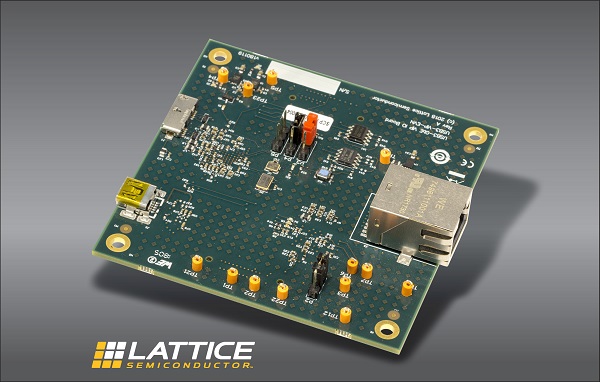
Lattice's USB3_GbE_VIP_IO
The Lattice sensAI stack is an optimized solution that delivers ultra-low power consumption (<1mW to 1W), small package size ( 5.5mm2 to 100mm2 ), interface flexibility (MIPI® CSI-2, LVDS, GigE, etc.), and high-volume pricing (<$1 to $10). This allows developers to quickly implement edge computing close to data sources.
“The Lattice sensAI stack addresses the need for flexible, ultra-low power, and cost-effective artificial intelligence (AI) semiconductor solutions, enabling rapid adoption of AI across a broad range of emerging mass-market IoT applications,” said Deepak Boppana, senior director, product and segment marketing, Lattice Semiconductor. “The Lattice sensAI stack accelerates the integration of on-device sensor data processing and analytics into edge devices by providing a complete machine learning inference technology stack that combines flexible, ultra-low power FPGA hardware and software solutions.”
“This new edge computing solution builds on Lattice’s FPGA technology leadership in edge connectivity, enabling flexible sensor interface bridging and data aggregation in high-volume IoT applications, including smart speakers, surveillance cameras, industrial robots, and drones,” he explained.
“As we’ve seen in the consumer IoT space, edge computing is getting smarter,” said Michael Palma, research director at IDC. “This is because computing power is increasing to process data collected from various sensors in real time. “The rise of artificial intelligence here will further accelerate this trend,” he said, adding, “Low-power, small-size, and low-cost semiconductor solutions capable of such local sensor data processing will play a key role in implementing artificial intelligence in various edge applications.”
As machine learning technologies increasingly become adopted across industries, latency, privacy, and network bandwidth limitations are driving the rise of edge computing deployments.
IHS Markit predicts that 40 billion IoT devices will be installed at the edge between 2018 and 2025, and that within the next five to ten years, the convergence of innovative technologies such as IoT, AI-based edge computing, and cloud analytics will transform not only various individual industries but all industries as well as create new business opportunities.
Semico Research predicts that edge devices equipped with AI technology will experience explosive growth of over 110% annually over the next five years.

Comments
Related news

Development of NewTypeMind, a deep learning and computation/storage server solution.
Intel's Programmable Solutions Group, SiliconCube, a DSN Partner of Intel FPGA, has announced the development of NewTypeMind, a solution for deep learning and computational/storage server systems utilizing the Arria10 SoC FPGA.
2016.07.25by 명세환 기자
.jpg)
Lattice Launches Low-Power FPGA Lattice Radiant
Lattice announced the launch of Lattice Radiant software for low-power FPGA. Lattice Radiant software supports the iCE40 UltraPlus FPGA and expands the application scope of this FPGA to market segments including mobile, consumer, industrial, and automotive. The iCE40 UltraPlus device is the world's smallest FPGA supporting enhanced memory and DSP, enabling always-on and distributed processing. Lattice Radiant software is currently available for free download. Yeo Chun-hoe, Senior Director of Software Marketing at Lattice Semiconductor, stated, "An increasing number of customers are seeking the benefits of ultra-low power consumption, small form factor, and cost-effectiveness offered by iCE40 UltraPlus FPGA." He added, "This software provides several enhanced features to facilitate the utilization of iCE40 UltraPlus FPGA, enabling innovative designs in embedded applications."
2018.02.27by 김학준 기자

Xilinx Unveils Heterogeneous Computing Platform ACAP
Xilinx announced an innovative product category called ACAP (Adaptive Compute Acceleration Platform), which can overcome the limitations of FPGA capabilities. ACAP is a highly integrated multicore heterogeneous computing platform that can be modified at the hardware level to adapt to the requirements of various applications and workloads. The adaptability of ACAP, which is performed dynamically during operation, provides levels of performance and performance per watt that CPU or GPU cannot match.
2018.03.20by 김지혜 기자

[e4ds Tech Day 2026 ⑨] Sim Sang-gyu, Autocrypt CTO: "In the Physical AI Era, Automotive Security Must Extend Beyond the Vehicle"
At e4ds Tech Day 2026, Sim Sang-gyu, CTO of Autocrypt, explained automotive cybersecurity strategies in the era of Physical AI and SDV (Software-Defined Vehicle). Automobiles are evolving as part of an ecosystem connected to AI, cloud, chargers, IoT, and robots, and he emphasized that the scope of security must expand beyond the vehicle interior to the entire connected environment. In particular, AI model tampering, adversarial attacks, OTA updates, and EV charger hacking were identified as major threats. He explained that response measures require zero trust, AI model integrity protection, intrusion detection, Security by Design and Default, and full lifecycle security management, and that proactive security system establishment beyond regulatory compliance is critical for securing future mobility competitiveness.
2026.10.12by 배종인 기자

NVIDIA to Invest $1 Billion in U.S. Science Over Next Five Years
NVIDIA has announced plans to invest $1 billion over the next five years to strengthen U.S. scientific and technological competitiveness. The company will enhance cutting-edge artificial intelligence research and development capabilities in key areas including quantum computing, healthcare, and energy security, while expanding support for higher education research institutions and cloud service providers. NVIDIA is participating as a major industry partner in the White House Office of Science and Technology Policy's Genesis Mission, and is promoting supercomputer construction in collaboration with national laboratories including Argonne and Los Alamos.
2026.10.12by 배종인 기자











