



Microchip Identifies Four Key Growth Factors for Automotive Semiconductor Market and Announces Response Strategies
 Published2019.05.09 17:59
| 전기화, 인포테인먼트, 자율주행, 사이버 보안
| 차내 모든 노드에서 보안 구현할 것
전장화가 가속화되면서 자동차는 이제 바퀴 달린 컴퓨터가 되었다. 그리고 점점 더 많은 칩을 요구하고 있다.
마이크로칩 테크놀로지는 9일, 서울 삼성동에서 기자간담회를 열고 자사의 오토모티브 솔루션을 소개하는 시간을 가졌다.
지속적인 인수합병으로 마이크로칩은 반도체 시장에서의 영향력을 확대하고 있다. 작년 3월에 인수한 마이크로세미는 마이크로칩의 오토모티브 사업을 확장하는 데 큰 역할을 했다. 마이크로칩은 PCIe 스위치, 인덕티브 센서 인터페이스, FPGA, SiC 다이오드, MOSFET, SBD 등의 분야에서 포트폴리오를 강화할 수 있었다.
지난해 마이크로칩은 60억 달러, 우리 돈으로 약 7조 920억 원의 매출을 기록했다. 이중 오토모티브 사업이 전체 매출에서 차지하는 비중은 17%에 달했다. 이는 27%인 인더스트리 사업 다음에 해당한다.
마이크로칩은 오토모티브 반도체 시장 성장 4대 요인을 선정하고 이에 따른 전략을 소개했다.
첫 번째는 전기화다. 환경에 대한 규제가 날로 강화되면서 자동차 OEM들은 전기차에 대한 투자를 강화하고 있다. 전기차와 하이브리드 전기차에는 수많은 애플리케이션이 탑재된다. 전기 모터, AC/DC 컨버터, DC/DC 인버터, 온보드 충전기, 충전 포트, 배터리 관리 시스템, 열 시스템, e사운드, 회생 제동 시스템 등이다.
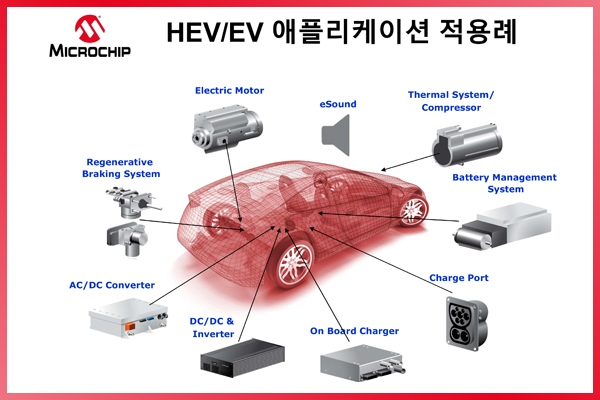
그 중 온보드 충전기(On Board Charger; OBC)는 2022년까지 연평균 52%의 성장이 예상되는 유망 분야다. 전기 인버터 분야 역시 2023년까지 연평균 11%의 성장이 예상된다. 마이크로칩은 두 분야에서 다양한 제품을 보유하고 있으며, 레퍼런스 디자인, 펌웨어, 보안 및 안전성 지원을 통해 시장 출시 기간을 단축하고 소비자 위험을 절감한다.
e사운드는 전기차에 탑재하는 가상의 소리로, 엔진음 따위를 내는 기능을 말한다. 전기차는 기존 차보다 내는 소리가 작다. 따라서 보행자는 전기차가 다가오는 것을 알아차리지 못할 수 있다. 미국과 유럽에선 향후 1~2년내에 모든 전기차에 e사운드를 필수로 장착해야 한다. 마이크로칩은 Ethernet/AVB, MOST, INICnet을 활용한 e사운드 레퍼런스 디자인을 보유하고 있으며, 오디오 애플리케이션용 MCU 로드맵을 갖추고 있다.
두 번째는 HMI와 차량용 인포테인먼트의 활성화다. 완성차 시장의 성장률은 연간 한 자릿수로 정체됐지만, 차량용 인포테인먼트 시장은 그보다 가파르게 성장하고 있다. 마이크로칩은 확장 가능한 1D/2D/3D HMI 시스템을 갖추고 있다. 이는 더욱 커지고 다양한 도형으로 변화하는 차량 내 디스플레이를 지원한다. 또 FuSa 지원과 검증된 라이브러리는 사용자 편의성과 운전 안전성 향상을 도모한다.
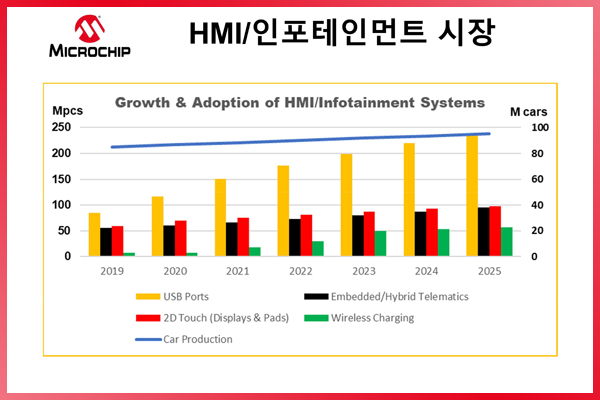

차량용 인포테인먼트는 안전에 대한 우려 때문에 각국 정부의 규제가 첨예하다. 따라서 터치스크린은 생각지도 못한 곳에 배치되고 복합적인 음향 시스템이 탑재될 것이다.
마이크로칩의 INICnet(Intelligent Network Interface Controller networking) 기술은 오디오 및 인포테인먼트 시스템 구축을 크게 단순화하는 동기식 확장형 솔루션으로, 이더넷 지향 시스템 아키텍처를 갖춘 차량에서 끊김 없이 원활한 네트워킹을 구현한다. INICnet은 인포테인먼트, 사운드 시스템, 음성 어시스턴트, eCall, 능동형 소음제거 애플리케이션 등에서 유용하게 활용될 수 있다.
세 번째는 ADAS와 자율주행차량 기술의 본격화다. 맥킨지는 2030년에 제조되는 차량의 15%가 완전 자율주행차량일 것으로 내다보고 있다. 이를 위해서는 고성능 컴퓨팅이 필수적이다.
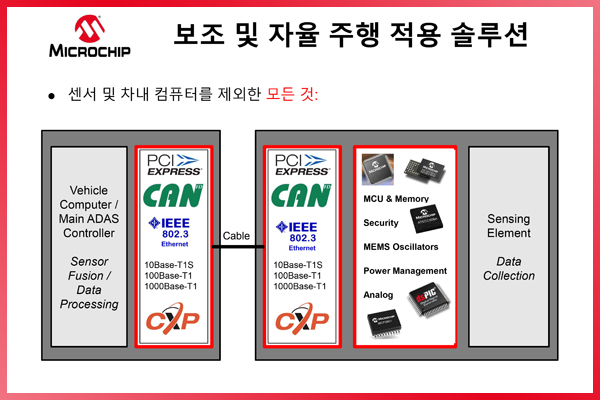
마이크로칩은 차량 내 컴퓨터, ADAS 컨트롤러, 센서 등을 만들지 않는다. 하지만 그 모든 것들을 잇는 커넥티비티 기능을 제공한다.
네 번째는 오토모티브 사이버 보안 필요성의 증가다. 자율주행차량 기술의 성숙과 커넥티드 카의 보편화로 보안 인증에 대한 수요가 증가하고 있다. 2019년부터 2026년까지 오토모티브 보안 엔드포인트 시장은 연간 12% 성장률을 보일 것으로 예측된다. 마이크로칩은 현재 ISO/SAE 21434에 대해 검토 중이며, 앞으로의 오토모티브 보안을 위한 확장 가능하고 유연한 보안 솔루션을 지원한다.
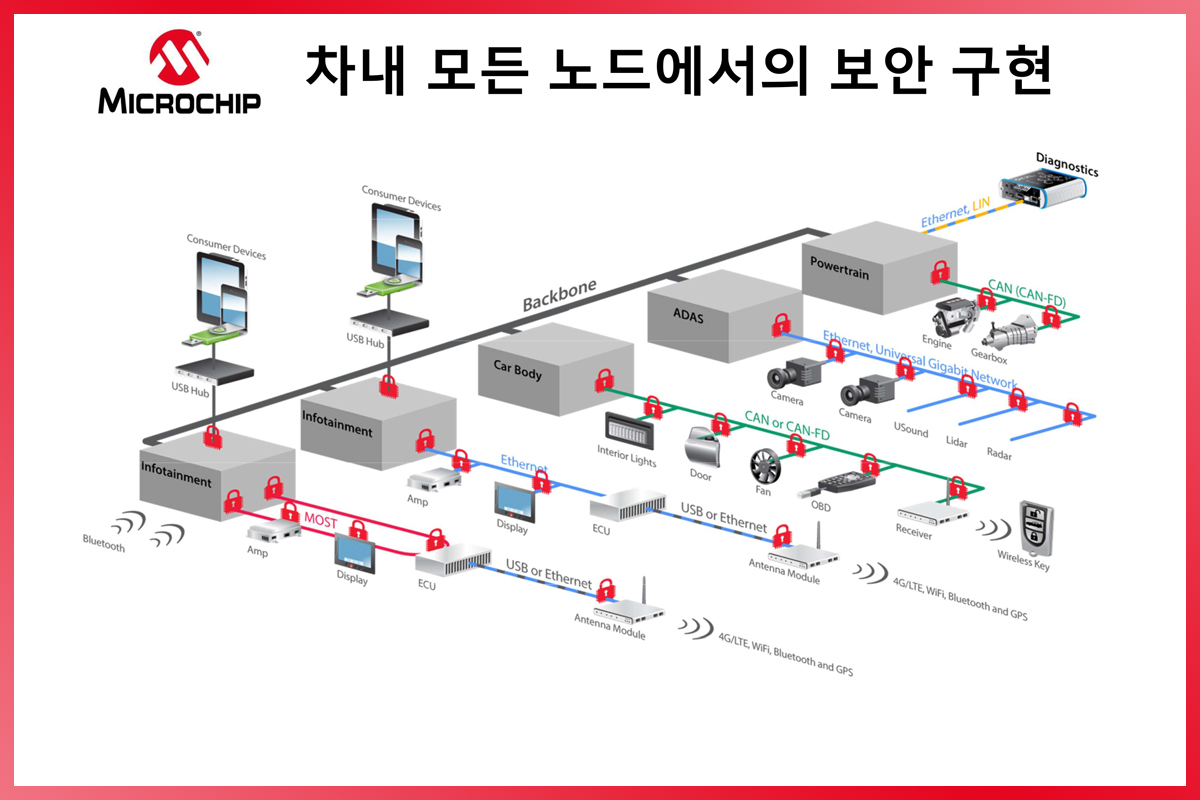
마이크로칩은 차내 네트워크 보안을 위해 다양한 ECU 아키텍처를 지원하며, 각 노드에서의 시큐어 부트를 지원한다. 마이크로칩의 최종 목표는 차내 모든 노드에서의 보안 구현이다.
마이크로칩 오토모티브 사업부 부사장 마티아스 케스트너(Matthias Kästner) 박사는 “마이크로칩은 2018년 기준으로 전 세계에서 열 손가락 안에 드는 오토모티브 반도체 공급업체로서 오랫동안 사업을 진행해왔고 검증된 포트폴리오를 보유하고 있다”라며, “제품을 공급하는 선에 그치지 않고 변화하는 트렌드에 맞춰 확장 가능한 솔루션을 제공할 것”이라고 말했다.

또 “오토모티브는 마이크로칩이 인더스트리 다음으로 가장 많은 수익을 내는 분야”라며 “최근 급성장하는 자율주행차량과 오토모티브 사이버 보안에 대한 포트폴리오를 강화하여 해당 시장에서의 선도적인 위치를 지속적으로 점유할 계획”이라고 밝혔다.
Comments 1
1 Comments:
Related news
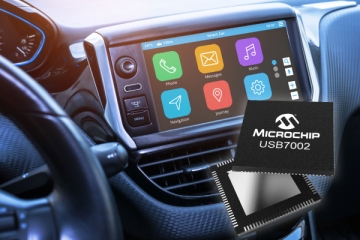
Microchip Launches USB 3.1 SmartHub IC for Automotive Infotainment with USB Type-C Support
As firmware updates and large-capacity media files become commonplace in automotive entertainment consoles, the need for faster data transmission speeds to reduce upload and download times is increasing. Microchip Technology is launching an automotive-certified USB 3.1 Gen1 smart hub IC that supports data transmission speeds ten times faster than existing USB 2.0 solutions and reduces indexing time to improve in-vehicle user convenience. The USB7002 smart hub IC features an interface for USB Type-C connectors to support the increasing adoption of USB Type-C products in the smartphone market and to enable universal connectivity functionality in vehicles.
2019.03.02by 이수민 기자
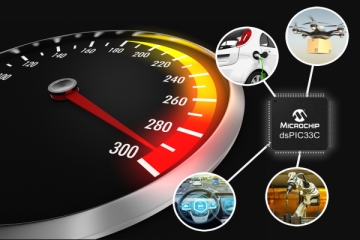
Microchip Launches New Dual- and Single-Core dsPIC DSCs for High-End Embedded Control Application Design
System developers designing high-end embedded control applications require flexible options that provide scalability as project complexity increases. In response to these needs, Microchip Technology has introduced new dual-core and single-core dsPIC33C digital signal controller products with additional options to meet changing application requirements in terms of memory, temperature, and functional safety. The dsPIC33CH512MP508 dual-core DSC supports applications with larger program memory requirements, while the dsPIC33CK64MP105 single-core DSC offers a cost-optimized version targeting applications with smaller memory and footprint requirements. Developers can easily expand their product lines by leveraging these new devices, which offer pin-to-pin compatibility within the dsPIC33CH and dsPIC33CK product families.
2019.03.17by 이수민 기자
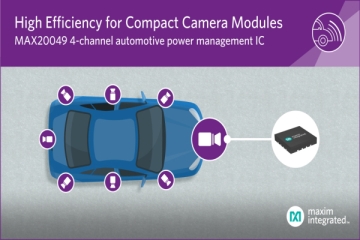
Maxim Launches MAX20049, a 4-Channel PMIC That Gives Automotive Camera Modules a Boost
Automotive camera modules require power solutions that integrate the necessary power and functionality in a compact form factor due to size constraints. To address this, Maxim has launched the MAX20049, an ultra-compact automotive 4-channel PMIC that integrates four power devices in a small space. The new product is approximately 30% smaller than average products in the market and offers the highest efficiency among comparable 4-channel PMICs in its class.
2019.03.27by 이수민 기자

Intel Unveils Next-Generation 'Core Ultra Series 3' and vPro Platform for Enterprise PCs
Intel has officially unveiled the "Intel Core Ultra Series 3" for next-generation enterprise PCs and the latest vPro platform, addressing a wide range of demands from enterprise notebooks to high-performance workstations.
2026.03.26by 배종인 기자

ROHM Launches ESD Protection Diode Compatible with High-Speed Interfaces of 10Gbps or Higher
Semiconductor specialist ROHM has developed the 'RESDxVx series' of ESD (electrostatic discharge) protection diodes capable of responding to next-generation high-speed data communication environments exceeding 10Gbps, simultaneously enhancing both signal quality maintenance required in high-speed interfaces and IC protection performance.
2026.03.26by 배종인 기자












좋은 정보 감사합니다