


[Interview] "The Need for Low-Parasitic Inductance Current Sensors Is Growing"
 Published2021.07.29 16:46
Increasing precision requirements for current sensors
Infineon offers high-efficiency sensors for various applications.
With demand for electronic devices soaring, integrated circuit (IC) shipments are projected to surge 21% this year compared to last year. The growing number of electronic devices also means a growing demand for power generation. Major countries around the world are rapidly enacting eco-friendly policies to reduce carbon emissions, and the electronics industry is striving to produce products with the highest possible efficiency.
Internal combustion engine vehicles (ICEVs) are identified as a major contributor to increased carbon emissions, leading the European Union (EU) to resolve their complete phase-out by 2050. China, betting the future of its automotive industry on electric vehicles, is sparing no expense in subsidizing them. Furthermore, electrification and electrification of vehicles are simultaneously taking place, with various electronic devices being integrated to enhance the in-car experience.
As the development of eco-friendly, high-efficiency applications emerges as a pressing challenge of the times, current sensors are also at a turning point with the emergence of third-generation semiconductors.
A current sensor is a product that detects the size and direction of current by measuring the magnetic field generated by the current. Today, current sensors are used in applications such as industrial solar inverters, motor drives, server and telecommunications power supplies, as well as automotive main drives, inverters, battery management systems and electric vehicle charging systems.
These applications are demanding higher precision from current sensors than ever before, driven by the trend toward higher efficiency, and are also seeking products with lower parasitic inductance as power devices increasingly use new semiconductor materials such as SiC and GaN.

We asked Kim Se-hwan, a deputy manager in charge of magnetic and pressure sensor technology support at Infineon Korea's Automotive Business Division, about current sensor market trends and products today.
Q. What are the recent trends in the current sensor market?
A. In the past, core-type current sensors that measured current by using shunt resistors or magnetic cores were widely used.
However, the shunt resistance was measured directly in the high voltage range, so it did not satisfy galvanic isolation, and the core type had problems with current measurement errors due to the weight of the core, hysteresis, and nonlinearity.
To overcome this, semiconductor-based, high-precision coreless current sensor solutions are being introduced to the market, and these products are expected to become the mainstream in the current sensor market.
Q. Recently, third-generation semiconductors based on SiC and GaN are becoming widespread. Why do these products require current sensors with even lower parasitic inductance?
A. Silicon carbide (SiC) and gallium nitride (GaN)-based semiconductors exhibit higher breakdown voltages and lower on-resistances than conventional silicon (Si)-based semiconductors, enabling stable operation even under high-voltage, high-frequency switching conditions. Compared to conventional Si semiconductors, they are known to reduce size by up to 50% and increase power efficiency by 5-7%.
Conversely, under high-voltage, high-frequency switching conditions, parasitic impedance losses are significant compared to Si, requiring even lower parasitic impedance. For example, Infineon's "TISON-8" current sensor features an internal current path and guarantees less than 1nH of parasitic impedance on the PCB, meeting the requirements of next-generation semiconductors such as SiC and GaN.
Q. What is Infineon's industrial 'TLI4971' current sensor?
A. The TLI4971 product features current rails within the package. Typically, a differential Hall method is used to minimize the influence of external magnetic fields. It supports 240 kHz analog output and offers three output modes: single-ended, semi-differential, and full-differential.
Additionally, it features independent internal overcurrent measurement and detects overcurrent with two OCD outputs. The hockey-stick-shaped internal current rail features a low resistance of 220µΩ and parasitic impedance of less than 1nH, ensuring less temperature fluctuation than competing products and stable operation under high current conditions.
Infineon offers standard products tailored to four current ranges: 25 A, 50 A, 100 A, and 120 A. Customers can also customize the current range via the internal EEPROM. The TLI4971 can measure both AC and DC and is suitable for applications such as industrial inverters, telecommunications equipment, motor drives, and energy storage systems (ESS).
Q. I heard that you are also planning to mass-produce current sensors for vehicles. Could you please introduce them?
A. Infineon is currently preparing for mass production of the 'TLE4971, TLE4972' current sensors.
The TLE4971 product is the automotive version of the TLI4971 product explained earlier. This product is AEC-Q100 certified for automotive applications and undergoes additional vehicle-grade testing during mass production. Its basic performance and functionality are identical to the TLI4971.
The TLE4972 measures current via an external current rail. It can measure up to 2000 A, making it ideal for use in high-voltage vehicle inverters. It can measure 200 A of current on a PCB, as well as 400 to 2000 A of current on an external busbar.
Infineon offers application and design solutions tailored to each current range. In particular, automotive products are developed with functional safety specifications and meet ASIL-B standards.
Q. Does the current sensor package differ depending on the current area it is responsible for?
A. The TLI4971 and TLE4971 are TISON-8 package products and have internal current rails on the semiconductor package, so the maximum usable current range is limited to 120 A.
For the TLE4972, it utilizes an external current rail for use in high-current ranges and is available in SMD type TDSO-16 and lead-less VSON packages.
Q. What additional current sensor solutions and services does Infineon offer?
A. First of all, Infineon current sensors have an internal EEPROM and support a programming kit and GUI that allows customers to set current range, output type, overcurrent threshold, current glitch filter, etc. according to the situation.
We also offer PC USB-based evaluation kits (Shield2Go, 2GO) and software. For the TLE4972 product in particular, we offer related simulations and optimized designs, as busbar design is a critical component in current sensor use.
Q. What are Infineon's future plans for the current sensor market?
A. The current sensor market is expected to grow further in line with the trend toward eco-friendly electrification. Infineon plans to mass-produce additional product lines that are easier to use and offer a wider range of price points from a customer perspective. While specific details are difficult to disclose at this time, the products will include additional features for easier programming and diagnostic processing.
In line with the commercialization of third-generation semiconductors, an Infineon webinar will be held on Tuesday, September 7th at 10:30 AM to explore the features of today's industrial and automotive current sensors with improved precision, as well as how to apply current sensors to various current ranges.
Comments
Related news
Mouser to Supply TDK InvenSense Industrial MEMS IMUs
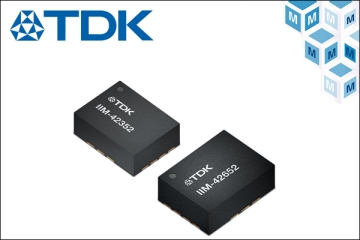
Mouser supplies TDK InvenSense's smart industrial sensor product line. The smart industrial product line being supplied this time includes the IIM-42351 and IIM-42352, as well as the IIM-42652 sensors. The three types of ultra-low-noise 3-axis accelerometers come in a compact 2.5×3×0.91mm 14-pin LGA package and provide a maximum ±16g digital output programming range.
2021.05.21by 이수민 기자
ETRI's Radiation-Immunicable Sensor Replaces Heavy Lead Protective Clothing
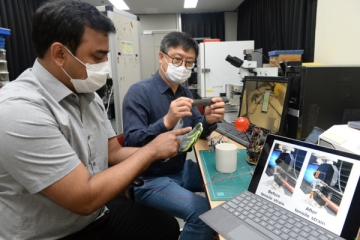
Domestic researchers have developed sensors based on radiation-resistant flexible composite materials, garnering expectations for application in extreme environments such as nuclear power plants or as replacements for heavy lead shielding.
2021.06.02by 배종인 기자

Infineon Provides ICMS Architecture to Prevent In-Vehicle Accidents
In-cabin monitoring systems (ICMS) for vehicles ensure passenger safety. To this end, Infineon announced that it provides an ultra-wideband, ultra-low-power, high price-to-performance ratio, and scalable ICMS subsystem architecture composed of Sensibe BGT60ATR24C AEC-Q100 radar sensor, Orix MCU, and Optirec PMIC.
2021.06.29by 명세환 기자

Intel Unveils Next-Generation 'Core Ultra Series 3' and vPro Platform for Enterprise PCs
Intel has officially unveiled the "Intel Core Ultra Series 3" for next-generation enterprise PCs and the latest vPro platform, addressing a wide range of demands from enterprise notebooks to high-performance workstations.
2026.03.26by 배종인 기자

ROHM Launches ESD Protection Diode Compatible with High-Speed Interfaces of 10Gbps or Higher
Semiconductor specialist ROHM has developed the 'RESDxVx series' of ESD (electrostatic discharge) protection diodes capable of responding to next-generation high-speed data communication environments exceeding 10Gbps, simultaneously enhancing both signal quality maintenance required in high-speed interfaces and IC protection performance.
2026.03.26by 배종인 기자











