


AMD: "Realizing Next-Generation Intelligent Factories with Robotics Starters"
 Published2022.05.19 09:55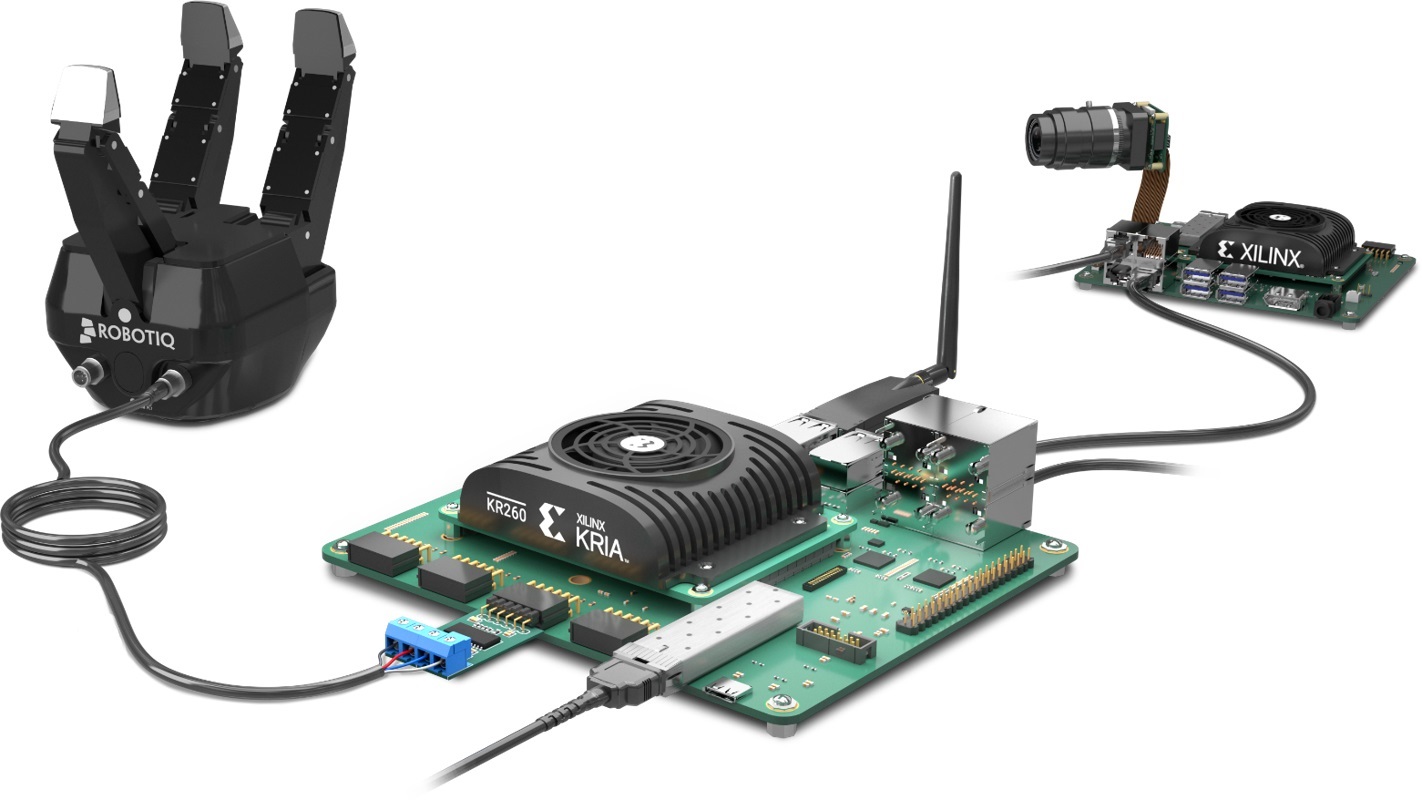
▲Cream KR260 Robotics Starter Kit and End-to-End Robotics Platform (Image courtesy of AMD)
The Cria KR260 improves productivity with support for ROS2 and Ubuntu.
Even developers without FPGA expertise can easily begin development.
Recent trends demand flexibility in factory production lines, enabling them to produce immediately in changing environments.
“The recent severe labor shortage has led to a need for higher levels of automation,” said Kiran Vishal Thanjavur Bhaskar, AMD AECG manager.
Today, the COVID-19 pandemic, supply chain issues, and rapid technological change are driving the adoption of robotics across factories and into new fields. AMD, with its acquisition of Xilinx, a leader in programmable field programmable gate array (FPGA) semiconductors, is accelerating its entry into this rapidly growing robotics market.
AMD held an event on the 18th to introduce its new lineup, including the latest Kria KR260 robotics starter kit. On this day, AMD introduced the Cria Robotics Starter Kit, which supports ROS2 and implements low latency and consistent performance.
Kiran Vishal, Manager, said, “As an IoT hub, robotics can perform innovative functions such as communication and management functions with 5G capabilities,” and “The robotics installation base is increasing in various environments such as agriculture, healthcare, delivery, cleaning, and maintenance outside of factories,” revealing the motivation behind developing AMD’s robotics platform.
.jpg)
▲AMD-XILINX joint venture CREA KR260 robotics starter kit (Image provided by AMD)
The Kria SOM portfolio is designed to enable developers without FPGA expertise to easily begin development, enabling faster design cycles compared to chip-down approaches, reducing the build time by up to nine months.
In particular, the low-latency adaptive compute architecture of the Kria SOM, implemented with the Kria Robotics Stack (KRS) and ROS 2, delivers more than 8x better performance per watt and up to 3.5x less latency than GPU-based competing solutions.
KRS is an integrated robotics library and set of utilities that accelerates the development, maintenance, and commercialization of industrial robotics solutions based on the Kria SOM. This is a core part of the KR260 design experience, enabling the robotics community to more easily leverage the benefits of adaptive computing.
The KR260 supports Ubuntu, a widely used embedded operating system, and is compatible with the latest long-term support versions of Ubuntu Linux desktop from Canonical and ROS 2 Humble Hawksbill.
“The Cria SOM family and the KR260 starter kit deliver the benefits the robotics community needs: superior performance, flexibility, and reduced development time,” said Brian Gerke, CEO of Open Robotics. “Users can develop software-defined hardware to deliver superior solutions with security, energy efficiency, and adaptability.”
“The Kria KR260 Robotics Starter Kit builds on the success of our Kria SOM and KV260 Vision AI Starter Kit among AI and embedded developers,” said Chetan Hona, AMD Senior Director. “Now, roboticists can work in a standard development environment on a platform that has all the interfaces and features they need to get up and running in less than an hour.”
Meanwhile, according to Omdia, a global research and consulting firm, the robotics components market is expected to grow at a compound annual growth rate (CAGR) of 20.4% until 2025, with the market size projected to increase to $126 billion by 2025.

Comments
Related news
NVIDIA Announces New ROS Product to Accelerate Robot Development
Nvidia, a leader in artificial intelligence (AI) computing technology headed by CEO Jensen Huang, has announced a new robot operating system (ROS) and is moving forward with optimizing the performance of robot applications.
2021.11.03by 강정규 기자
AMD Unveils 4G and 5G Wireless Access Network Solutions
With the recent rapid surge in demand for internet connectivity, the necessity for improving the infrastructure to support it is also increasing. AMD is currently stepping forward to provide development support to offer solutions in response to this situation.
2022.05.12by 명세환 기자
SKT Builds Open Platform to Expand Robot Ecosystem
SKT has signed a memorandum of understanding (MOU) with Intergity, an AI-based robotics platform company, to develop an "open robotics data platform."
2022.05.13by 김예지 기자

Intel Unveils Next-Generation 'Core Ultra Series 3' and vPro Platform for Enterprise PCs
Intel has officially unveiled the "Intel Core Ultra Series 3" for next-generation enterprise PCs and the latest vPro platform, addressing a wide range of demands from enterprise notebooks to high-performance workstations.
2026.03.26by 배종인 기자
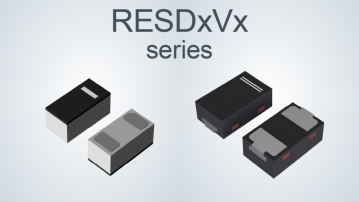
ROHM Launches ESD Protection Diode Compatible with High-Speed Interfaces of 10Gbps or Higher
Semiconductor specialist ROHM has developed the 'RESDxVx series' of ESD (electrostatic discharge) protection diodes capable of responding to next-generation high-speed data communication environments exceeding 10Gbps, simultaneously enhancing both signal quality maintenance required in high-speed interfaces and IC protection performance.
2026.03.26by 배종인 기자











