



Global Automotive Industry in 2026, 'Test of Transformation'
 Published2026.02.06 09:25
2026 Breakthrough Point for Estimating Actual Revenue Connection Rather Than Technological Advancement Itself
The global automotive industry is entering an unprecedented phase of structural transformation. The reshaping of the trade order due to the competition for dominance between the U.S. and China, the strengthening of protectionism, the divergence of environmentally friendly policy lines, and the rapid advancement of artificial intelligence (AI) and robotics technologies are all intertwined, shaking up the entire industrial landscape.
The Korea Automotive Technology Institute (KATECH) predicted in a recently published special issue on industry analysis that changes in the global automotive industry will face a full-scale test starting in 2026.
The report presented the key issues for the automotive industry in 2026 from five perspectives: autonomous driving and robotics, eco-friendliness of powertrains, software-defined vehicles (SDV) and user experience (UX), automotive market dynamics, and global key component supply.
A common characteristic is that while the pace of technological advancement is accelerating, the pressure to verify commercial viability and profitability is increasing.
In the field of autonomous driving, the 'end-to-end (E2E)' approach is effectively converging as a technological alternative.
The E2E approach, which processes everything from perception to control using a single AI model based on vast driving data, is evaluated as having excellent scalability at the advanced stage.
Accordingly, competition is intensifying between open strategies of allying with Big Tech and closed strategies of building their own ecosystems.
The leapfrog strategy for robotaxi led by Tesla and the gradual commercialization of Level 3 (L3) autonomous driving spreading, centered on China, are also expected to enter a phase of performance verification around 2026.
The field of robotics, coupled with autonomous driving technology, is also drawing attention. While automobiles and robots share similar perception, judgment, and control structures, creating significant technological synergy, the economic viability and scope of application for robots, such as humanoids, are still limited.
Accordingly, the analysis suggests that there is a high possibility of a 'Big Blur' phenomenon occurring in the short term, where expectations and skepticism intersect.
In terms of powertrains, there is a shift away from the sole dominance of battery electric vehicles (BEVs), with various eco-friendly alternatives such as hybrids (HEV, PHEV, EREV) emerging.
As policy uncertainty and consumer burdens increase, demand for relatively low-risk hybrids is expanding, and technological competition among Chinese automakers is also stimulating this trend.
In the medium and large commercial vehicle sector, the transition to BEVs based on megawatt (MW) charging technology is expected to be put to the test.
In the battery sector, while the proportion of LFP batteries is increasing due to their superior price-to-performance ratio, it appears that full-scale commercialization of innovative technologies such as solid-state batteries will still require time.
While the transition to SDV continues, monetization remains a challenge. However, continuous feature improvements via OTA (Over-the-Air) updates and the ability to respond to recalls have established themselves as important criteria for consumer choice.
With generative AI-based voice assistants emerging as a key competitive factor in in-vehicle interfaces, a structure is forming where the level of SDV transition determines the upper limit of the user experience.
The trends in the finished vehicle market also differ distinctly by region. In the U.S., premium and entry-level niche strategies coexist amidst consumption polarization, while Europe is seeking a breakthrough centered on small, low-cost electric vehicles.
Amid slowing growth, China is shifting its focus from price competition to competition over quality and brand.
In terms of global sales volume, the three-way dominance of Toyota, Volkswagen, and Hyundai Motor Group is expected to continue, but changes in the rankings of Chinese and Indian companies are anticipated within the top 10.
Meanwhile, the supply and demand imbalance of memory semiconductors caused by the AI craze and escalating geopolitical tensions are other variables for the automotive industry.
Supply chain risks are expected to persist in sectors highly dependent on China, such as automotive semiconductors, secondary battery materials, and rare earth elements.
KATECH assessed that “2026 will be a turning point to gauge whether technological progress can lead to actual markets and profits, rather than the progress itself,” and that “the entire automotive industry has entered a period where it is required to make choices and focus.”

Comments
Related news
.jpg)
“Used Car Exports Rising Rapidly, Tailored Strategies for Each Country Are Necessary”
The Korea Automotive Research Institute recently released a report titled "The Rise of the Used Vehicle Export Market and the Need for Strategic Response" through its Industrial Analysis Vol. 148. According to the report, the used vehicle export market has been growing rapidly and occupying an important share within the global automotive industry. In particular, as demand for used vehicles increases centered on developing countries, competition among countries is intensifying, and accordingly, it has been shown that Korea also needs to implement active response strategies.
2025.06.02by 배종인 기자
.jpg)
Hanjayeon, Establishment of a Base for Supporting the Full Cycle of Autonomous Driving and Automotive Semiconductors
The Korea Automobile Research Institute (KAERI) has broken ground on a "Comprehensive Support Center for Autonomous Driving and Automotive Semiconductors" at a site near Cheonan-Asan KTX Station in Baebang-eup, Asan-si, Chungcheongnam-do, to establish a hub for technological self-sufficiency and full-cycle support in the autonomous driving and automotive semiconductor industries.
2025.06.09by 배종인 기자
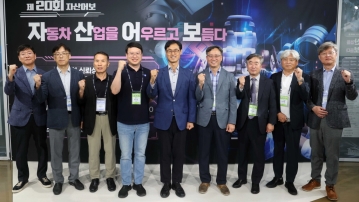
Hanjayeon, presents a solution for future car reliability
The Korea Automotive Research Institute (Director Jin Jong-wook) held the 20th Jasan Automotive Forum on the 10th at COEX Startup Branch under the theme of "Promise Beyond Future Vehicle Reliability Performance, Future Vehicle Reliability Innovation."
2025.06.11by 배종인 기자
“Autonomous driving and SDV, rapid rise of product differentiation”
According to the special industrial analysis report "The Current State of China's Automotive Industry as Seen Through the Shanghai Motor Show," released by the Korea Automotive Research Institute on the 7th, the 2025 International Motor Show held in Shanghai, China clearly demonstrated that the global automotive industry is undergoing a paradigm shift beyond mere technology exhibition. In particular, five key trends emerged from this motor show: advanced electrification, competition in autonomous driving and SDV (Software-Defined Vehicle), diversification of product strategies across vehicle types, price segments, and powertrains, the shift of ICT technology companies toward the center of the industry, and global manufacturers' localized strategies tailored to the Chinese market.
2025.07.08by 배종인 기자
Domestic auto parts industry in the midst of global shocks must respond to structural advancement
According to Industry Analysis Vol. 149 titled "Environmental Changes in the Parts Industry and Response Directions," recently published by the Korea Automotive Research Institute (KARI), domestic major automotive parts companies are showing improvement trends in management performance and technology investment, but analysis indicates they still lag behind global competitors. As multiple factors such as industrial paradigm shifts and intensifying protectionism overlap, there is a point that strategic responses from both the private sector and government are urgently needed for structural upgrading.
2025.07.24by 배종인 기자











