



Infineon aims to achieve 23.2% MCU market share by 2025, expanding into the automotive and robotics markets.
 Published2026.03.11 10:14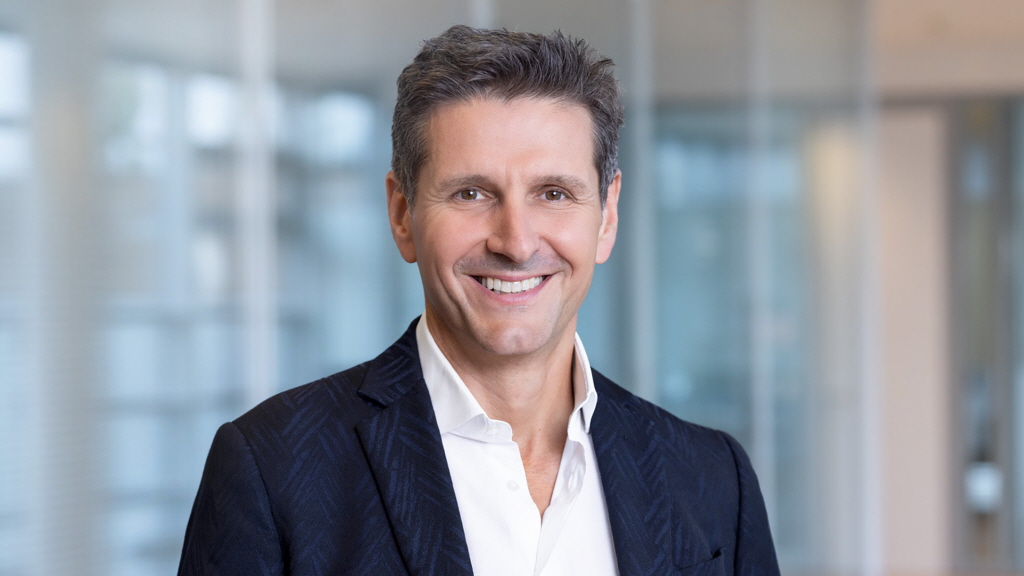
▲Andreas Ursitz, CMO of Infineon
Automotive Ethernet Integration Expands Response to SDV and Humanoid Robot Markets
Infineon has increased its share of the global microcontroller (MCU) market. This increase, despite a slight market contraction overall, is drawing attention to its business expansion strategy, encompassing automotive semiconductors, robotics, and security.
According to market research firm Omdia on the 11th, Infineon's global MCU market share in 2025 is projected to reach 23.2%, up 1.8 percentage points from 21.4% in 2024. The overall MCU market declined by 0.3% over the same period. Infineon claimed to have achieved the largest market share gain compared to its competitors.
The shift in numbers is driven by a portfolio expansion focused on automotive electronics. Following the completion of its acquisition of Marvell's automotive Ethernet business in August 2025, Infineon restructured its business to integrate its BRIGHTLANE automotive Ethernet product line with its AURIX, PSOC, and TRAVEO MCUs. This strategy aims to address demand for software-defined vehicles (SDVs), including autonomous driving, advanced driver assistance systems (ADAS), and over-the-air (OTA) software updates.
The scope of application is expanding beyond vehicles to include robotics. The company explained that its AURIX, PSOC, and MOTIX series MCUs can be used for real-time perception and control, motor drive, connectivity, and edge computing in humanoid robots. As demand for core control blocks grows across industrial, service, and home robots, MCU supply opportunities are also expected to expand.
Security measures are also emerging as a key competitive factor. Infineon announced that its latest AURIX and TRAVEO products meet the international automotive security standard ISO/SAE 21434. Furthermore, the company added that its architecture incorporates next-generation requirements, such as the EU Cyber Resilience Act (CRA) and Quantum-Resistant Cryptography (PQC). Chief Marketing Officer Andreas Urszt explained that this achievement is the result of a systems approach, including technology investment, partner collaboration, and software and development tools.
The MCU market is experiencing a shift in competition from simple chip supply to system responsiveness, driven by the proliferation of vehicle electrification, industrial automation, and AI-based edge devices. Companies that go beyond simply expanding market share and integrate networking, control, and security are likely to gain an advantage in the future competition for market leadership.

Comments
Related news
Infineon President Adam White: “Infineon Takes Responsibility for ‘Power Semiconductors,’ the Power Driving AI”
Through an interview with Adam White, President of Infineon Technologies' Power & Sensor Systems Division, we examined Infineon's power semiconductor strategy along with future growth opportunities expanding into robotics and quantum computing.
2026.02.04by 배종인 기자
Infineon CoolSiC Power Semiconductor Applied to New Toyota EV 'bZ4X' Model
Infineon Technologies is strengthening its offensive in the electrification market by supplying its silicon carbide (SiC) power semiconductors to Toyota's new electric vehicle model 'bZ4X'.
2026.02.10by 배종인 기자
Infineon Forecasts GaN Market to Reach $3 Billion by 2030… Expanding Applications in AI and Robotics
Infineon Technologies presented in its annual report 'GaN Insights 2026' that the gallium nitride (GaN) power semiconductor market could grow to approximately $3 billion by 2030. The report estimates the market size in 2026 at $920 million, projecting 58% growth compared to 2025 ($584 million). Infineon explained that by applying a common drain design with a double gate structure to high-voltage GaN bidirectional switches (BDS), die size reduction is possible compared to conventional back-to-back configurations. Additionally, the company noted that GaN application areas are expanding to include AI data centers, robotics, electric vehicles, renewable energy, and digital health and quantum computing.
2026.02.12by 명세환 기자
.jpg)
Mouser Supplies Infineon AURIX TC4x MCUs
Global authorized electronic components distributor Mouser Electronics is supplying Infineon Technologies' next-generation automotive and AI microcontroller (MCU) 'AURIX™ TC4x', accelerating its market push into automotive and AI applications.
2026.02.19by 배종인 기자
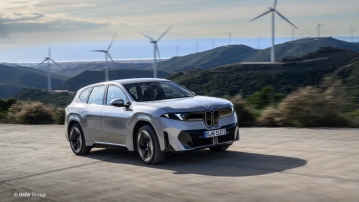
Infineon Usheres in SDV Era with BMW 'Neue Klasse'
Infineon Technologies (Korea CEO Lee Seung-soo) plays a key role in implementing software-defined vehicle (SDV) architecture through BMW Group's next-generation electric vehicle platform 'Neue Klasse'.
2026.02.19by 배종인 기자











