This page was machine-translated and may differ from the original. View original
2017: The First Year of Rapid Semiconductor Growth
Chip design, which was previously only accessible to large corporations
Ventures and startups are also jumping into EDA. 
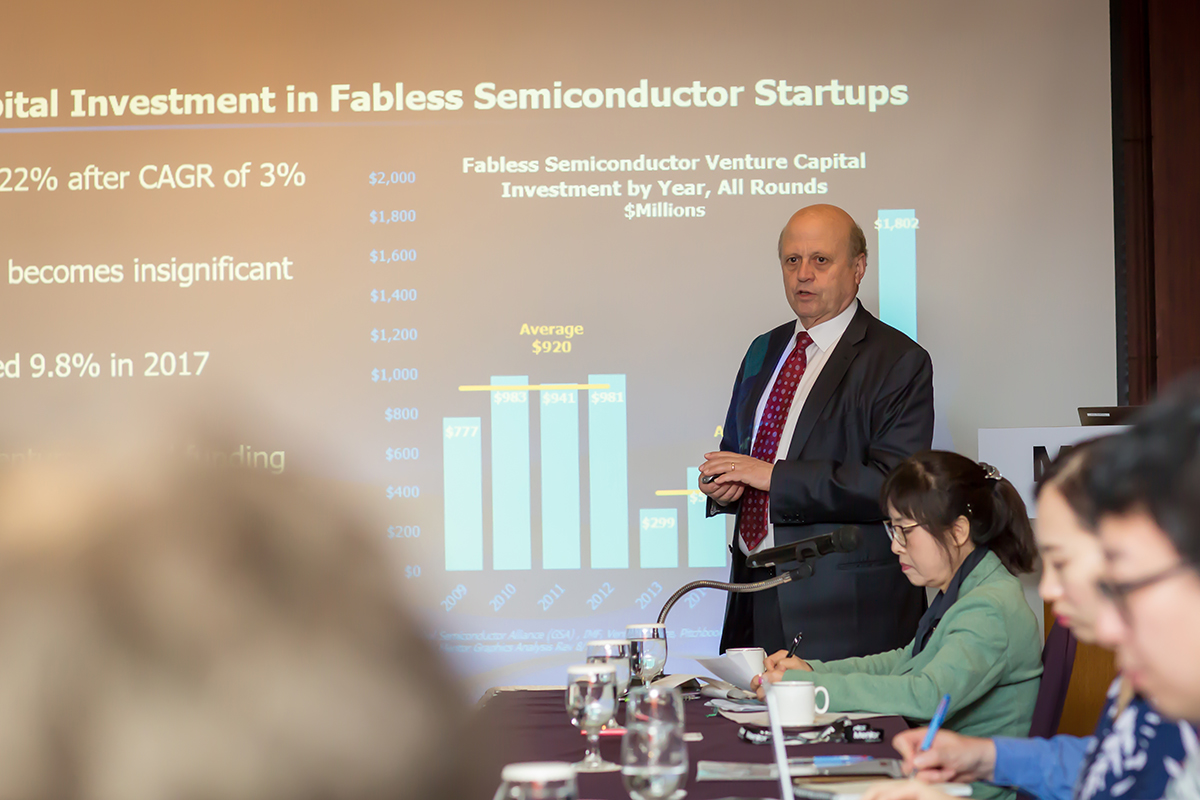
Mentor's CEO Walden Lines holds a press conference
Previously, semiconductor chip design was so costly that only large corporations could afford it. Now, even companies outside of semiconductor companies are designing chips. Furthermore, while the semiconductor market was once considered mature, the semiconductor chip design industry continues to expand, with its applications expanding day by day.
These are the words of Mentor CEO Walden C. Rhines, who attended the 'Mentor Forum 2018' held by Korea Mentor on the 30th. 
Mentor Forum 2018 held on August 30th
At the Mentor Forum 2018, Mentor predicted that the semiconductor design industry would continue to grow as changes in semiconductor chip design methodology have made semiconductor chip design possible even for small businesses, and the development of domain-specific architecture products such as AI increases.
The semiconductor market achieved unprecedented growth of 22% in 2017. M&A activity also declined significantly compared to 2016. R&D investment also increased significantly by 9.8%. 
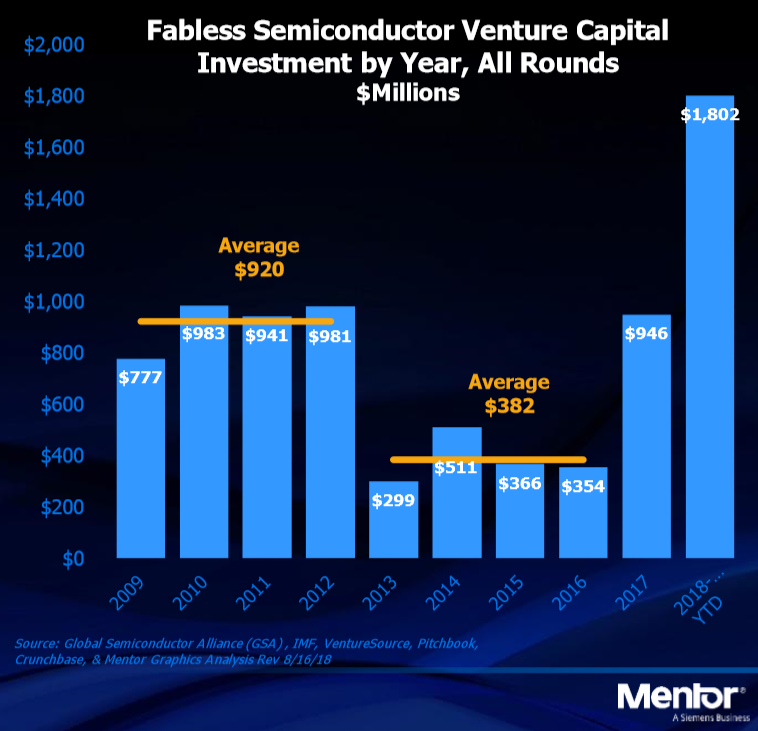
The amount of investment in the semiconductor industry has been rapidly increasing since 2017.
What's noteworthy is the increasing investment by venture capital firms in semiconductor companies. The pace is steep, with annual investments reaching $1 billion from 2009 to 2012, $400 million annually for the following four years, and $1 billion again starting in 2017, with $1.8 billion invested in the first half of this year alone.
How can the semiconductor market continue to grow?
3 Reasons Why the Semiconductor Market Continues to Grow
First, many global companies are engaging in their own chip design. Companies like Google, Facebook, and Amazon are already users of Mentor's Electronic Design Automation (EDA) software. They are designing their own chips to develop IoT capabilities and improve server performance. Furthermore, over 300 companies, including Bosch in the automotive industry, are also engaged in custom IC manufacturing. Tesla has also formed its own chip design team to improve the performance of autonomous vehicles..jpg)
The second is the massive investment of funds by the Chinese government. In 2014, the central government established a $20 billion fund to invest in companies through private equity funds. Local governments also created a $100 billion fund to invest in the semiconductor industry, with $47 billion going to chip design. The number of semiconductor design companies in China has grown from around 500 to over 1,400. Furthermore, the size of semiconductor design companies has also increased, with companies employing 100 to 500 employees accounting for 22.1% of all companies in 2006, but that number has risen to 43.3% in 2015.
In the past, Chinese design firms focused on developing power devices and analog devices, but now they are moving into designing domain-specific architecture products for advanced video compression, machine learning, vision processing, and AI.
Third, new "domain-specific" architectures and chips are now creating a new trend in the semiconductor market. This is a focus on developing solutions tailored to specific functions. To design low-cost, high-performance, and highly efficient processing semiconductor chips that the market demands, it's crucial to develop domain-specific architectures and supply chips specifically tailored to specific functions.
Increased funding for the AI semiconductor industry
Looking at trends in early-stage funding for startups, investments have increased significantly since the third and fourth quarters of 2017.
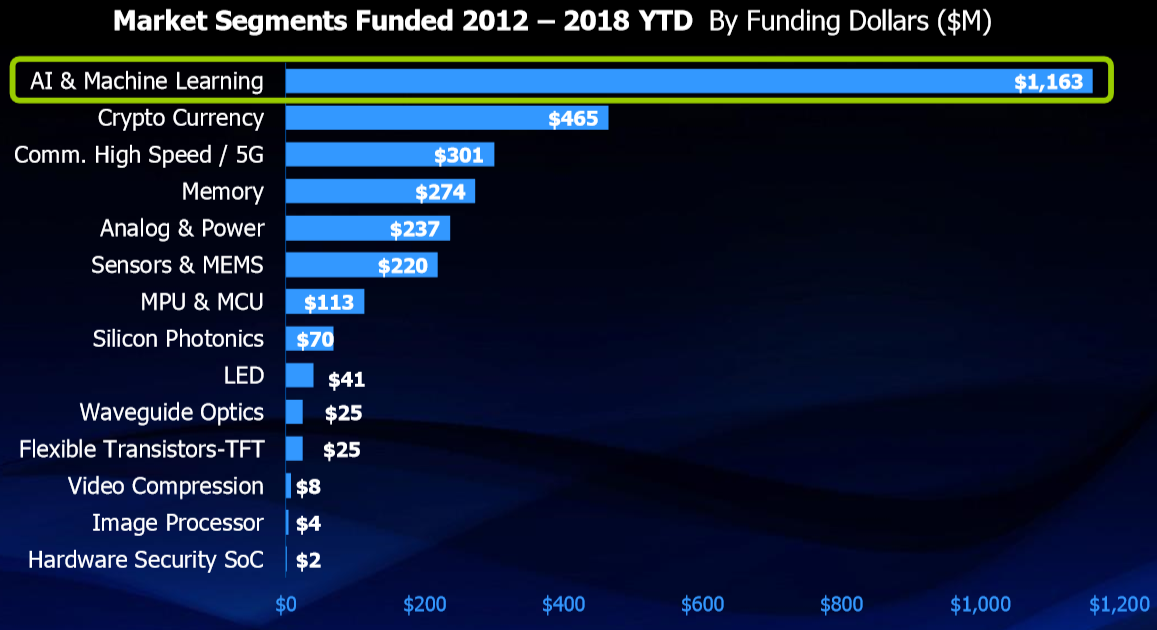
Investments are primarily focused on the development of AI and machine learning solutions. This type of investment is not unusual; AI development has been ongoing since 1986. It only gained significant attention in 2016 when there was a match between Lee Sedol 9-dan and AlphaGo.
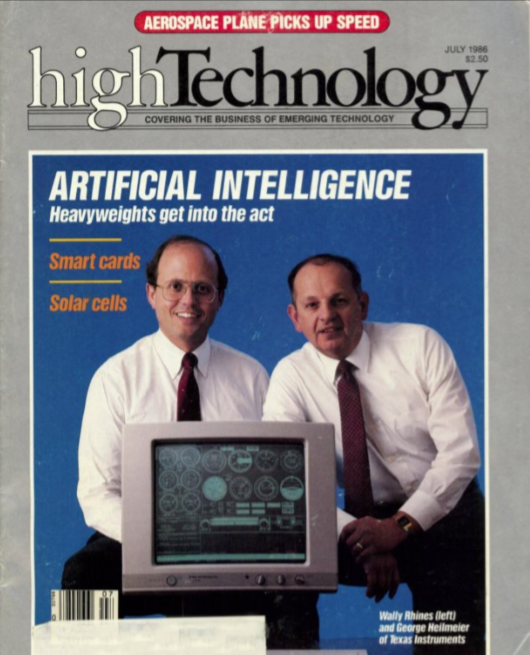
Walden Rhynes, while working at TI, introducing AI technology in 1986.
When AI technology first emerged, there was little data to analyze, limited computing power, no sophisticated algorithms, and no killer solutions to generate revenue. Now, these obstacles have disappeared, and a market environment conducive to business application has emerged. In 2018 alone, 14 AI-focused semiconductor design companies received investment, including companies specializing in facial recognition technology, automotive, embedded neural network processing, data centers, and data analytics optimization. China is leading the way in AI investment.
Major domain-specific architecture development areas
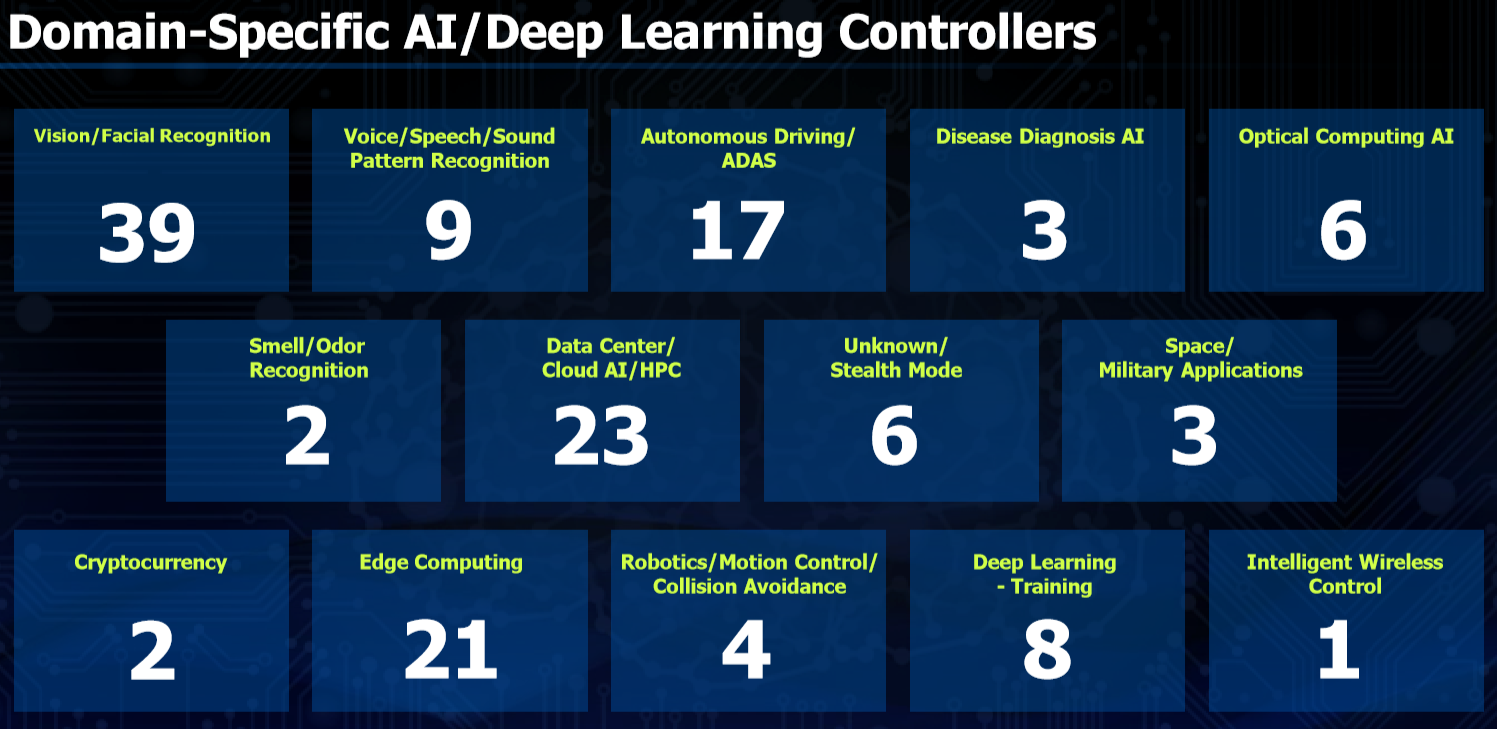
Looking at the types of domain-specific AI and deep learning controllers being developed, the most common are screen and facial recognition. 
Number of domain-specific AI and deep learning controller development types
It's also being used for data analysis utilizing cloud computing and high-performance computing. Furthermore, many startups are designing chips for self-driving cars. Significant investment is also being made in odor recognition. Additionally, development is underway in areas where computers can respond to various emotional changes in humans.
Not only startups but also giants like Microsoft are actively developing AI chips. They are developing domain-specific devices, such as augmented learning devices, virtual learning devices, and devices utilizing holograms.
Until recently, small companies had difficulty designing chips, but changes in design methodology have made it possible to develop domain-specific processes.
Chip design by small companies primarily focuses on areas such as screen and facial recognition, high-bandwidth mobile communications, and video compression. To rapidly develop innovative products that meet market demands, they must support easy design changes after late-stage testing and reduce the time and cost required for verification and debugging.
HLS shortens product development time with rapid verification.
High-Level Synthesis (HLS) can reduce product development time by as much as 75% through rapid verification. HLS allows chip designers to select the best performing design. 
Nvidia's case
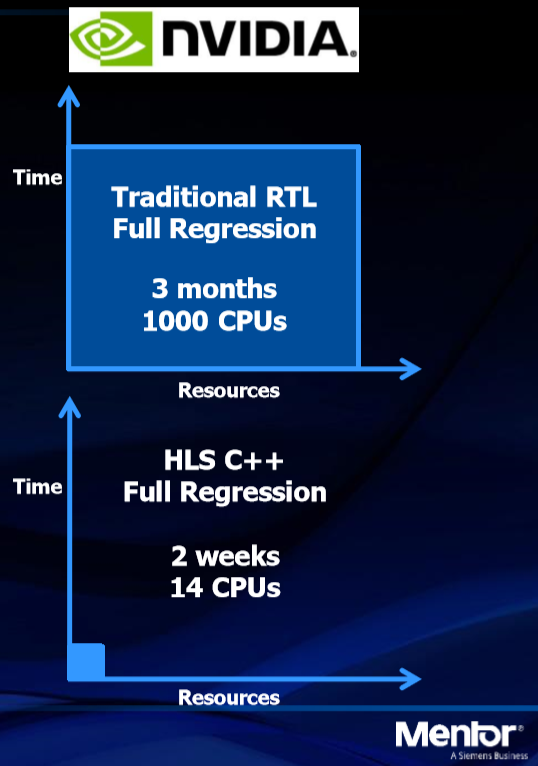
NVIDIA has actually used HLS in AI and chip design to increase productivity by 50% and reduce costs by 80%. Additionally, while chip development previously required 1,000 CPUs over three months, using HLS, the task could be completed in two weeks with just 14 CPUs.
This change in chip design is not a passing trend. 
Gompertz curve
The Gompertz curve, introduced in 1825 by British actuarialist Benjamin Gompertz, depicts a gradual rise in the early stages, rapid growth in the middle, and a gradual maturity in the later stages. This curve has been used to predict the growth of cancer cells, population growth, the rise of smartphone users, and the impact of financial markets. It particularly closely matches the trends of increasing mobile phone subscribers and PC laptops.
Applying the Gompertz curve to the semiconductor market, the current market is in its infancy, with chip development growth expected to peak in 2038. It is projected to reach maturity by 2050.
Furthermore, the semiconductor industry's growth is expected to continue through early 2019. Memory growth will slow slightly in the second half of 2018, and memory price growth will slow slightly in 2019, but the non-memory market will continue to grow.
Chip design, which was previously only accessible to large corporations
Ventures and startups are also jumping into EDA.

Mentor's CEO Walden Lines holds a press conference
Previously, semiconductor chip design was so costly that only large corporations could afford it. Now, even companies outside of semiconductor companies are designing chips. Furthermore, while the semiconductor market was once considered mature, the semiconductor chip design industry continues to expand, with its applications expanding day by day.
These are the words of Mentor CEO Walden C. Rhines, who attended the 'Mentor Forum 2018' held by Korea Mentor on the 30th.

Mentor Forum 2018 held on August 30th
At the Mentor Forum 2018, Mentor predicted that the semiconductor design industry would continue to grow as changes in semiconductor chip design methodology have made semiconductor chip design possible even for small businesses, and the development of domain-specific architecture products such as AI increases.
The semiconductor market achieved unprecedented growth of 22% in 2017. M&A activity also declined significantly compared to 2016. R&D investment also increased significantly by 9.8%.

The amount of investment in the semiconductor industry has been rapidly increasing since 2017.
What's noteworthy is the increasing investment by venture capital firms in semiconductor companies. The pace is steep, with annual investments reaching $1 billion from 2009 to 2012, $400 million annually for the following four years, and $1 billion again starting in 2017, with $1.8 billion invested in the first half of this year alone.
How can the semiconductor market continue to grow?
3 Reasons Why the Semiconductor Market Continues to Grow
First, many global companies are engaging in their own chip design. Companies like Google, Facebook, and Amazon are already users of Mentor's Electronic Design Automation (EDA) software. They are designing their own chips to develop IoT capabilities and improve server performance. Furthermore, over 300 companies, including Bosch in the automotive industry, are also engaged in custom IC manufacturing. Tesla has also formed its own chip design team to improve the performance of autonomous vehicles.
.jpg)
The second is the massive investment of funds by the Chinese government. In 2014, the central government established a $20 billion fund to invest in companies through private equity funds. Local governments also created a $100 billion fund to invest in the semiconductor industry, with $47 billion going to chip design. The number of semiconductor design companies in China has grown from around 500 to over 1,400. Furthermore, the size of semiconductor design companies has also increased, with companies employing 100 to 500 employees accounting for 22.1% of all companies in 2006, but that number has risen to 43.3% in 2015.
In the past, Chinese design firms focused on developing power devices and analog devices, but now they are moving into designing domain-specific architecture products for advanced video compression, machine learning, vision processing, and AI.
Third, new "domain-specific" architectures and chips are now creating a new trend in the semiconductor market. This is a focus on developing solutions tailored to specific functions. To design low-cost, high-performance, and highly efficient processing semiconductor chips that the market demands, it's crucial to develop domain-specific architectures and supply chips specifically tailored to specific functions.
Increased funding for the AI semiconductor industry
Looking at trends in early-stage funding for startups, investments have increased significantly since the third and fourth quarters of 2017.

Investments are primarily focused on the development of AI and machine learning solutions. This type of investment is not unusual; AI development has been ongoing since 1986. It only gained significant attention in 2016 when there was a match between Lee Sedol 9-dan and AlphaGo.

Walden Rhynes, while working at TI, introducing AI technology in 1986.
When AI technology first emerged, there was little data to analyze, limited computing power, no sophisticated algorithms, and no killer solutions to generate revenue. Now, these obstacles have disappeared, and a market environment conducive to business application has emerged. In 2018 alone, 14 AI-focused semiconductor design companies received investment, including companies specializing in facial recognition technology, automotive, embedded neural network processing, data centers, and data analytics optimization. China is leading the way in AI investment.
Major domain-specific architecture development areas
Looking at the types of domain-specific AI and deep learning controllers being developed, the most common are screen and facial recognition.

Number of domain-specific AI and deep learning controller development types
It's also being used for data analysis utilizing cloud computing and high-performance computing. Furthermore, many startups are designing chips for self-driving cars. Significant investment is also being made in odor recognition. Additionally, development is underway in areas where computers can respond to various emotional changes in humans.
Not only startups but also giants like Microsoft are actively developing AI chips. They are developing domain-specific devices, such as augmented learning devices, virtual learning devices, and devices utilizing holograms.
Until recently, small companies had difficulty designing chips, but changes in design methodology have made it possible to develop domain-specific processes.
Chip design by small companies primarily focuses on areas such as screen and facial recognition, high-bandwidth mobile communications, and video compression. To rapidly develop innovative products that meet market demands, they must support easy design changes after late-stage testing and reduce the time and cost required for verification and debugging.
HLS shortens product development time with rapid verification.
High-Level Synthesis (HLS) can reduce product development time by as much as 75% through rapid verification. HLS allows chip designers to select the best performing design.

Nvidia's case
NVIDIA has actually used HLS in AI and chip design to increase productivity by 50% and reduce costs by 80%. Additionally, while chip development previously required 1,000 CPUs over three months, using HLS, the task could be completed in two weeks with just 14 CPUs.
This change in chip design is not a passing trend.

Gompertz curve
The Gompertz curve, introduced in 1825 by British actuarialist Benjamin Gompertz, depicts a gradual rise in the early stages, rapid growth in the middle, and a gradual maturity in the later stages. This curve has been used to predict the growth of cancer cells, population growth, the rise of smartphone users, and the impact of financial markets. It particularly closely matches the trends of increasing mobile phone subscribers and PC laptops.
Applying the Gompertz curve to the semiconductor market, the current market is in its infancy, with chip development growth expected to peak in 2038. It is projected to reach maturity by 2050.
Furthermore, the semiconductor industry's growth is expected to continue through early 2019. Memory growth will slow slightly in the second half of 2018, and memory price growth will slow slightly in 2019, but the non-memory market will continue to grow.
본 기사에 대한 정정·반론·추후보도 청구는 보도 청구 안내를, 그간 게재된 보도문은 정정·반론보도 모아보기를 참고해 주세요.