


The automotive semiconductor market, facing a supply and demand crisis, demands future investment, not immediate action.
 Published2021.03.08 17:23
A faster-than-expected economic recovery is the cause of the crisis.
Immediate uncertainty, but long-term market expansion prospects
The automotive semiconductor supply and demand situation shows no signs of improving. Industry analysts attribute the current supply and demand disruption to major semiconductor companies' failure to forecast demand.
.jpg)
The image is Samsung Electronics' digital cockpit [Photo = Samsung Electronics]
Global car sales plummeted from 8.1 million units at the end of December 2019 to 4 million units at the end of April 2020, at the height of the pandemic. Major automotive semiconductor manufacturers, including NXP, Renesas, Infineon, TI, and Microchip, reduced orders for automotive semiconductor production, and TSMC, which had been handling contract manufacturing, shifted its production lines to other semiconductor production areas.
The decision by automotive semiconductor companies to cut production was driven by reduced orders from automakers. However, the global economy recovered faster than expected as countries began to adapt to the COVID-19 era and prepare for the post-COVID era.
Furthermore, the widespread adoption of remote work due to the spread of non-face-to-face interactions has not only driven demand for consumer electronics but also led to an increase in passenger car sales due to a decline in public transportation. This brought the issue of semiconductor supply for automobiles to the surface.
◇ It is becoming difficult to meet existing production levels due to abnormal weather conditions.
The supply and demand issues for automotive semiconductors are unlikely to be resolved anytime soon due to extreme weather events. Last February, a record-breaking cold snap hit Texas, USA, causing a severe power shortage, forcing factories in Texas, including NXP and Infineon, to shut down.
Samsung Electronics' semiconductor plant in Austin, Texas, has also been shut down due to a power outage since February 16th (local time). An earthquake struck Japan. Renesas's main production base, the Ibaraki plant, halted operations on February 13th following a magnitude 7.3 earthquake that struck Fukushima.
Restarting semiconductor equipment handling delicate processes requires a lengthy adjustment period. Therefore, it is expected to take at least one to two months to restart the factories in Texas and Ibaraki.
◇ The semiconductor crisis has increased risks for automakers.
Amidst the shortage of automotive semiconductors, General Motors (GM) extended the suspension of production at its San Luis Potosi, Mexico, assembly plant until the end of March, and at its Fairfax, Kansas, and Ingersoll, Ontario, Canada, plants until mid-April. Ford is also closing its plants in Germany and Brazil, with production expected to decline by up to 20% in the first quarter of this year.
Germany's Audi has also laid off over 10,000 employees, and Volkswagen has decided to cut production by 100,000 vehicles. Japan's Nissan and Honda, and France's Renault and Fiat Chrysler have also implemented production cuts. Domestic automakers such as Hyundai, Kia, Renault Samsung, and Ssangyong are not facing any immediate problems due to inventory security and supply management, but mid- to long-term impacts are expected to be unavoidable.
Hyundai and Kia are operating production lines primarily for vehicle models with existing automotive semiconductor inventory. They are prioritizing the use of general-purpose semiconductors for vehicle parts whose inventory is nearly depleted. Furthermore, they plan to flexibly adjust their future production plans by conducting weekly inventory checks and directly negotiating with semiconductor companies to secure supplies.
According to Bloomberg, the global auto industry's sales hit this year is expected to be approximately $60.7 billion, or about 69 trillion won in Korean currency.
◇ The crisis will continue until the third quarter, "making it difficult to expand facilities immediately."
IHS Markit forecast that automakers' production volume will decrease by 672,000 units in the first quarter of this year, while also predicting that the shortage of automotive semiconductors will continue into the third quarter.
Despite mounting concerns from automakers, the crisis shows no signs of ending soon. To increase automotive semiconductor production, semiconductor companies must reallocate their capabilities, previously focused on consumer electronics, to automotive applications and expand production.
However, key automotive semiconductor products, such as microcontrollers (MCUs), power management integrated circuits (PMICs), and microelectromechanical systems (MEMS) sensors, are almost exclusively produced on 8-inch wafers. Even if the company expands its 8-inch production line this month, it will take at least six months to complete production.
Moreover, 8-inch wafers have lower added value than 12-inch wafers, and related equipment manufacturing is also expensive due to low production. From a business management perspective, expanding 8-inch production lines carries risks. Accordingly, semiconductor companies are still taking a cautious stance.
Increasing the proportion of contract manufacturing is also challenging. TSMC, which accounts for 70% of global MCU production, derives only 3% of its automotive semiconductor sales from the fourth quarter of 2020. Increasing capital investment in a business with such a low revenue share is challenging. Furthermore, TSMC's production lines are operating at nearly 100% capacity due to a surge in semiconductor orders from other sectors.
◇ High barriers to entry for new companies, but worth investing in.
The purpose of a car is to safely transport its passengers to their destination. Safety is the top priority for automobiles. Furthermore, the lifespan of a car is more than five years, longer than that of many consumer electronics. Consequently, safety and durability are crucial for automotive semiconductors.
This is why it's difficult for a new company to quickly achieve automotive semiconductor production capabilities comparable to those of existing companies. The verification and stability testing period for semiconductor manufacturing is significantly longer than for memory, making a quick resolution to this crisis nearly impossible.
Regardless of this situation, the mid- to long-term outlook for the automotive semiconductor market is bright.
Automotive semiconductors are installed in both the powertrain and electrical systems of a car. Current commercial vehicles contain 200 to 300 semiconductors. Industry sources estimate that future Level 3 autonomous vehicles will require over 2,000 semiconductors.
IHS Markit forecasts that the automotive semiconductor market size will begin to rebound this year and reach $67.6 billion in 2026, although it fell 9.6% year-on-year to $38 billion in 2020 due to the impact of the COVID-19 pandemic. Statista also predicted that the market will grow to 175 billion by 2040.
As autonomous driving technology advances rapidly and governments around the world accelerate their zero-carbon policies, the electric and hydrogen vehicle markets are expanding. Consequently, demand for automotive semiconductors is expected to increase significantly. With many cars already equipped with advanced driver assistance systems (ADAS) and in-vehicle infotainment (IVI), demand for high-performance semiconductors is already strong.
The automotive semiconductor market, unlike the memory and foundry markets, lacks a clear leader. Therefore, it's a suitable field for our company to enter. Telechips has begun developing an AI processor specifically for autonomous driving, and Samsung Electronics has unveiled automotive image sensors and processors, including the ISOCELL Auto and Exynos Auto.
In particular, Samsung Electronics announced in January that it would pursue a significant M&A within the next three years. Industry sources believe the acquisition of an automotive semiconductor company is highly likely. Samsung Electronics' cash holdings are estimated at 116.2 trillion won. This amount would allow it to acquire NXP (market capitalization of approximately 57 trillion won), the leading automotive semiconductor company.
Comments
Related news

Telechips Adopts Arm IP Supporting 'Functional Safety' for Automotive APs
Telechips has adopted an Arm Cortex-A76 CPU supporting automotive digital cockpit, an Arm Mali-G78AE GPU providing functional safety by supporting up to four fully independent partitions, and an Arm Ethos-N78 NPU dedicated to machine learning in its next-generation automotive AP, Dolphin 5.
2020.12.15by 명세환 기자
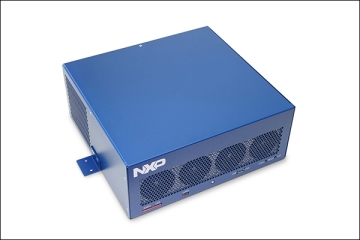
NXP Announces BlueBox 3.0, a Automotive Computing Development Platform
NXP Semiconductors has announced BlueBox 3.0, a new expanded version of its automotive high-performance compute (AHPC) development platform. BlueBox 3.0 is a platform for software application development and validation before semiconductors are commercialized. This version provides flexible implementation methods for evolving automotive architectures, including customized vehicles, autonomous driving at safety level 2+, and connected cars.
2021.01.14by 명세환 기자
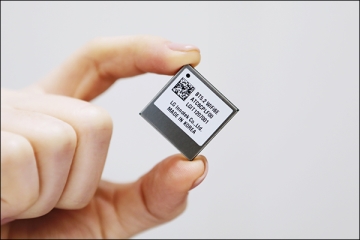
LG Innotek Unveils Automotive Wi-Fi 6E Module with Reduced Buffering
LG Innotek has developed an automotive WiFi 6E module that connects in-vehicle infotainment (IVI) systems with internal smart devices and external routers. The module operates in the 6GHz frequency band, delivering data transmission speeds of 1.2Gbps and network access times of 2ms. This represents 3x faster speeds and 1/7 of the connection time compared to WiFi 5 modules.
2021.03.03by 강정규 기자

[e4ds Tech Day 2026 ⑨] Sim Sang-gyu, Autocrypt CTO: "In the Physical AI Era, Automotive Security Must Extend Beyond the Vehicle"
At e4ds Tech Day 2026, Sim Sang-gyu, CTO of Autocrypt, explained automotive cybersecurity strategies in the era of Physical AI and SDV (Software-Defined Vehicle). Automobiles are evolving as part of an ecosystem connected to AI, cloud, chargers, IoT, and robots, and he emphasized that the scope of security must expand beyond the vehicle interior to the entire connected environment. In particular, AI model tampering, adversarial attacks, OTA updates, and EV charger hacking were identified as major threats. He explained that response measures require zero trust, AI model integrity protection, intrusion detection, Security by Design and Default, and full lifecycle security management, and that proactive security system establishment beyond regulatory compliance is critical for securing future mobility competitiveness.
2026.10.12by 배종인 기자

Practical HIL Construction Strategy for Automotive and Off-Highway Controller Validation
As vehicle E/E architecture transitions to zonal structures and shifts to software-defined vehicles (SDV), the number of controllers (ECUs) requiring validation and software complexity are surging dramatically. Meanwhile, real vehicle testing cannot provide repeated verification under identical conditions and entails lead time and safety concerns. This white paper explains the principles of HIL (Hardware-in-the-Loop) validation and the structure of the NI platform composed of PXI, SLSC, and VeriStand, and through two actual implementation cases—Camera Record & Replay HIL for In-Cabin Monitoring Controller (ICMU) and Forklift Controller (VCU) HILS—describes how controller-level regression testing becomes possible. Additionally, it explicitly states application boundaries and limitations, such as lack of A2B support.
2026.10.12by 편집부











