


The era of 'wireless power transmission' has arrived, and the next-generation technology 'Wireless' dominates
 Published2022.12.01 09:13
KERI 장거리 무선전력전송, 우주시대 준비

[편집자주]무선(Wireless)의 세상은 통신기술을 중심으로 발달하며 IoT, 스마트폰, 커넥티드카 등 다양한 산업 부문에 영향을 미치며 혁신을 촉진시켰다. 이윽고 무선은 ‘전력전송’이란 또 하나의 영역을 개척하며 스마트폰뿐 아니라 모빌리티, 위성 등 적용범위를 확대하고 있는 추세이다. 최근 무선충전과 전자파 관련 규제 혁신이 이뤄지며 2023년을 기점으로 무선전력전송이 화두로 떠오를 전망이다. 이에 무선전력전송 제품을 개발하는 업체 및 기관들이 한데 모인 소규모 전시에서 관련 솔루션을 탐구해봤다.
최근 코엑스에서 한국전자파진흥협회와 무선전력전송진흥포럼이 주관한 무선전력전송 제품 전시회가 진행됐다.
이날 전시관에는 △바이에너지 △화인파워엑스 △에타일렉트로닉스 △한국전기연구원 △워프솔루션 △건국대학교 △포항공과대학교 △서울대학교 등에서 참가해 무선전력전송 기술이 적용된 제품 포트폴리오를 선보였다.
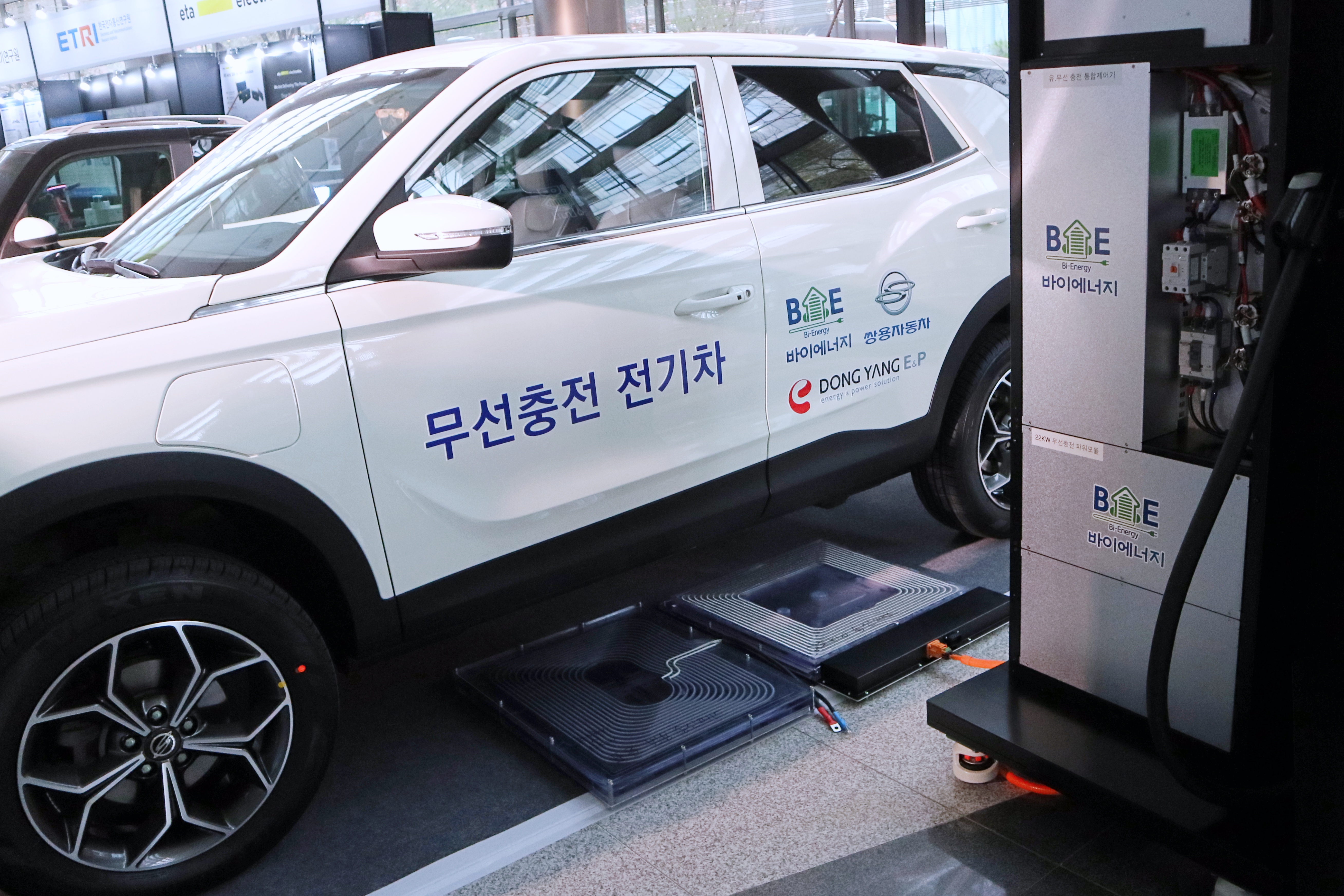
▲바이에너지가 개발한 전기차용 무선충전기와 송·수신패드
바이에너지 관계자는 전기버스가 주행 중 정류장에 잠깐 섰을 때 충전하는 세미 다이렉트가 현재 개발 단계에 있다고 전하며 “유선충전이 먼저 전국적으로 보급이 된 이후 운전자 2명 중 1명가량이 전기차를 보유하는 단계에 들어섰을 때 무선충전이 확대될 것”이라고 전망했다.
더불어 전자기장(EMF)으로 인한 인체 유해 우려가 있어 충전 시 운전자나 탑승자가 내려서 충전해야 하는 문제가 있다. 이에 대해 관계자는 “향후 자율주행 기술과 결합된다면 자동차는 무선충전기가 설치된 차고지 혹은 주차지로 알아서 이동하며 운전자는 하차 후 업무를 보는 형태가 될 것”이라고 조심스레 예측했다.
.jpg)
▲에타일렉트로닉스에서 개발한 전동킥보드용 6.78MHz 100W 무선전력전송(WPT) 제품
에타일렉트로닉스는 전시관에서 킥보드 무선 충전 시스템을 선보였다. 6.78MHz 100W 무선전력전송(WPT) 솔루션이 킥보드에 탑재돼 있었다. 3~4센치미터(cm)가량 떨어져서도 충전이 이뤄질 수 있으며 일반적으로는 킥보드 거치대에 송신부를 설치하고 킥보드 전면에 수신부를 탑재해 거치 시 무선충전이 될 수 있게끔 기술 적용이 이뤄질 전망이다.
관계자는 “스마트 모빌리티 업체 휙고와의 협업을 통해 공유 전동킥보드 사업에 적용할 무선 충전기술을 현재 필드 테스트 진행 중”이라고 말했다.
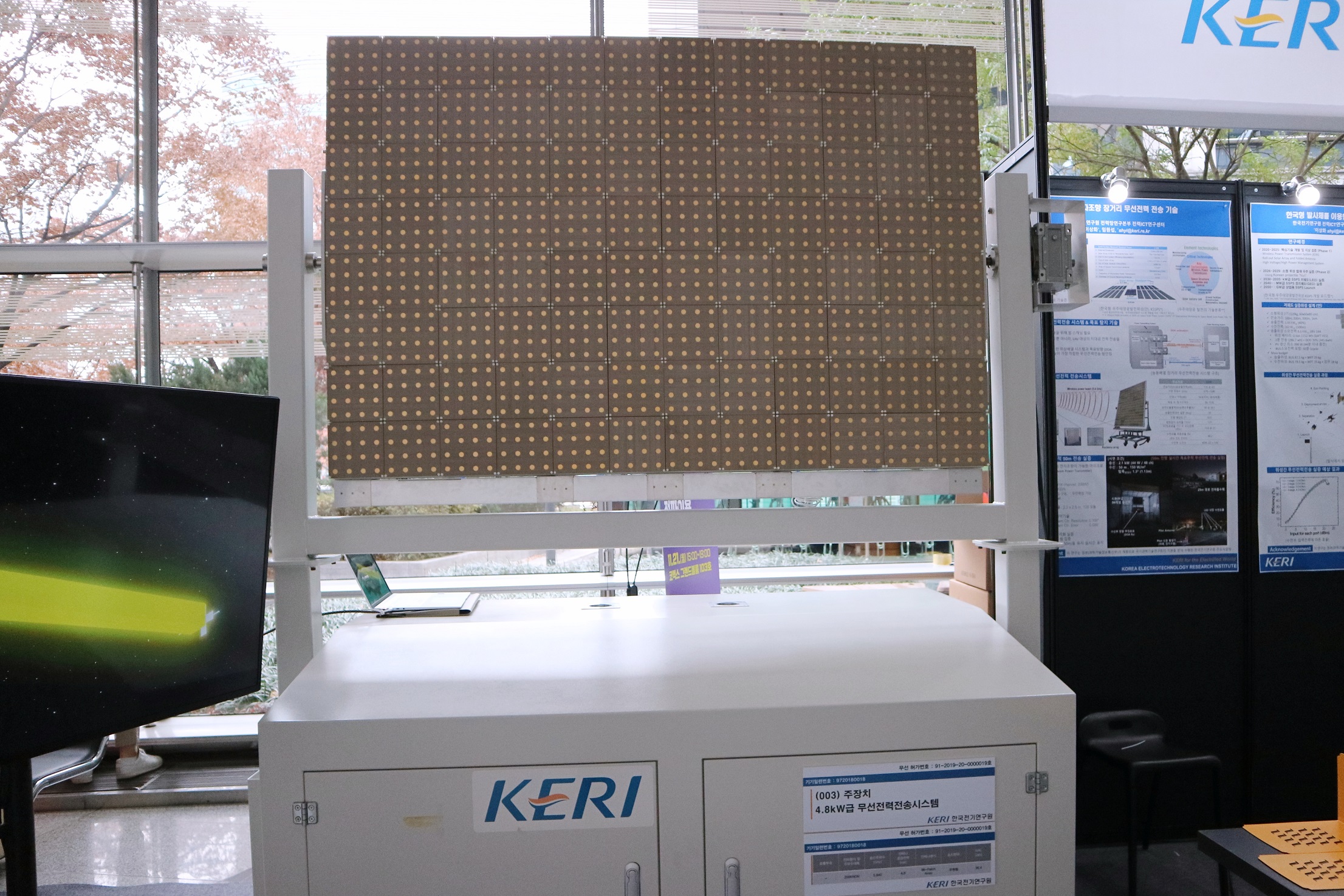
▲한국전기연구원 고출력 전자조향 장거리 무선전력전송 시스템 실증품
연구기관의 기술개발 성과도 빛났다. 한국전기연구원(KERI)은 고출력 전자조향 장거리 무선전력전송 기술을 개발해 선보이고 있었다. RF방식으로 5.8GHz 주파수를 사용하며, 96개의 채널과 1,536개의 방사소자로 빔포밍 어레이를 구성했다.
연구의 최종목표는 위성에 실어서 우주로 보낸 다음 위성에서 지상으로 혹은 위성에서 위성으로의 에너지 전송을 실증하는 것이라고 밝혔다. 실제로 전기연구원은 실시간 목표 추적에서 50미터(m)거리를 실증하는 데 성공했으며 관계자는 “현재 수준에서 구현했을 때 약간의 손실은 있지만 100미터까지도 전력전송을 해냈다”고 말했다.
고출력 장거리 무선전력전송 기술은 차세대 우주 태양광 발전의 핵심기술이 될 것으로 기대되고 있다. 2025년까지 핵심기술 개발 및 지상 검증을 끝낸 이후 2026년부터 소형 위성에 탑재해 우주 실증이 진행될 계획이다. 이를 위한 다수 및 이동식 플랫폼 적용에 필요한 빔스캐닝 기술, 지대공 전력 전송을 위한 실시간 빔교정 기술 등이 발맞춰 발전을 이뤄 나갈 필요가 있을 것이다.
한편, e4ds news에서는 다가오는 12월 9일 강남역 한국컨퍼런스센터에서 EMI·EMC 최신 동향과 기술 정보를 공유하는 아날로그데이를 개최한다. 이날 무선전력전송 기술의 전문가인 안승영 KAIST 교수가 무선전력전송 기술 전망과 EMC 대책에 대해서 세션 발표를 진행한다.

Comments
Related news
Rapid rise of 'IP licensing platform' in connected car and IoT ecosystem
Wireless communication technology is expanding across various industries and is being utilized in diverse industrial applications such as connected cars and IoT. Accordingly, it is anticipated that consideration of Standard Essential Patents (SEPs) will become important in future product development and design to prevent risks such as litigation and disputes.
2022.10.21by 명세환 기자
Accelerates introduction of wireless charging for electric vehicles
The government is making a full-scale push to establish the foundation for commercializing wireless charging for electric vehicles by the end of this year, and the introduction of wireless charging for electric vehicles is expected to accelerate.
2022.11.10by 배종인 기자
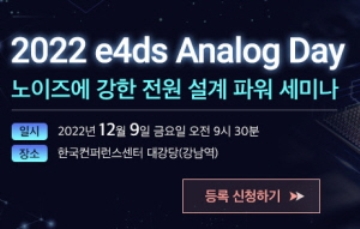
The latest EMI/EMC information at a glance
e4ds news will hold the '2022 e4ds Analog Day' on December 9th at the Grand Hall of Korea Conference Center (Exit 5, Gangnam Station).
2022.11.21by 배종인 기자

[e4ds Tech Day 2026 ⑨] Sim Sang-gyu, Autocrypt CTO: "In the Physical AI Era, Automotive Security Must Extend Beyond the Vehicle"
At e4ds Tech Day 2026, Sim Sang-gyu, CTO of Autocrypt, explained automotive cybersecurity strategies in the era of Physical AI and SDV (Software-Defined Vehicle). Automobiles are evolving as part of an ecosystem connected to AI, cloud, chargers, IoT, and robots, and he emphasized that the scope of security must expand beyond the vehicle interior to the entire connected environment. In particular, AI model tampering, adversarial attacks, OTA updates, and EV charger hacking were identified as major threats. He explained that response measures require zero trust, AI model integrity protection, intrusion detection, Security by Design and Default, and full lifecycle security management, and that proactive security system establishment beyond regulatory compliance is critical for securing future mobility competitiveness.
2026.10.12by 배종인 기자

Practical HIL Construction Strategy for Automotive and Off-Highway Controller Validation
As vehicle E/E architecture transitions to zonal structures and shifts to software-defined vehicles (SDV), the number of controllers (ECUs) requiring validation and software complexity are surging dramatically. Meanwhile, real vehicle testing cannot provide repeated verification under identical conditions and entails lead time and safety concerns. This white paper explains the principles of HIL (Hardware-in-the-Loop) validation and the structure of the NI platform composed of PXI, SLSC, and VeriStand, and through two actual implementation cases—Camera Record & Replay HIL for In-Cabin Monitoring Controller (ICMU) and Forklift Controller (VCU) HILS—describes how controller-level regression testing becomes possible. Additionally, it explicitly states application boundaries and limitations, such as lack of A2B support.
2026.10.12by 편집부











