



Semiconductor supply and demand instability is expected to be resolved in 2023, with a surge in fabs.
 Published2021.05.28 15:15
Full stabilization and expansion fabs expected to be operational in 2023.
South Korea must expand 8-inch fabs to compete with China.
The pandemic-induced material supply and demand instability across industries continues unabated. The Korea Semiconductor Industry Association (KSIA) predicts that the semiconductor supply will only begin to ease in the short term, perhaps in July.
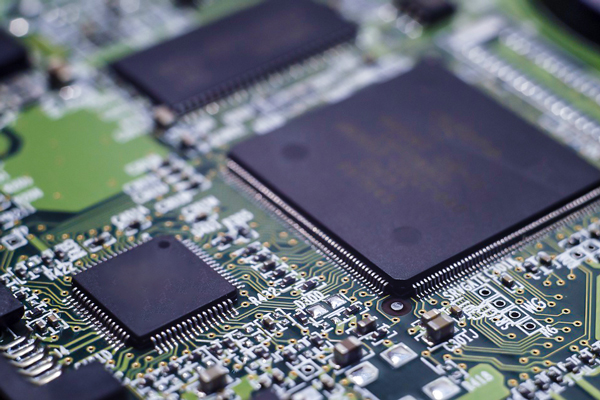
The outlook for breathing room is clear [Photo = Pixabay]
The U.S. Institute for Supply Management (ISM)'s manufacturing Purchasing Managers' Index (PMI) reached 64.7 in March, the highest reading since 1983. However, it plummeted to 60.7 in April. The production index, in particular, plummeted (from 68.1 in March to 62.5 in April), raising concerns about the stability of semiconductor supply and demand. Furthermore, the supplier transit time index and inventory index for April stood at 75.0 and 46.5, respectively. A PMI reading above 50 indicates expansion, while a reading below 50 indicates contraction.
The decline in the production index due to a decline in the inventory index and an increase in the transportation time index means that production is not increasing due to increasing difficulties in procuring parts despite a decrease in inventory.
In the automotive industry, where the semiconductor shortage is most severe, the average industry production decline in April is estimated to have reached -5.1%. While demand for automotive semiconductors remains robust due to the recovery in finished vehicle demand and the rapid electrification of vehicles, production plans have been lowered due to the semiconductor shortage. Although the semiconductor supply situation will improve starting in July, resulting in an increase in finished vehicle production, it is unlikely that this will be able to completely replace the reduced finished vehicle production in the first half of the year.
The global economy in the second quarter of this year was characterized by a severe shortage of raw materials and components due to a rapid economic recovery, and the resulting inflation. Concerns are also growing over a potential interest rate hike by the U.S. Federal Reserve (FED). If shortage inflation persists, it could lead to increased manufacturing costs and rising prices, leading to a decline in demand.
Our major export markets, including the US, China, Europe, and Southeast Asia, account for over 70% of global demand, making "Korean exports" a valuable indicator of "global demand." According to SK Securities, South Korea's exports in the second quarter are expected to show record growth. In particular, exports in May are expected to increase by 45-48% year-on-year.
With the increase in finished vehicle production due to improved supply and demand for system semiconductors and the arrival of the seasonal peak season for smartphones, the inventory of memory semiconductors at demand sources, which had been high in the short term, is expected to decrease significantly.
◇ 2023: The First Year of Stable Semiconductor Supply and Demand
Currently, high-end foundries such as TSMC, Samsung Electronics, and Intel are preparing aggressive capacity expansions. However, full-scale capacity expansion is not expected until the second half of 2022, when ASML's EUV equipment supply increases. Therefore, normalization is expected to occur in 2023. However, it is difficult to predict the timing as it coincides with the full-scale application of the EUV process to DRAM production.
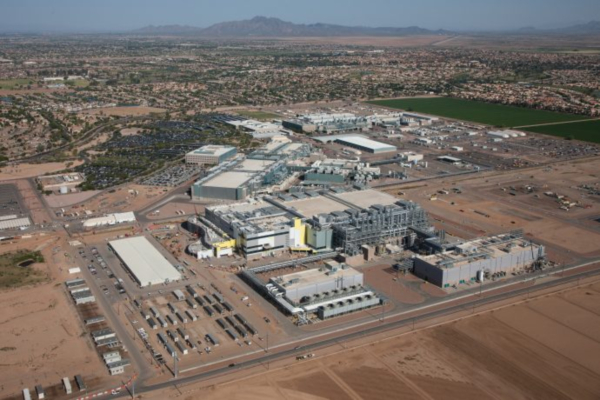
For mid-range foundries, Intel's new Arizona plant is scheduled to begin operations in 2023, and GlobalFoundries' large-scale new fab investment is unlikely before its IPO. Industry sources predict GlobalFoundries' IPO will occur in the second half of this year. Furthermore, given the active support of the U.S. government, the new fab is likely to begin operations in 2023.
In China, in addition to SMIC, TSMC is investing approximately 3 trillion won to build a 28nm fab in Nanjing, with normalization expected in 2023. Furthermore, China is expanding its low-range foundries to enable its own production of CIS, DDI, and PMIC. China has established a company called WOODSON to begin mass production of OLED DDIs and CIS in 2023, but US sanctions are a factor.
However, with the acquisition of Magnachip by Chinese private equity fund Wiseroad Capital, concerns are being raised that domestic OLED DDI manufacturing technology could leak to China. If these concerns are confirmed, China's position in the DDI market is expected to further increase.
With the establishment of a domestic supply chain directly linked to national economic and security issues, expanding Korea's 8-inch, mid-range, and low-range foundries will be a major challenge going forward.
◇ Kioxia's slump continues amidst the rise of the top three memory manufacturers.
DRAM prices surged in the second quarter due to a stronger-than-expected global economic recovery, changes in downstream industries, and concerns about a semiconductor shortage. Memory manufacturers currently have very low inventory levels, and demanders are stockpiling an additional 2-6 weeks' worth of memory due to disruptions in production plans.
Despite market concerns, DRAM supply and demand is expected to remain tight in the second half of this year. This is due to a decrease in supply capacity resulting from the conversion of existing DRAM fabs to CIS/DDR5.
The potential demand-actual demand gap, caused by production disruptions due to the imbalance in semiconductor inventory by product, is estimated at 2-2.5% of total DRAM demand. In 2022, the supply shortage is expected to ease compared to this year, leading to stable growth.
NAND prices were expected to stabilize in the second quarter and transition to a supply shortage in the second half. However, demand increased significantly in the second quarter, leading to an upward trend in prices. While a transition to a supply shortage and a further increase in price increases are expected in the third quarter, the peak season, there is also the possibility of a supply-demand imbalance or a transition to an oversupply in the fourth quarter.
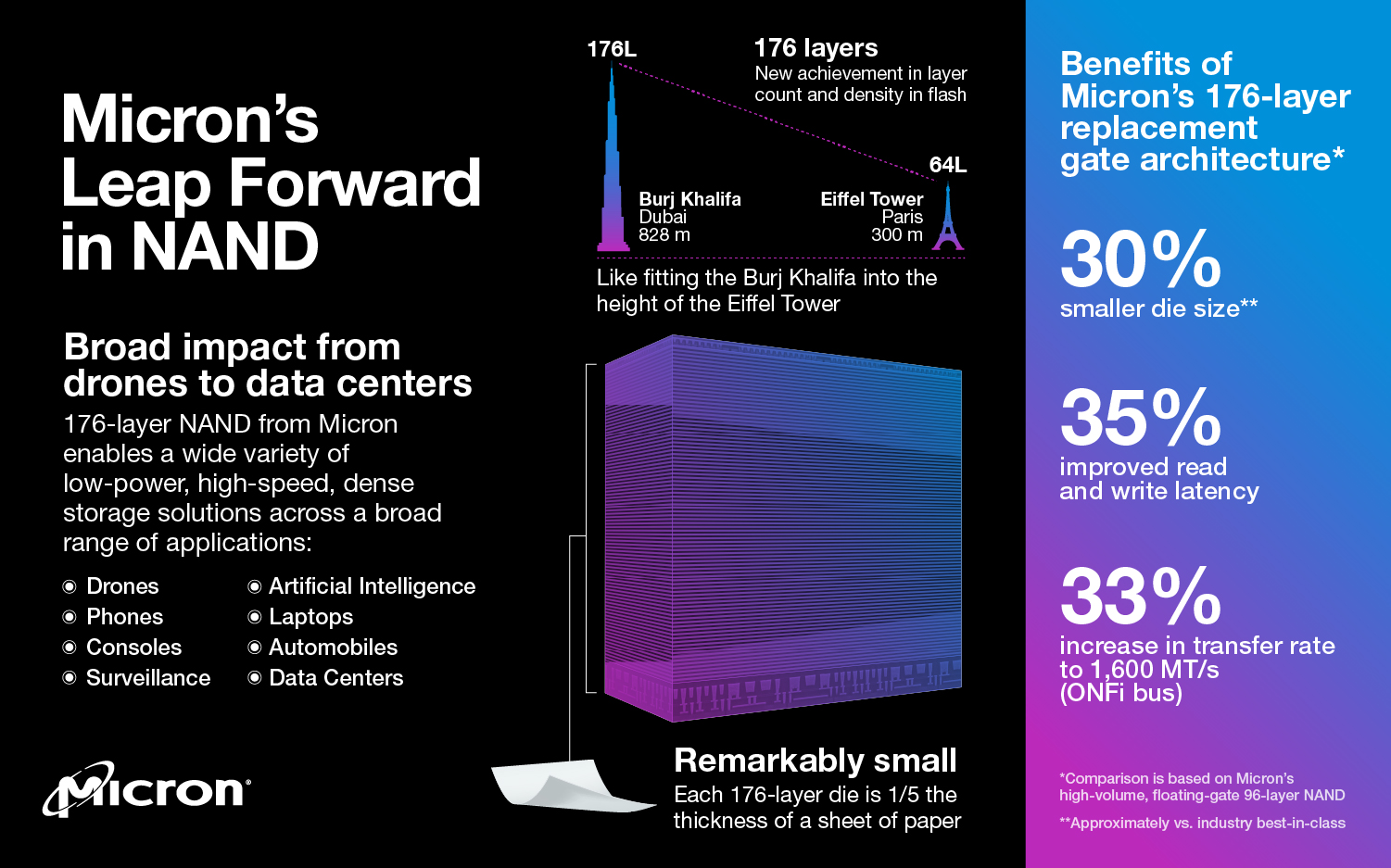
The likelihood of a Kioxia acquisition is low [Image = Micron]
Japan's Kioxia Corp. withdrew its Tokyo Stock Exchange IPO plan in October of last year, and its IPO this year is uncertain due to losses in the fourth quarter of 2020 and an increase in losses in the first half of 2021. Micron's proposed acquisition of Kioxia is also likely to be difficult to achieve due to significant differences in views between current voting shareholders and the company regarding fair value. Accordingly, mass production of 162-layer NAND is expected to be difficult within this year, and the 162-layer application rate in 2022 is also expected to fall below 20%.
China's Tsinghua Unigroup is facing a debt default and the threat of its overseas assets being frozen, making it desperate for new financing. While the Chinese government needs to step in to help secure the funds, the risks associated with such a large-scale financing are heightened by the US government's criticism of the Chinese Communist Party's active support for the semiconductor industry. Consequently, securing 128-layer mass production capacity and the roadmap for developing 256-layer chips are expected to become even more challenging.
Micron, the US-based company, was the first to begin mass production of 176-layer NAND, and South Korea, following SK Hynix and Samsung Electronics, plans to begin 176-layer production in the second half of this year. Despite industry concerns, the three-company system of Samsung Electronics, SK Hynix, and Micron is expected to further solidify in the NAND market. This presents a significant opportunity to widen the gap with Japanese and Chinese competitors.
Comments
Related news
510 trillion won investment in K-semiconductors by 2030
The government will complete the world's largest and most cutting-edge semiconductor supply chain through overwhelming private sector investment of over 510 trillion won by 2030 to realize comprehensive semiconductor superpower status.
2021.05.14by 배종인 기자
"PMIC 3 Types Unveiled" Samsung Electronics Expands System Semiconductor Lineup
Samsung Electronics has unveiled three PMICs that enhance the performance of DDR5 DRAM modules and reduce power consumption, expanding its system semiconductor lineup. Unlike DDR4 DRAM, which mounted PMICs on external substrates, DDR5 DRAM mounts PMICs directly on the DRAM module substrate. With the PMIC and DRAM integrated on a single module, power can be supplied stably and rapidly, enabling improved memory performance while simultaneously minimizing malfunctions.
2021.05.18by 이수민 기자
8-inch wafer fab production volume shows continued growth
According to SEMI's latest 200mm fab outlook report, monthly 8-inch fab production volume is forecast to grow 17% from 2020 to 2024, reaching approximately 6.6 million wafers produced. Additionally, by 2024, 22 new 200mm fabs are expected to be constructed to meet demand for 5G and IoT devices, producing power and analog semiconductors, MOSFETs, MCUs, sensors, and other components.
2021.05.26by 이수민 기자

Intel Unveils Next-Generation 'Core Ultra Series 3' and vPro Platform for Enterprise PCs
Intel has officially unveiled the "Intel Core Ultra Series 3" for next-generation enterprise PCs and the latest vPro platform, addressing a wide range of demands from enterprise notebooks to high-performance workstations.
2026.03.26by 배종인 기자

ROHM Launches ESD Protection Diode Compatible with High-Speed Interfaces of 10Gbps or Higher
Semiconductor specialist ROHM has developed the 'RESDxVx series' of ESD (electrostatic discharge) protection diodes capable of responding to next-generation high-speed data communication environments exceeding 10Gbps, simultaneously enhancing both signal quality maintenance required in high-speed interfaces and IC protection performance.
2026.03.26by 배종인 기자











