


Intel's entry into the foundry market is negative for Korea.
 Published2021.06.24 16:43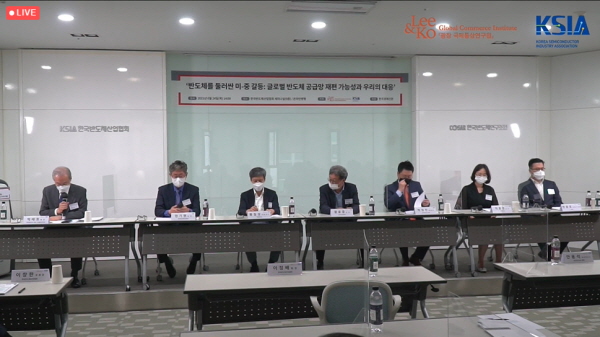
Industrial policies for supply and demand stabilization are essential at the government level.
It has been suggested that Intel's entry into the foundry market will further strengthen cooperation within the United States and have a negative impact on the Korean foundry industry.
On the 24th, the Korea Semiconductor Industry Association and Gwangjang Law Firm held a seminar titled "US-China Conflict Surrounding Semiconductors: Possibility of Restructuring the Global Semiconductor Supply Chain and Our Response."
At the event, Seoul National University Professor Hwang Cheol-seong answered a question from a participant in a panel discussion regarding Intel's entry into the foundry industry. He stated that Intel's entry into the foundry industry is from the standpoint of reducing the risk of foundries in the U.S., and that while Intel had no reason to provide foundry services until now, it is beneficial to the U.S. in terms of supply chain diversification. He also stated that cooperation between foundries and fabless companies in the U.S. will be further strengthened, as the new Qualcomm president recently announced his intention to cooperate with Intel.
Other panelists also said that there is a high possibility of a shift from the existing semiconductor division of labor structure to a self-sufficiency structure due to semiconductor policies and development support from each country, including the U.S. and China, and that the government should take steps to secure semiconductor supply and demand. He argued that we need to think about stabilization and establish related policies.
In addition, in today's discussion, Ahn Ki-hyun, Executive Director of the Korea Semiconductor Industry Association, stated that since the scale of semiconductor investment in the United States and China is almost similar, Korea also needs to invest on a similar scale, and that it should actively pursue core technologies and talent development to reflect the unique characteristics of the semiconductor industry.
Regarding talent development, Seoul National University Professor Hwang Cheol-seong stated that a significant portion of the U.S. R&D funds are distributed to universities, and that Korea is losing its competitiveness in talent development and there is a risk of an outflow of excellent Korean talent, and that more investment should be made in nurturing semiconductor talent.
Professor Lee Hyo-young of the Korea National Diplomatic Academy, who gave the opening remarks, said that the cause of the crisis in the U.S. semiconductor supply chain is because the U.S. has a low share of production in the domestic semiconductor supply chain and a low share of the U.S. in the semiconductor industry compared to other industries. He also said that the Biden administration is investing $250 billion by implementing tax exemptions, R&D support, and financial support measures to strengthen the country's competitiveness.
In addition, he introduced the US's bill on containing China, and stated that the US's excessive reshoring policy in relation to the US semiconductor supply chain could conflict with the direction of 'supply source diversification', which is the optimal means to strengthen supply chain resilience, and that the preferential purchase measures of US products under the Buy America policy could conflict with the supply chain resilience cooperation plan with allies.
In addition, it is predicted that the continued protectionist and America First policies in the United States will act as a barrier to foreign investment in building a sustainable supply chain ecosystem.
Yeon Won-ho, a research fellow at the Korea Institute for International Economic Policy, who gave the second presentation, cited the low semiconductor self-sufficiency rate of 15.9% as a weakness of the Chinese semiconductor industry, and said that while China is the world's largest producer of electronic devices, semiconductors are China's largest import item.
However, China's 2015 &lHe said that the country has succeeded in domestically producing semiconductors through the 'Made in China 2025' policy, and that it will actively pursue securing advanced memory technology, third-generation semiconductors such as SiC and GaN, design tools, important materials, and advanced manufacturing technology through the current '14th Five-Year Plan'.
To this end, we are encouraging foreign companies to advance into China through tax reform and legal system reform, but we must prepare for this as the Chinese government has established a legal basis for taking retaliatory measures against companies advancing into China.
He also mentioned that, as the US, China, Europe, Japan, and other countries around the world are engaging in fierce competition in the semiconductor industry and are working to foster it, it is necessary to consider ways to seek investment opportunities in various countries.

Comments
Related news
Automotive semiconductor shortages will likely persist for the foreseeable future.
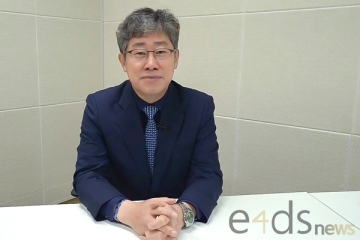
An Ki-hyun, Executive Director of the Korea Semiconductor Industry Association, delivered a keynote presentation titled "Recent Issues and Responses in the Semiconductor Industry" at the 'e4ds Semiconductor Technology Conference 2021 Spring'. Executive Director An Ki-hyun projected that automotive semiconductor supply and demand imbalances will persist in the near term, as production capacity falls short relative to the year-over-year demand growth for automotive semiconductors.
2021.04.30by 배종인 기자
“2021 semiconductor growth rate raised to 24%”
IC Insights anticipates that the global IC market will grow 24% in 2021 due to semiconductor supply shortages and price increases, and that the global IC market is expected to exceed $500 billion for the first time this year.
2021.06.18by 배종인 기자
Why the Semiconductor Equipment Market Will Boom in the First Half of 2022
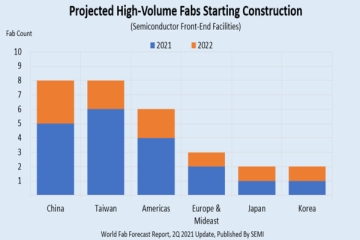
By the end of this year, 19 new fabs will begin construction, and an additional 10 fabs are scheduled to break ground in 2022. Since semiconductor equipment installation typically takes about two years after construction begins, most of the fabs that start construction this year are not expected to begin introducing semiconductor equipment until 2023. However, some fabs are anticipated to have semiconductor equipment installed as early as the first half of 2022.
2021.06.23by 이수민 기자

Intel Unveils Next-Generation 'Core Ultra Series 3' and vPro Platform for Enterprise PCs
Intel has officially unveiled the "Intel Core Ultra Series 3" for next-generation enterprise PCs and the latest vPro platform, addressing a wide range of demands from enterprise notebooks to high-performance workstations.
2026.03.26by 배종인 기자

ROHM Launches ESD Protection Diode Compatible with High-Speed Interfaces of 10Gbps or Higher
Semiconductor specialist ROHM has developed the 'RESDxVx series' of ESD (electrostatic discharge) protection diodes capable of responding to next-generation high-speed data communication environments exceeding 10Gbps, simultaneously enhancing both signal quality maintenance required in high-speed interfaces and IC protection performance.
2026.03.26by 배종인 기자











