



Inflation-induced consumption slump, 'semiconductor cooling'
 Published2022.07.12 16:55
▲'탄광 속 카나리아'라는 표현은 재앙이나 위기의 조기 감지를 뜻하며 과거 광부들이 유해가스를 감지하기 위해 카나리아를 쓴 데서 유래했다. (사진-픽사베이)
하반기 D램價 5~10%↓…마이크론·난야 ‘탄광 속 카나리아’

인플레이션 우려가 높아지며 얼어붙는 가전 및 모바일 수요가 하반기 반도체 전망에 먹구름을 드리고 있다는 의견이 곳곳에서 터져 나오고 있다.
미국 노동통계청에 따르면 소비자 물가지수(CPI)는 지난 3월부터 8.5%대를 기록해 40년 만에 최고 수준에 올라서며 심화되는 인플레이션을 단적으로 보여줬다. 한국도 6월 소비자 물가가 전년 동월 대비 6%로 오른 상황에서 현재 추세대로라면 연간 상승률 5%를 넘을 것이란 예측도 나오고 있다.
■ 소비 수요 감소, 8인치 기반 아날로그칩 수급 원활
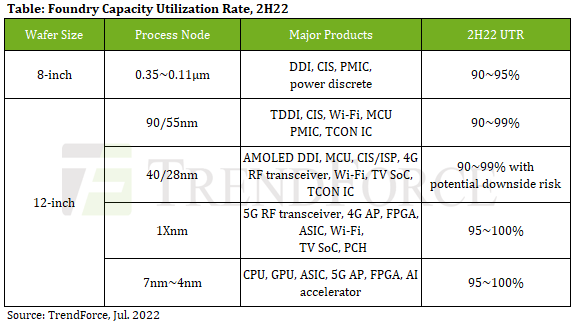
▲2022년 하반기 파운드리 가동율 전망 (자료-트렌드포스)
지난 7일 대만의 시장조사기관 트렌드포스에서는 올 상반기 소비자 수요가 지속적으로 감소해 PC, TV 등 소비재 가전에 사용되는 드라이버 IC, 전력반도체, 이미지센서 등을 생산하는 8인치 파운드리 가동율이 올 하반기 일부 감소할 수 있다고 주장했다.
전세계를 덮친 인플레 공포와 소비자 물가 상승률에 시장은 가전 및 IT기기 수요 예측을 하향 조정하게 만들었다. 트렌드포스는 이미 “스마트폰과 PC 및 SoC, CIS, PMIC와 같은 TV 관련 부품에 재고 조정을 하고 있으며, 기업들이 파운드리 및 웨이퍼 투입 계획을 축소하기 시작했다”고 밝혔다.
드라이버 IC는 TV와 PC 수요 감소에 영향을 받았으며 웨이퍼 투입량 하향 조정이 가장 심한 품목이라고 언급했다. 반면 올 상반기 수급이 빡빡했던 PMIC의 경우 수급 상황이 좀더 원활해졌다.
공급난이 발생할 당시 과도하게 주문을 가져간 기업들을 중심으로 주문 조정이 이뤄지고 있는 것으로 보인다. 트렌드포스는 “드라이버 IC, 소비재용 PMIC 및 CMOS 이미지센서의 주문 취소가 발생하며 이에 따른 파운드리 가동율 감소를 서버·차량용·산업용 애플리케이션 수요로 메우기 어렵다”고 단언했다.
2022년 하반기 8인치 기반 아날로그칩을 생산하는 팹의 전체 가동률을 90~95%로 전망했으며 소비재 제품을 더 많이 제조하는 일부 팹의 경우 가동률이 90%에 미치지 못하게 될 수도 있다고 우려했다.
업계 관계자는 “반도체 공급난 시기 공급량 확보를 위해 과도하게 주문한 부분에 대해서 필요물량 이외의 오더를 취소하는 등 조정이 있을 수 있다”고 말했다.
다만 트렌드포스는 “2년 반 동안의 반도체 부족 사태를 겪은 뒤 이처럼 단기적인 소비 수요 냉각이 파운드리 가동율을 완화하고 반도체 수급난에 어려움을 겪은 제품군에서도 리소스를 재할당 받을 수 있을 것”이라고 내다봤다. 또한 5G 인프라 및 제품, 클라우드 서비스에 기인한 서버 수요 등이 수요를 뒷받침해 여전히 90%가 넘는 수준의 가동률을 보일 것이라고 전망했다.
■ ‘탄광 속 카나리아’의 경고, 메모리 시장 먹구름
3분기 D램 가격이 10%까지 하락폭을 키울 수 있다는 전망이 나왔다. PC, 스마트폰 부문에서 메모리 반도체 수요 둔화가 지속되고 있는 가운데 일부 고객사에서 재고 증가에 따라 올해 상반기 반도체 구매량을 기존 계획 대비 축소하는 움직임을 보였는 소식도 전해졌다.
11일 IC인사이츠 보고서에서는 이러한 상황을 빗대어 ‘탄광 속 카나리아’라고 했다. 과거 탄광에서 카나리아는 위험 신호를 포착해 조기에 경보를 보내는 존재였다. 최근 3대 메모리 공급업체인 마이크론과 대만 반도체 공급업체에서 위기의 전조가 포착되며 이들을 놓고 카나리아에 빗댄 것이다.
지난달 30일 마이크론은 5월 기준 회계 3분기 실적을 공개했는데 전년 동기 대비 19% 성장한 86억달러를 기록했지만 8월에 끝나는 회계연도 4분기 실적 전망치는 72억달러로 17% 이상 감소를 예상했다. 대만 최대 메모리 공급업체 난야(Nanya)에서도 5월 매출 대비 6월 매출이 26% 급감하며 마이크론과 더불어 메모리 시장의 미래를 보여주고 있다고 IC인사이츠는 설명했다.
한 해 중 3분기는 반도체 산업의 성수기에 진입하는 때로 이 시기 하락 전망은 올해 하반기 메모리 시장의 약세를 조기에 경고하는 것이라고 덧붙였다.
D램 평균 재고 수준이 2개월 이상인 상황에서 PC OEM의 지속적인 출하 전망 하향 조정과 더불어 스마트폰 생산 목표 또한 경기 침체로 인해 계속해서 하향 조정됐다. 인플레이션으로 인한 소비재 수요 감소와 함께 암호화폐 시장 위축으로 그래픽 D램 수요도 약화됐다.
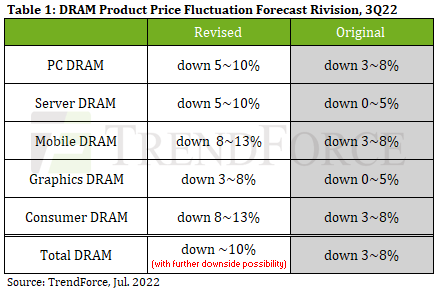
▲D램 제품군별 가격 전망(수정/기존) (자료-트렌드포스)
트렌드포스는 지난 4일 3분기 PC·서버 D램에서 5~10%의 가격 하락을 전망했으며 모바일 8~13%, 그래픽 3~8%, 소비자 D램에서 8~13%로 기존 대비 하락율을 높게 조정했다. 과잉 메모리 반도체 재고가 소진되기 전까진 현물가격 하락이 지속될 가능성이 높다고 보는 것이다.
이승우 유진투자증권 애널리스트는 11일 반도체 섹터 코멘트에서 “100% 이상을 유지해왔던 8인치 및 12인치 레거시 팹의 가동률이 하락을 목전에 두고 있다”며 “PC와 스마트폰 판매 부진 우려 속에서 제조업체들이 재고 조정에 나설 경우 팬데믹이 불러온 오버부킹은 마무리될 것으로 보인다”고 언급했다.

Comments
Related news
Samsung's Super Gap, World's First GAA-Based 3nm Semiconductor Mass Production Begins
Ten years ago, Samsung held only about 1% of the global foundry market share, but has now narrowed the gap enough to challenge TSMC, the current foundry leader. Within five years of launching Samsung Electronics' foundry business division, the company unveiled the world's first GAA-based 3-nanometer process and is demonstrating a pace in process miniaturization that is at least one step ahead of TSMC.
2022.06.30by 명세환 기자

Semiconductor exports exceeded $60 billion in the first half of this year, setting a new all-time high.
According to the export and import trends for the first half of 2022 announced by the Ministry of Trade, Industry and Energy on the 1st, semiconductors reached $69.02 billion, representing a 20.8% increase compared to the same period of the previous year, achieving the highest first-half performance on record.
2022.07.04by 김예지 기자
Fabless Worldwide Grows 2.7 Times… Focus on Future Food
The fabless and system semiconductor industry is rapidly expanding within the global semiconductor market. The system semiconductor industry, which has grown nearly threefold over the past 20 years, is larger than the memory market and capable of creating high value-added products, drawing attention domestically as a promising future business sector.
2022.07.08by 명세환 기자

Intel Unveils Next-Generation 'Core Ultra Series 3' and vPro Platform for Enterprise PCs
Intel has officially unveiled the "Intel Core Ultra Series 3" for next-generation enterprise PCs and the latest vPro platform, addressing a wide range of demands from enterprise notebooks to high-performance workstations.
2026.03.26by 배종인 기자

ROHM Launches ESD Protection Diode Compatible with High-Speed Interfaces of 10Gbps or Higher
Semiconductor specialist ROHM has developed the 'RESDxVx series' of ESD (electrostatic discharge) protection diodes capable of responding to next-generation high-speed data communication environments exceeding 10Gbps, simultaneously enhancing both signal quality maintenance required in high-speed interfaces and IC protection performance.
2026.03.26by 배종인 기자











