



Korea-Sweden Power Semiconductor Forum Held... 'Compound Power Semiconductors and Power Electronics' Emphasized
 Published2024.11.04 17:02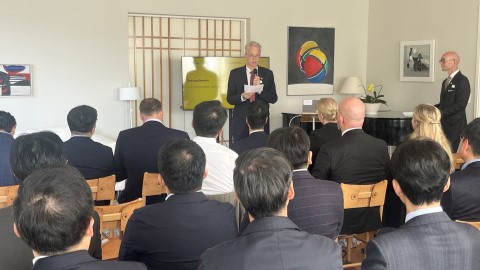
▲Korea-Sweden Power Semiconductor Forum / (Photo: Swedish Trade and Investment Office)
As the demand for electricity and efficient energy solutions continues to increase due to the intelligence of modern society, power semiconductors are emerging as a key technology for carbon reduction and energy transition.
The 'Korea-Sweden Power Semiconductor Forum' was held on the 30th of last month at the Embassy of Sweden in Korea, co-hosted by the Embassy of Sweden in Korea, the Swedish Trade and Invest Korea, and the RISE Research Institute of Sweden. The importance of power semiconductors and power electronics applicable to various fields including electric vehicles, data centers, and digital infrastructure was highlighted, and semiconductor industry leaders and researchers gathered to discuss cooperation opportunities between Sweden and Korea, focusing on power semiconductor technology innovation.
“The cooperation between Sweden and Korea is an important step towards creating a sustainable energy future together,” said Swedish Ambassador to Korea Karl-Ulf Andersson. “Power semiconductor technology will play a key role in helping us achieve carbon neutrality.”
Sweden is a leader in this field, having been conducting research on wide bandgap (WBG) materials and power semiconductor devices for over 30 years, centered around the Research Institute of Sweden (RISE). Korea, which has strengths in semiconductor research and development and mass production, is playing a complementary role. Through this forum, the two countries sought to establish deeper cooperation in the power semiconductor sector, which is a key element for energy efficiency and green transition.
A 1% improvement in power conversion efficiency can save about 270 TWh of energy globally, which is equivalent to the energy produced by 100 500 MW coal-fired power plants. This efficiency improvement is expected to reduce CO2 emissions by about 350 million tons per year. As global energy consumption increases and the transition to renewable energy accelerates, advances in power semiconductors and power electronics technology are said to have benefits in reducing dependence on fossil fuels, modernizing power grids, and mitigating climate change.
This forum introduced a high-efficiency, high-voltage PTC heater project currently being developed in collaboration between RISE (Redischer Research Institute), Korea Automotive Research Institute, and Jahwa Electronics, as well as presentations on innovative cases in the power semiconductor and power electronics fields from Sweden and Korea, such as SK Siltron’s SiC (silicon carbide) wafer technology and Revotech Research Institute’s high-efficiency system for electric vehicles using SiC MOSFETs. The expert panel discussion that followed shared insights on cooperation in power semiconductor and power electronics technologies, and discussed joint international research projects, R&D environments, and cooperation plans between the two countries in this field.
“If Sweden’s WBG semiconductor expertise and Korea’s R&D capabilities are combined, it will bring about positive changes to the global power semiconductor and power electronics industry, and further accelerate innovation in power semiconductor and power electronics technology,” said Malin Frenning, President of Research Institute Sweden (RISE).

Comments
Related news
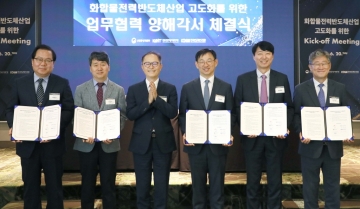
SK Siltron, Above Semiconductor, DB HiTek, 138.5 billion won power semiconductor deal
The Ministry of Trade, Industry and Energy (Minister Ahn Duk-geun) held a 'Kick-off Meeting for the Advancement of Compound Power Semiconductor Industry' together with approximately 80 participants including the Korea Institute of Industrial Technology Planning and Evaluation, Korea Semiconductor Research Cooperative, and industry officials from the power semiconductor sector. At this meeting, SK Siltron, Above Semiconductor, and DB Hitech joined hands to conduct compound power semiconductor research and development at a scale of 138.5 billion won.
2024.06.20by 배종인 기자
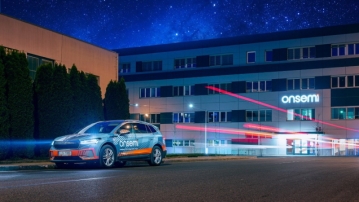
Onsemi Selects Czech Republic as SiC Production Base for Advanced Power Semiconductors
ON Semiconductor produces intelligent power semiconductors in the Czech Republic that are essential for improving energy efficiency in applications such as electric vehicles, renewable energy, and AI data centers.
2024.06.21by 성유창 기자
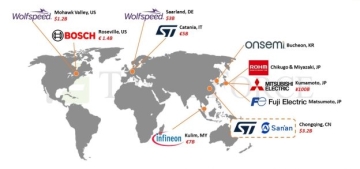
Power Semiconductor Global Competition ST 1st Place...China-Major Gap↓, Oversupply Risk↑
The power semiconductor market is undergoing a paradigm shift centered on SiC and GaN technologies, with major players engaged in intense competition over investments and facility expansion. While ST maintains its global leadership position, China's accelerated efforts to build a self-sufficient ecosystem for compound power semiconductors are emerging as a major variable that could significantly reshape the industry and market landscape going forward.
2024.06.25by 권신혁 기자
Infineon's InnoScience GaN Patent Lawsuit, Not Just a Litigation, but Future AI and Data Center Markets at Risk
The patent infringement lawsuit between global semiconductor company Infineon Technologies and China's Innoscience is analyzed to become an important turning point beyond simple technical infringement, decisive for securing market leadership in GaN (gallium nitride) power semiconductors for future artificial intelligence (AI) servers and data centers.
2024.08.08by 배종인 기자
.jpg)
Korea Electric Power Research Institute, 'Diamond Power Semiconductor' International Cooperation Begins in Full Swing
The Korea Electrotechnology Research Institute (KERI) and Gyeongnam Province will jointly conduct international research with Orbray, a Japanese precision component manufacturing company, on 'diamond power semiconductors' for aerospace applications.
2024.09.13by 배종인 기자











